Top Alphabet Learning Activities for Kids to Improve Letter Recognition and Early Reading
Learning the alphabet is one of the first and most important steps in early childhood education. For children aged 3 to 5, recognizing letters and understanding their sounds lays the foundation for reading and writing.
Many parents search for effective and simple ways to teach the alphabet at home. The good news is that alphabet learning does not need to be complicated. With the right activities and printable worksheets, children can learn naturally through play and practice.
In this detailed guide, you will discover the best alphabet learning activities for kids that improve letter recognition, phonics skills, and early reading ability.

Why Alphabet Learning Is Important for Kids
Alphabet learning is the foundation of reading. Before children can read words or sentences, they must recognize letters and understand the sounds they represent.
When children become familiar with letters, they begin to connect sounds and words. This process is called phonemic awareness and is essential for early reading.
Using structured activities helps children learn faster and with more confidence.
👉 Explore:
Alphabet Worksheets for Kids
1. Alphabet Tracing Worksheets
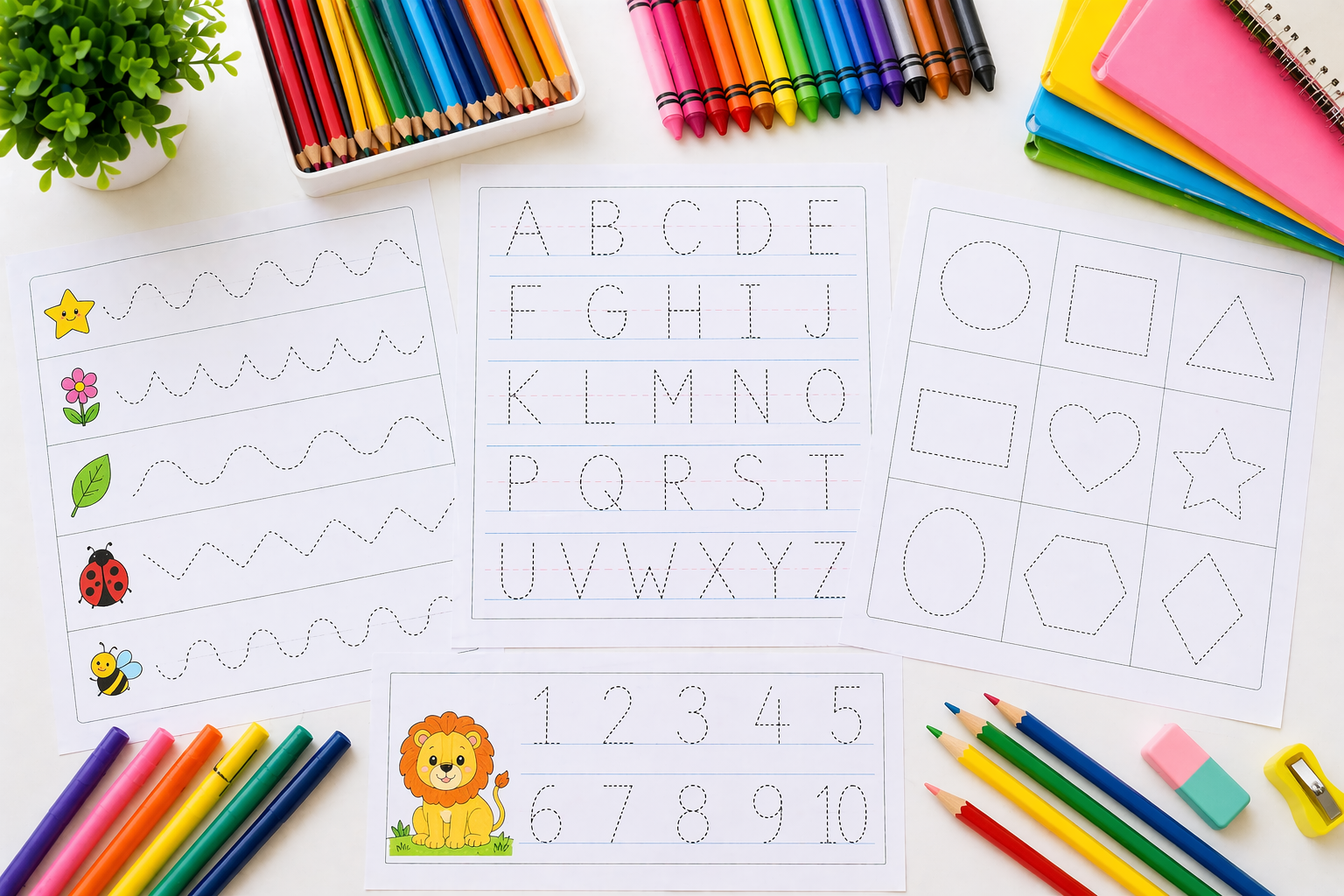
Alphabet tracing is one of the most effective ways to introduce letters to children. It helps them recognize letter shapes and improves writing skills.
Children follow dotted lines to trace letters. This builds hand coordination and memory.
👉 Try:
Alphabet Tracing Worksheets

2. Alphabet Flashcards
Flashcards are a simple and effective way to teach letter recognition. Each card shows a letter along with a picture.
For example, A for Apple, B for Ball. This helps children connect letters with real-world objects.
Flashcards improve memory, recognition, and vocabulary.
3. Letter Matching Activities
Matching activities help children identify letters and pair them correctly. These worksheets include matching uppercase and lowercase letters.
Children enjoy these activities because they feel like a game.

4. Phonics Learning Activities
Phonics teaches children the sounds of letters. This is essential for reading.
Activities include identifying beginning sounds, matching sounds with pictures, and simple word formation.
👉 Explore:
Phonics Worksheets

5. Alphabet Coloring Pages
Coloring pages make alphabet learning fun. Each page focuses on one letter with related images.
Children color pictures while learning the letter. This improves both creativity and memory.
👉 Download:
Alphabet Coloring Pages
6. Letter Recognition Games
Simple games like finding letters in books or matching letters around the house make learning interactive.
These activities help children recognize letters in real-world situations.
7. Writing Practice Sheets
Once children are comfortable with tracing, they can move to writing letters independently.
Practice sheets help improve confidence and writing skills.
8. Alphabet Puzzles
Puzzles improve problem solving skills and letter recognition at the same time.
Children match letters to complete puzzles, which makes learning engaging.
9. Story-Based Alphabet Learning
Stories that focus on letters help children remember them better.
For example, a story about animals can introduce multiple letters in a fun way.
10. Daily Alphabet Practice Routine
Consistency is key. A simple daily routine can make a big difference.
Spend 15 to 20 minutes daily on alphabet activities.
Start with tracing, then move to matching, and end with fun activities like coloring.
Tips for Teaching Alphabet to Kids
Keep learning simple and fun. Avoid forcing children to memorize quickly.
Use printable worksheets to maintain structure.
Encourage repetition and practice.
Praise efforts to build confidence.
Best Printable Resources for Alphabet Learning
Printable worksheets are one of the best tools for teaching alphabet at home.
They are easy to use, reusable, and provide structured learning.
👉 Explore full collection:
Free Printable Worksheets
Conclusion
Alphabet learning is the first step toward reading and writing. With the right activities, children can learn quickly and confidently.
Using tracing worksheets, flashcards, phonics activities, and games makes learning enjoyable.
Start early, stay consistent, and use printable worksheets to support your child’s learning journey.
Frequently Asked Questions
What is the best age to start alphabet learning?
Children can start learning the alphabet from age 3.
How can I teach alphabet at home?
Use tracing worksheets, flashcards, and phonics activities for effective learning.
How long should kids practice alphabet daily?
15 to 20 minutes daily is enough.
Are printable worksheets effective for alphabet learning?
Yes, they provide structured and simple learning for children.