Printable Math Worksheets for Kindergarten to Build Strong Number Skills
Mathematics is one of the most important subjects children learn in early education. For kindergarten students, building strong number skills is essential for future success in school.
Many parents look for simple and effective ways to teach math at home. One of the best methods is using printable math worksheets for kindergarten.
These worksheets provide structured learning while keeping activities fun and engaging. They help children understand numbers, counting, and basic math concepts step by step.

Why Math Worksheets Are Important for Kindergarten
Kindergarten is the stage where children begin to understand numbers and basic calculations. Learning math early helps children develop logical thinking and problem-solving skills.
Printable worksheets make learning easier by providing visual examples and structured exercises.
👉 Explore:
Math Worksheets for Kids
1. Number Recognition Worksheets
Number recognition is the first step in learning math. Children need to identify numbers before they can use them.
Worksheets that focus on recognizing numbers help children become familiar with number shapes and patterns.
Activities include matching numbers, circling correct numbers, and identifying numbers in a sequence.
2. Counting Worksheets
Counting worksheets help children understand quantity. These worksheets often include pictures of objects such as fruits, animals, or shapes.
Children count the objects and write the correct number.
👉 Try:
Number Counting Worksheets

3. Number Tracing Worksheets
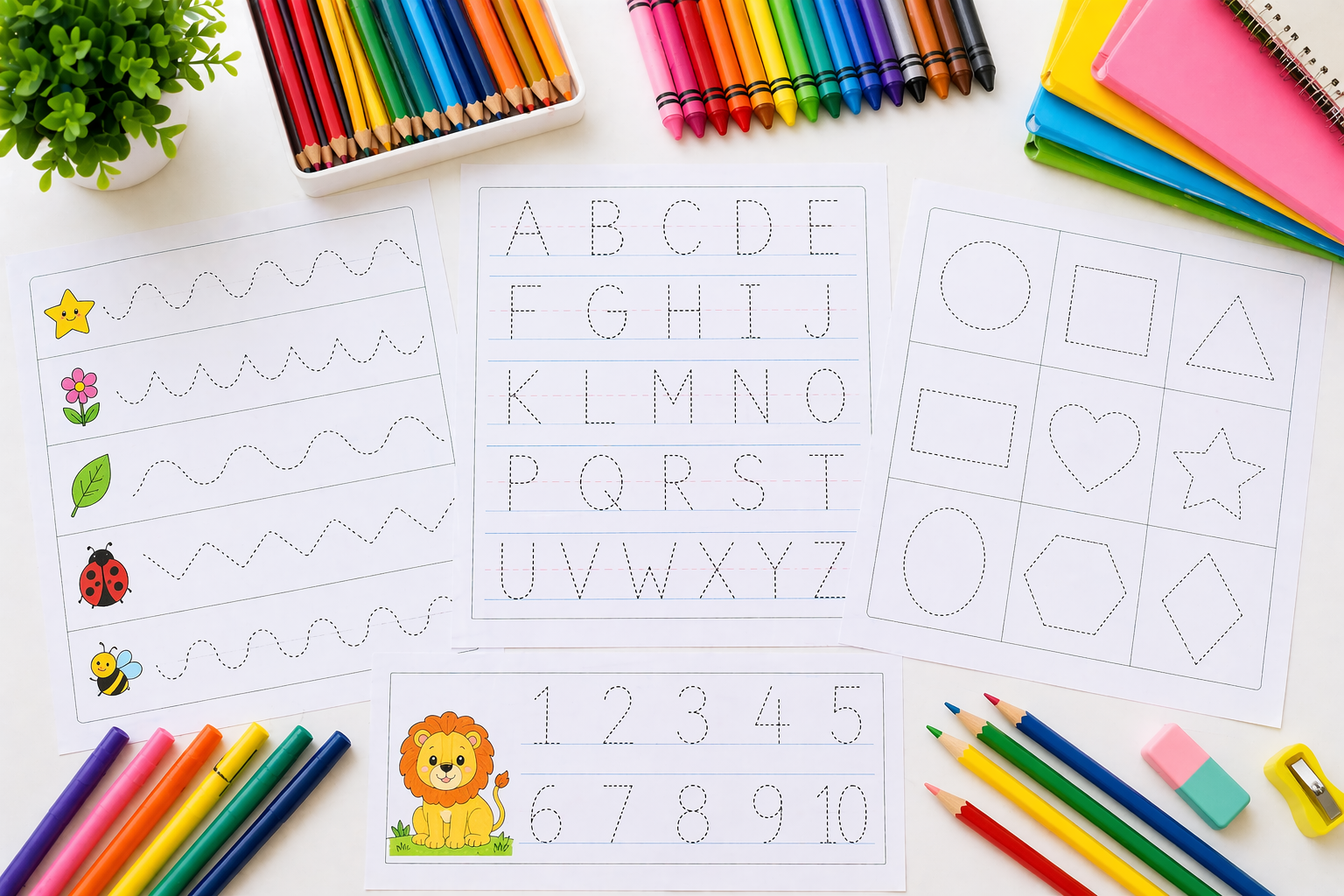
Tracing numbers helps children learn how to write them correctly. It also improves fine motor skills.
Children follow dotted lines to trace numbers. This builds confidence and writing ability.
4. Basic Addition Worksheets
Addition is one of the first math operations children learn. Simple addition worksheets introduce this concept in an easy way.
These worksheets use pictures and objects to make addition understandable.
👉 Explore:
Addition Worksheets

5. Subtraction Worksheets
Once children understand addition, they can move to subtraction. This helps them understand the concept of taking away.
Simple visual examples make subtraction easy to learn.
6. Number Matching Activities
Matching activities help children connect numbers with quantities.
For example, matching the number 5 with five objects improves understanding.
7. Pattern Recognition Worksheets
Patterns help children develop logical thinking skills. Worksheets include identifying and completing patterns.
This improves observation and reasoning abilities.
8. Comparing Numbers
Children learn to compare numbers using greater than and less than concepts.
This builds early analytical thinking.
9. Math Puzzle Worksheets
Puzzles make math fun and engaging. These include number puzzles, matching games, and simple logic problems.
They improve problem-solving and memory.
10. Daily Math Practice Worksheets
Daily worksheets combine multiple math concepts such as counting, addition, and matching.
This helps children practice regularly and build confidence.
👉 Get complete bundle:
Printable Math Worksheet Packs

How to Create a Daily Math Learning Routine
A simple daily routine can help children learn math effectively.
Spend 20 to 30 minutes daily on math activities. Start with counting, then move to addition, and finish with fun puzzles.
Keep sessions short and engaging.
Tips for Teaching Math to Kindergarten Kids
Use visual examples and real objects for better understanding.
Encourage practice through worksheets.
Make learning fun with games and activities.
Be patient and supportive.
Best Printable Worksheets for Kindergarten Math
Printable worksheets provide structured learning and are easy to use at home.
They cover all essential math topics and help children practice regularly.
👉 Explore full collection:
Free Printable Worksheets
Conclusion
Printable math worksheets are one of the best tools to teach kindergarten children. They help build strong number skills and improve confidence.
By practicing regularly, children can develop a solid foundation in math.
Start early, stay consistent, and make learning enjoyable.
Frequently Asked Questions
What age should kids start learning math?
Children can start learning basic math from age 3 to 4.
How can I teach math at home?
Use printable worksheets, counting activities, and simple exercises.
How long should math practice be?
20 to 30 minutes daily is enough.
Are math worksheets effective?
Yes, they provide structured and easy learning for children.