
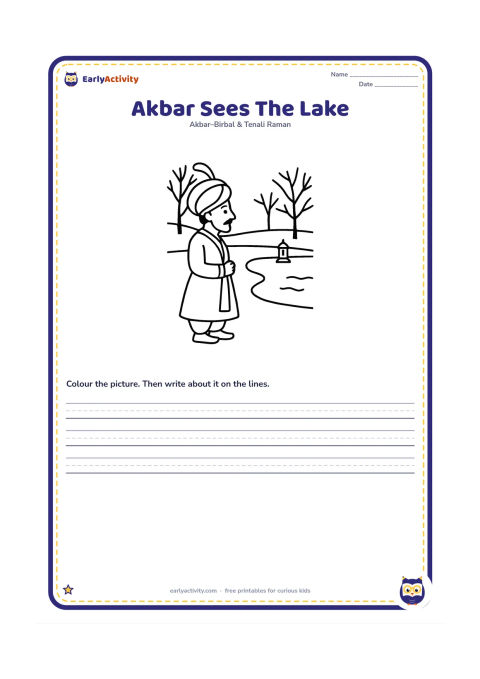
Akbar Sees The Lake
Show Emperor Akbar standing beside a simple palace garden lake, looking across the water toward a tiny distant lamp. Include a few bare winter trees and a calm shoreline.
هذه الصفحة غير متوفرة باللغة العربية بعد — نعرضها بالإنجليزية.
These akbar and birbal stories printables bring classic tales, simple reading practice and child-friendly activities together for ages 6 to 12. They are free to download and print for home or classroom use.
يلزم حساب مجاني للتنزيل · 20 تنزيلًا مجانيًا كل يوم
Show Emperor Akbar standing beside a simple palace garden lake, looking across the water toward a tiny distant lamp. Include a few bare winter trees and a calm shoreline.
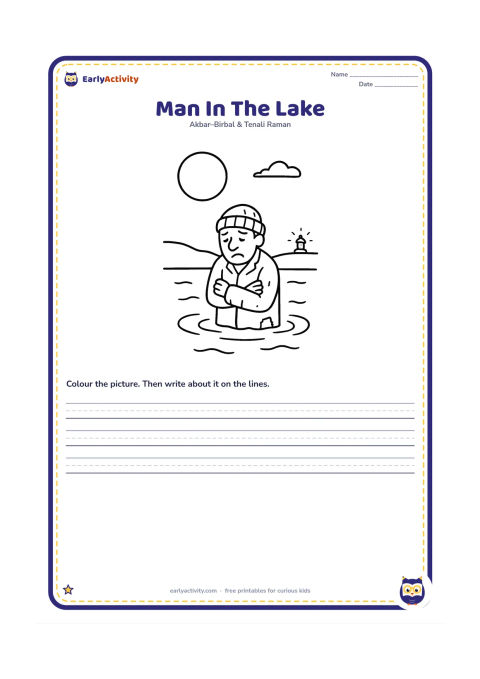
Show the poor man standing waist-deep in a cold lake at night, holding his arms close while a small lamp glows far away on the shore. Add a large moon and a simple bank.
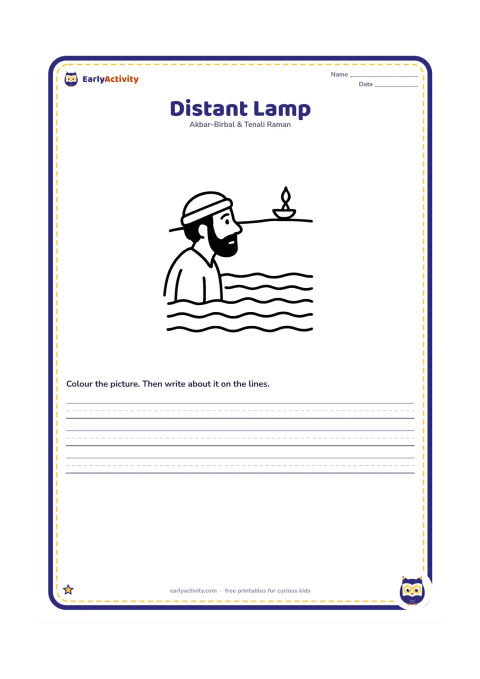
Show a close view of the poor man in the lake looking toward a single small lamp on a far shore. Use a clear open space between the man and the lamp to show the distance.
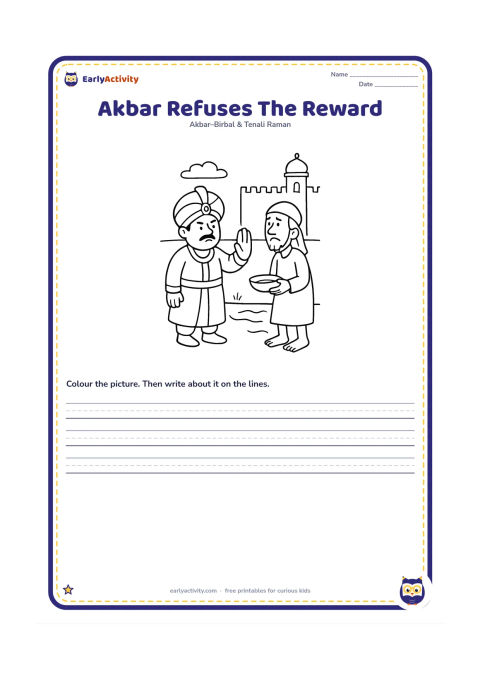
Show Akbar facing the poor man beside the lake, holding one hand up in refusal while the disappointed man stands respectfully nearby. Include a simple palace wall in the background.
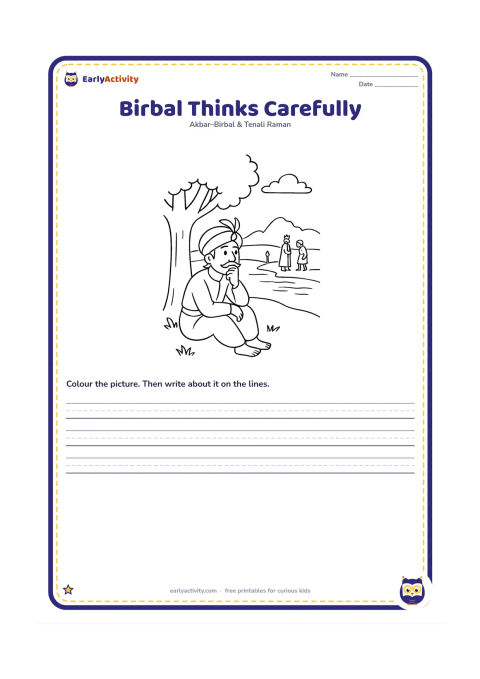
Show Birbal seated beneath a tree with one hand on his chin, looking thoughtfully toward the lake and distant lamp. Akbar and the poor man can appear as small background figures.
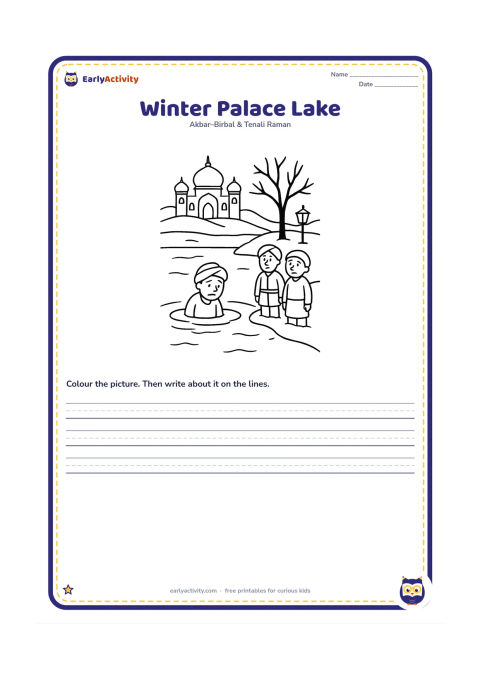
Show the palace, a frozen-looking winter lake, a bare tree and the poor man standing in the water while a distant lamp shines from the bank. Akbar and Birbal watch from the shore.
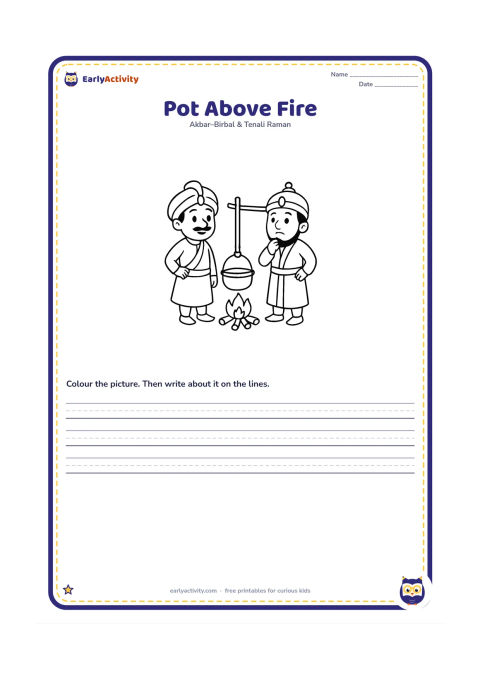
Show Birbal beside a tiny ground fire with a cooking pot hanging very high above it on a tall support. Akbar stands nearby looking puzzled.
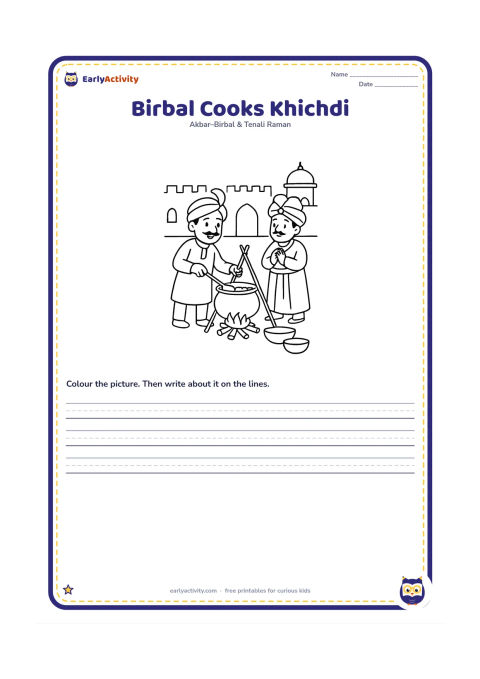
Show Birbal stirring a pot of khichdi suspended high above a small fire in a palace courtyard. Akbar watches from the side while a few cooking bowls sit on the ground.
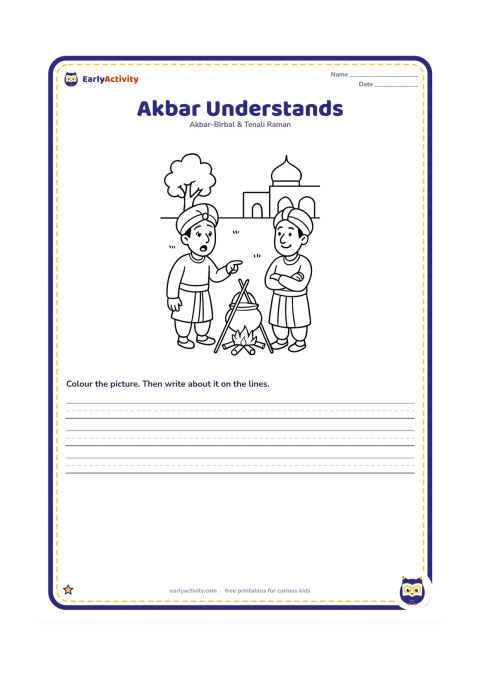
Show Akbar pointing from the far-away fire to the high pot while Birbal smiles gently beside him. Use a clear palace courtyard with one tree and open ground.
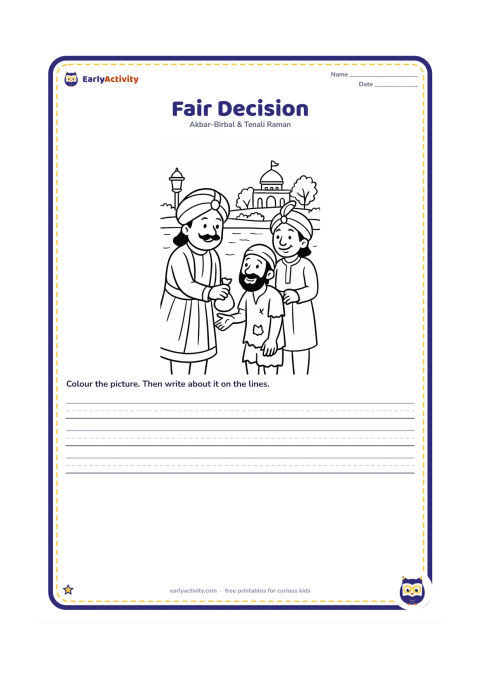
Show Akbar handing a reward to the poor man while Birbal stands beside them approvingly near the lake. The distant lamp and palace garden remain in the background.
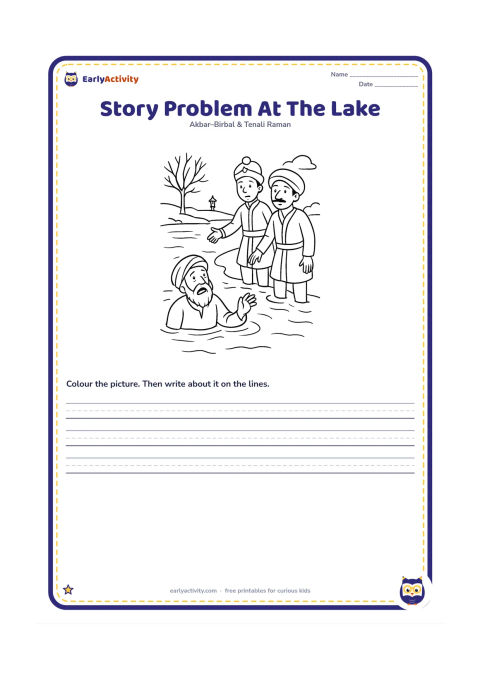
Show Akbar, Birbal and the poor man together at the winter lake, with the man in the water and the distant lamp on the opposite shore. Arrange the figures so the problem is easy to discuss.
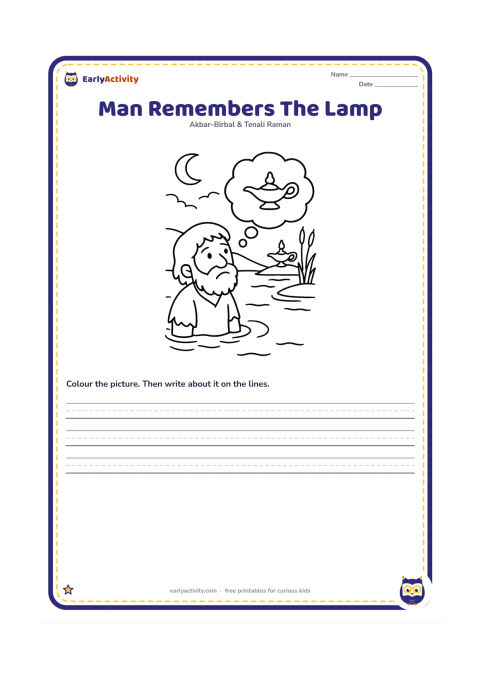
Show the poor man in the lake gazing steadily at a faraway lamp while a soft thought cloud contains only a simple lamp picture. Reeds, moonlight and the shore frame the scene.
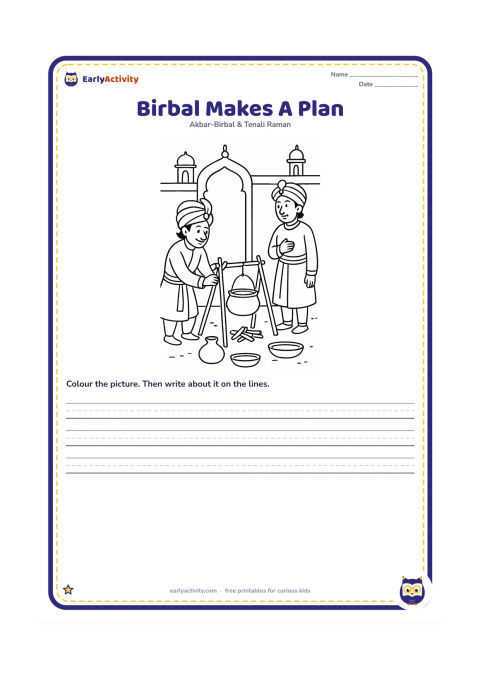
Show Birbal arranging a tall cooking stand, a pot and a small bundle of firewood in a palace courtyard while Akbar watches curiously. Include a few simple kitchen vessels.
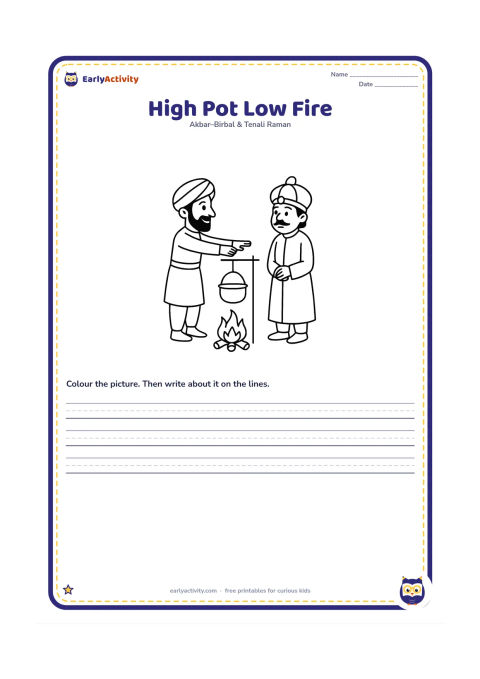
Show a side-view comparison of a small fire on the ground and a cooking pot hanging far above it, with Birbal measuring the gap using his outstretched arms. Akbar observes from the other….
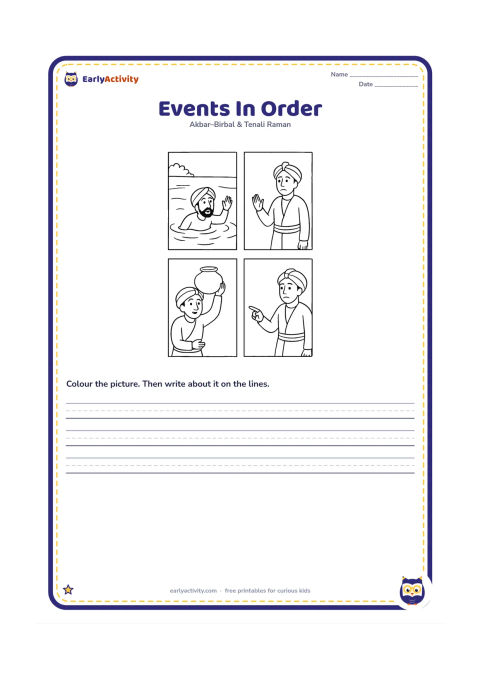
Create four large blank picture panels showing the poor man in the lake, Akbar refusing the reward, Birbal raising the pot, and Akbar correcting the decision. Do not add panel numbers or….
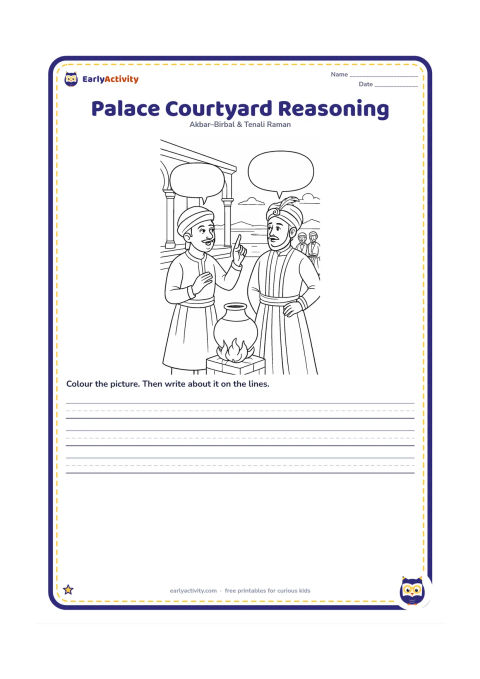
Show Birbal explaining the high-pot example to Akbar in a spacious palace courtyard, with the raised pot, low fire and distant lake scene visible behind them. A few courtiers listen….
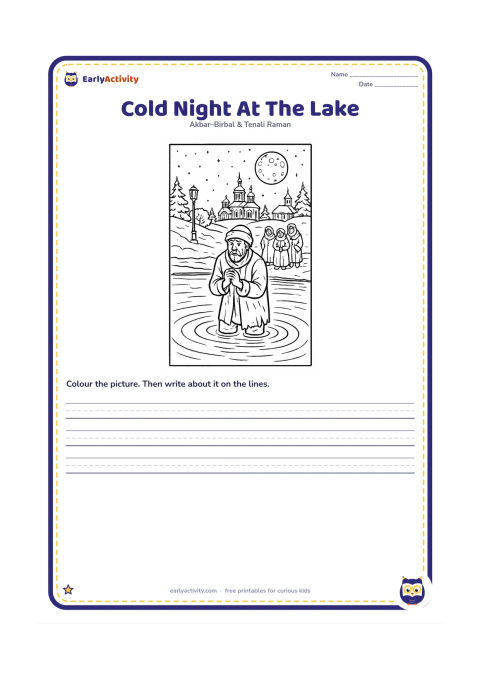
Show a detailed winter night scene with the poor man standing in the lake, ripples around him, a far lamp on a village bank, moonlit palace buildings and bundled-up figures watching from….
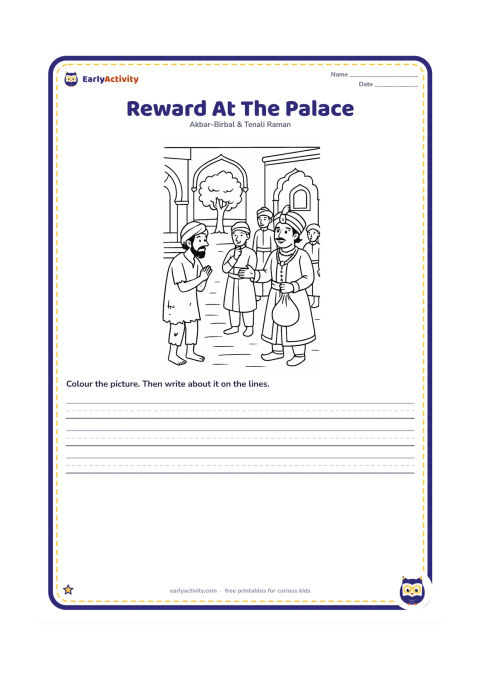
Show the poor man arriving at a palace courtyard with Akbar, Birbal and a small group of attendants. Akbar gestures toward a reward pouch while Birbal studies the scene thoughtfully.
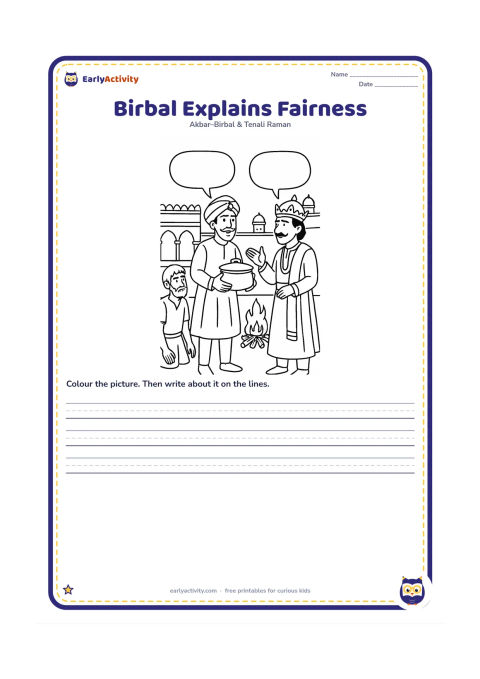
Show Birbal calmly presenting the raised cooking pot and distant fire to Akbar, with the palace courtyard arranged like a demonstration area. The poor man watches from one side.
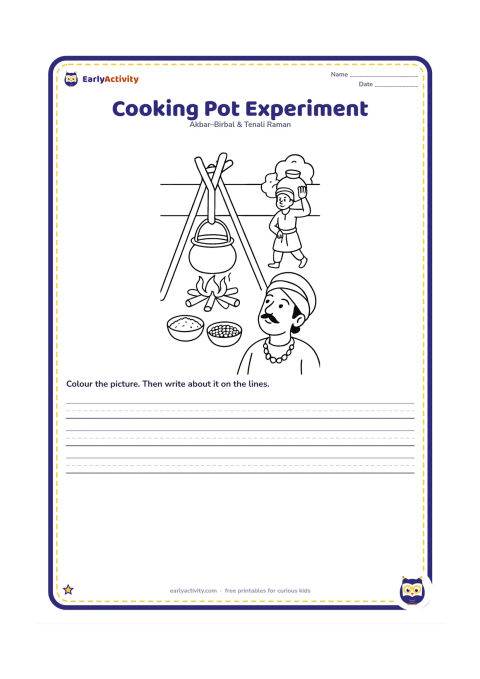
Show a detailed view of Birbal's tall wooden cooking frame, suspended pot, small fire, bowls of rice and lentils, and a courtyard helper carrying water. Akbar looks upward from below.
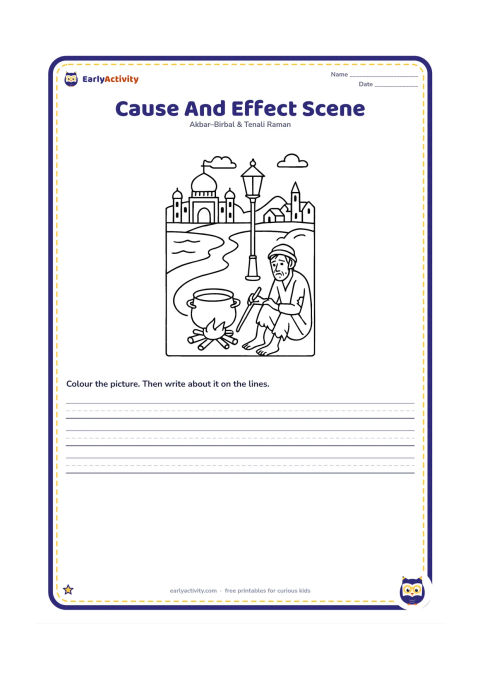
Show the lake, distant lamp, poor man, raised cooking pot and low fire in one connected palace-and-village landscape, with visual paths leading from each cause to its result. Do not use….
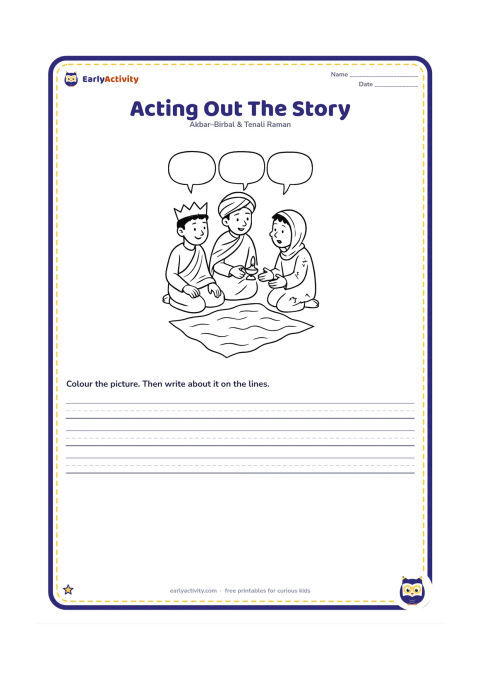
Show three children in a classroom or home play area acting as Akbar, Birbal and the poor man, using a blue cloth as the lake and a small safe pretend lamp. Include simple costume pieces….
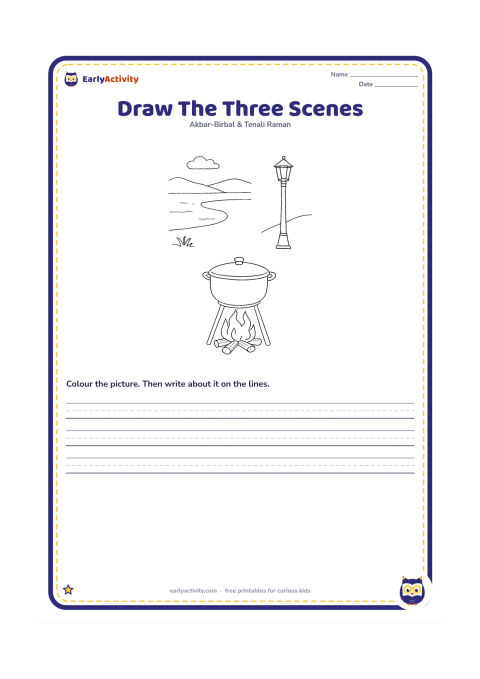
Create a detailed three-part drawing page with one open area for the lake, one for the distant lamp, and one for Birbal's raised cooking pot above the fire. Show faint scene starters….
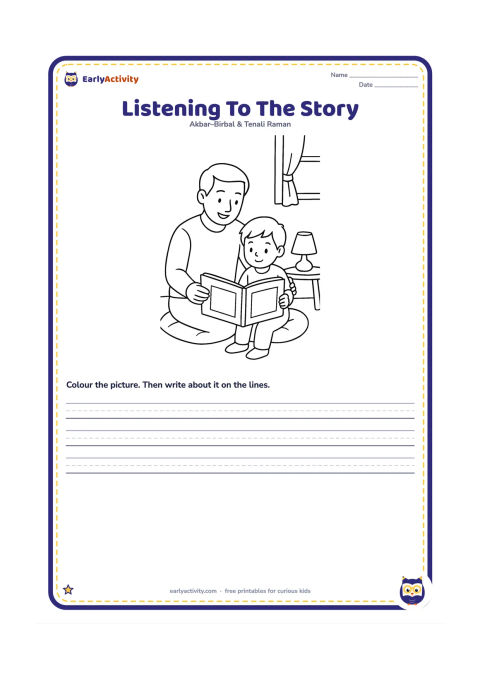
Show a child sitting beside an adult who is reading an open picture book about Akbar, Birbal and the lake. Include a floor cushion and a small lamp in a cosy home setting.
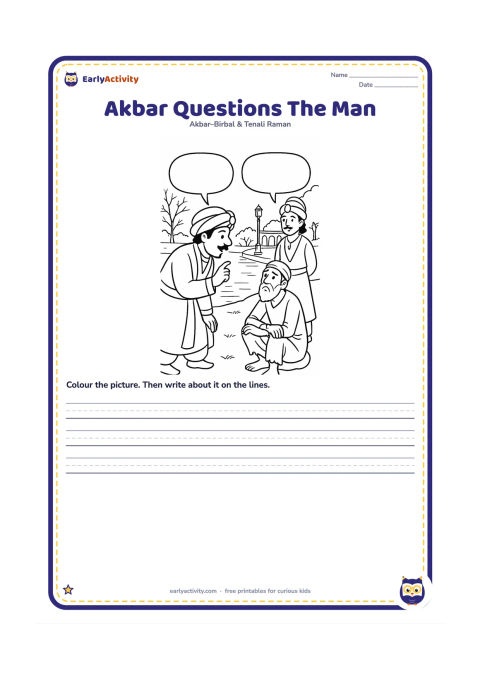
Show Akbar leaning forward to ask the poor man a question beside the lake, with Birbal listening nearby. Add the distant lamp, palace walkway and winter trees.
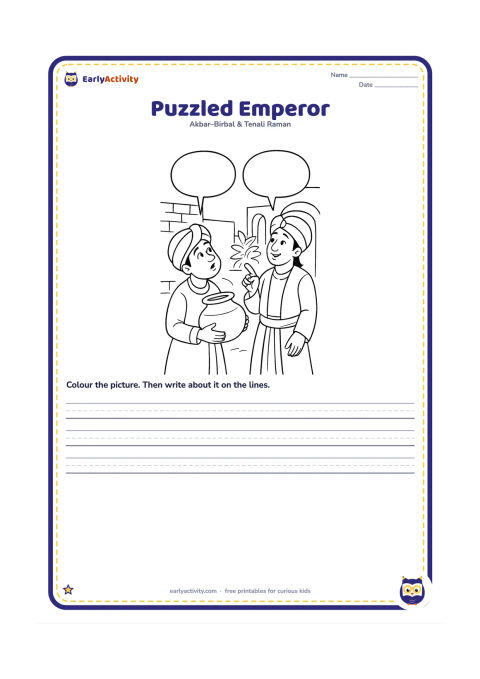
Show Akbar tilting his head and looking up at the pot while Birbal points calmly toward the distant fire. Use a courtyard wall, doorway and leafy plant behind them.
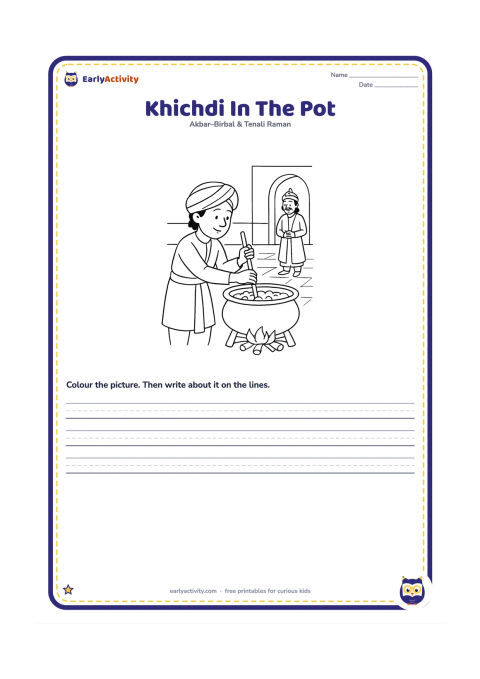
Show a close view of the raised pot with khichdi inside, while a tiny fire burns far below and Birbal stirs from a safe platform. Akbar looks on from the courtyard.
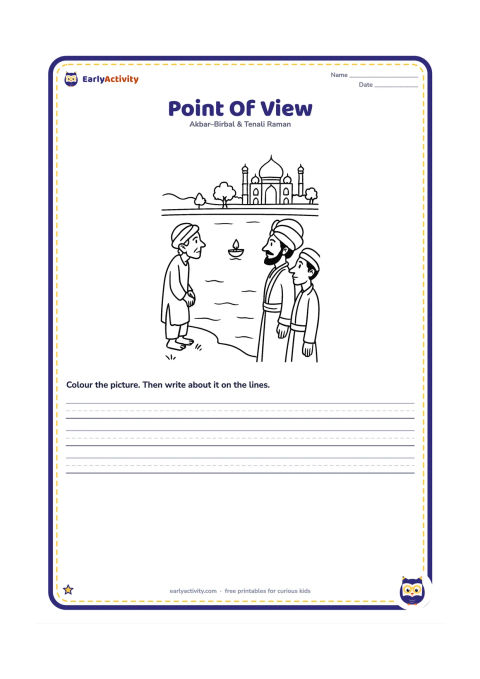
Show the poor man, Akbar and Birbal standing in separate parts of a lake scene, each looking toward the distant lamp from a different position. Use a clear shoreline and palace garden.
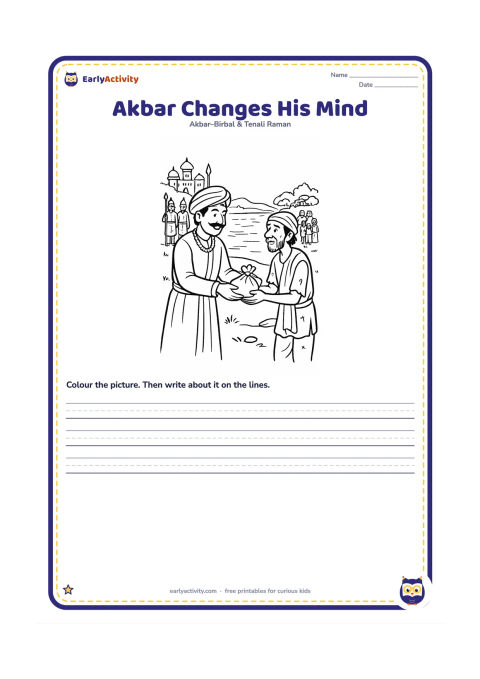
Show Akbar returning the reward to the poor man beside the lake while Birbal stands nearby with a satisfied but respectful expression. Palace guards and village families watch from a….
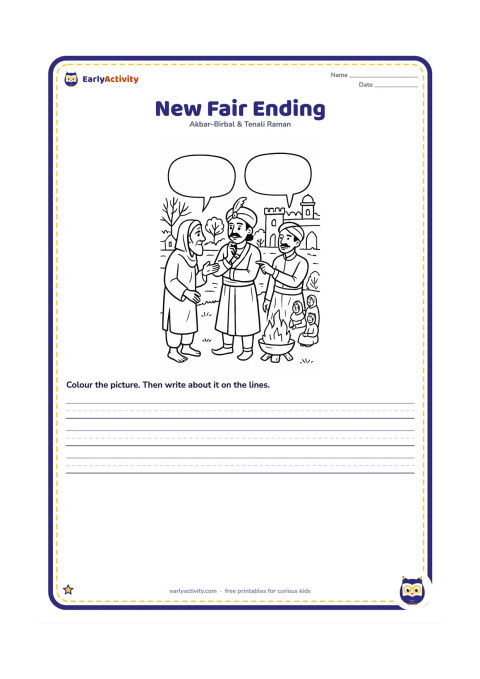
Show a peaceful alternate ending in which Akbar listens to the poor man, Birbal points toward the lake, and the reward is presented beside a warm palace courtyard fire. Village people….
One winter, Emperor Akbar heard that a poor man had stood all night in a cold lake because a reward had been promised. Akbar asked how he managed it. The man said he had seen a lamp far away and kept thinking about it. Akbar decided that the distant lamp had warmed him, so he refused the reward. Birbal felt this was unfair. The next day, he hung a pot high above a small fire, far beyond the fire's heat, and began cooking khichdi. When Akbar asked how it could cook, Birbal gave the same answer as the king had given the poor man. Lesson: A fair decision needs careful thinking and an honest understanding of the facts.
Read the story aloud once while your child listens for the problem. On a second reading, let your child read the dialogue or repeat key lines. Pause before Birbal gives his answer and ask, "What do you think he will do?" Talk about the poor man's point of view, Akbar's mistake and why Birbal uses an example instead of an argument. Ask your child to explain the lesson in their own words. Older children can compare Birbal's reasoning with a fair decision they have seen at home or school.
Ask your child to put the main events in order, then draw the lake, the distant lamp and Birbal's cooking pot. They can write two speech bubbles for Akbar and Birbal, or complete a short cause-and-effect chart. For a speaking activity, act out the story with one child as Akbar, one as Birbal and one as the poor man. Older children can write a new ending in which Akbar corrects his decision. You can also pair this tale with Birbal's Khichdi for a second reading session.

They are traditional tales about Emperor Akbar and his wise adviser Birbal. Many stories use a puzzle, a disagreement or a clever answer to show the value of fairness and good judgement.
Yes. The stories on this page are presented in simple language for children aged 6 to 12. Read them together and explain unfamiliar words or old customs.
Children can practise reading, retelling, listening and speaking while thinking about fairness, honesty and problem-solving. The lesson may be discussed rather than memorised.
Yes. Most EarlyActivity printables are free to download with a free account. Files are PDFs for A4 and US Letter paper, and you may print them for home or your own classroom.
Start with a short story that has one clear problem and a simple solution, such as Birbal's Khichdi. Ask your child to predict the answer before reading the ending.

These birbal's khichdi story printables help children aged 6 to 12 read, understand and respond to a classic Akbar and Birbal tale. The free activities can be printed for reading practice, classroom work or a quiet activity at home.
These free story printables retell Tenali Raman and the Thieves for children aged 6 to 12. Your child can read, sequence, discuss and respond to the story through simple activities for home or class.
These Tenali Raman story printables give children aged 6 to 12 short traditional tales, reading practice and simple follow-up activities. They are free to print for use at home or in your own classroom.