
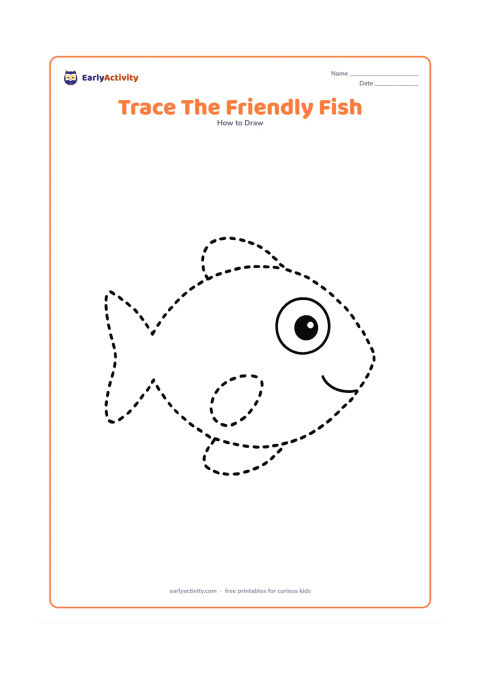
Trace The Friendly Fish
Show one very large side-view fish made from a bold rounded body, simple triangle tail, one large eye, and two easy fins. Use a thick dashed outline for tracing and leave the background….
هذه الصفحة غير متوفرة باللغة العربية بعد — نعرضها بالإنجليزية.
These how to draw a fish craft printables help children aged 4 to 12 sketch fish with simple shapes, guided steps and colouring tasks. They are free to print for use at home or in your own classroom.
يلزم حساب مجاني للتنزيل · 20 تنزيلًا مجانيًا كل يوم
Show one very large side-view fish made from a bold rounded body, simple triangle tail, one large eye, and two easy fins. Use a thick dashed outline for tracing and leave the background….
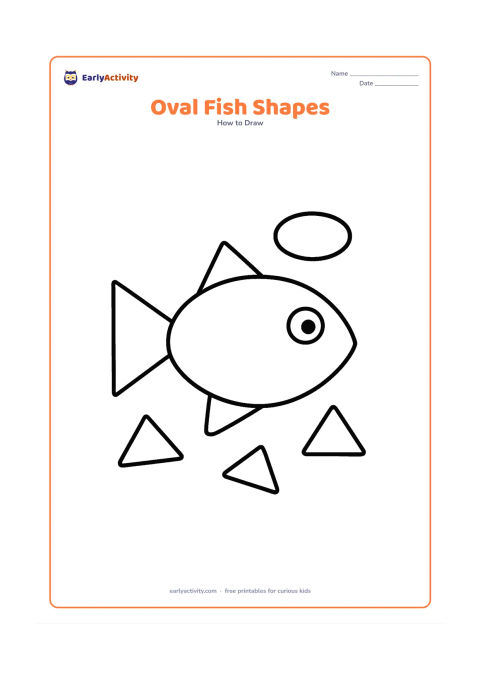
Show a large fish assembled from a clear oval body, triangle tail, round eye, and two triangle fins. Include a few separate pale shape guides around the fish for children to copy, with….
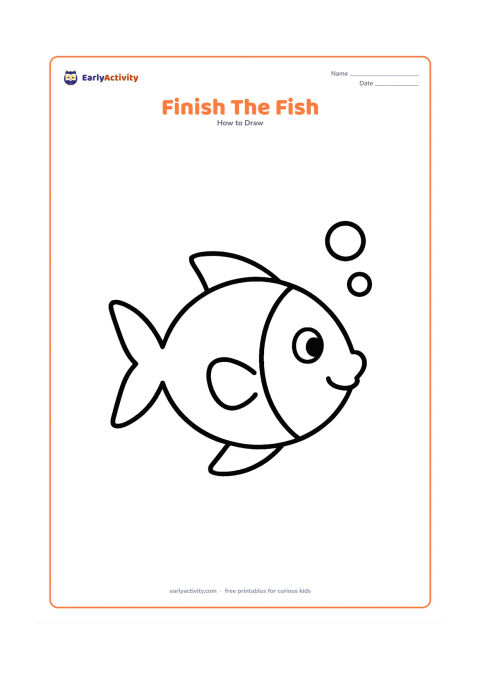
Show a large outlined fish with the body, tail, eye, and one fin already drawn, leaving the second fin as a simple empty attachment area to complete. Add two small bubbles and no other….
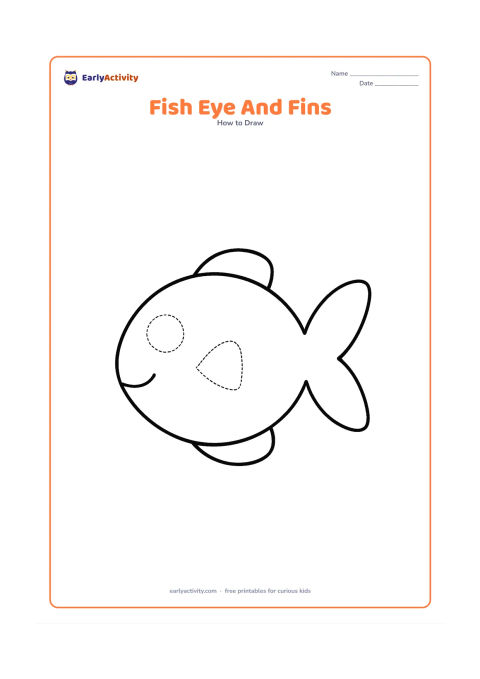
Show a big rounded fish body and tail with blank spaces where the eye and two fins should be added. Include faint circular and triangular guide shapes beside those spaces for children to….
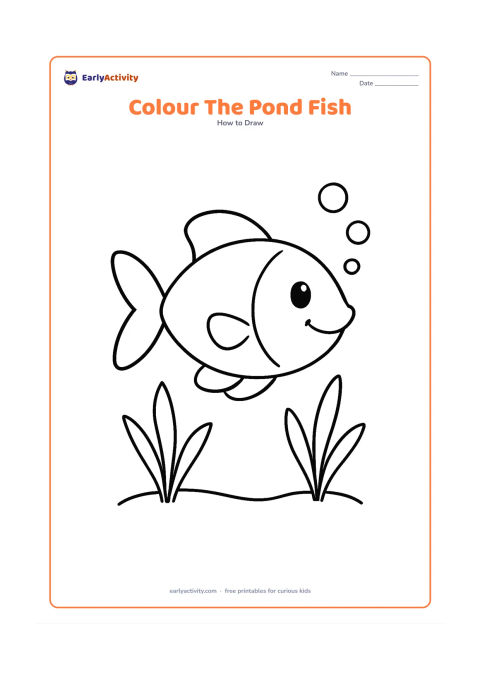
Show one large friendly fish with a bold outline swimming above two simple pond plants and three round bubbles. Keep the fish unpatterned so children can colour the body and fins freely.
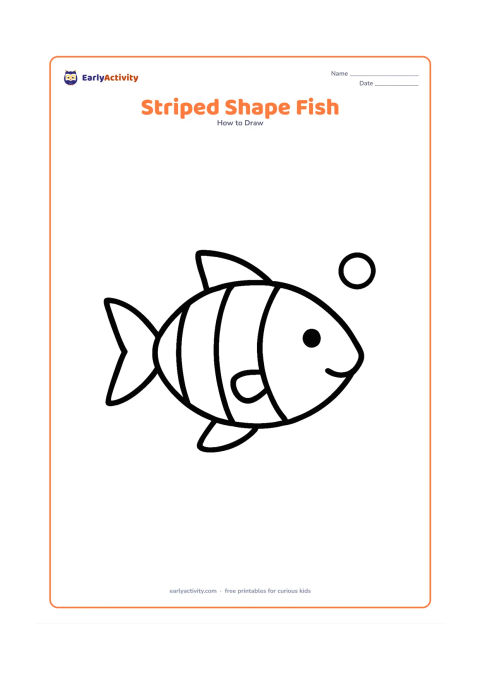
Show a large side-view fish with an oval body, triangle tail, two fins, and three wide curved stripe spaces. Add one small bubble and keep the surroundings empty.
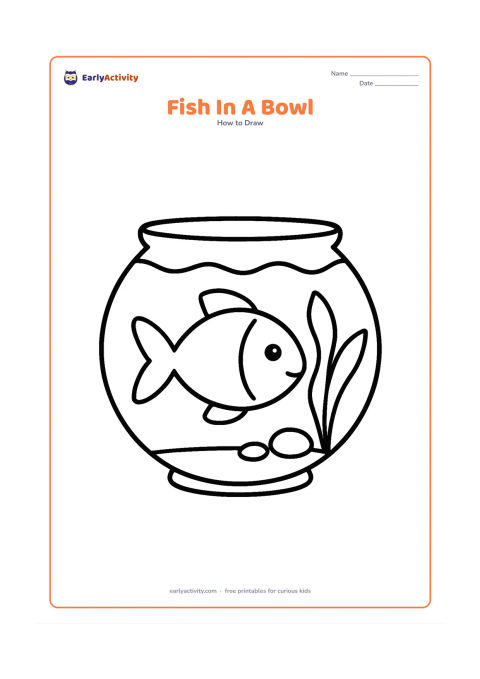
Show one large simple fish inside a round glass bowl with a curved water line, two pebbles, and one broad water plant. Use only clear, bold shapes.
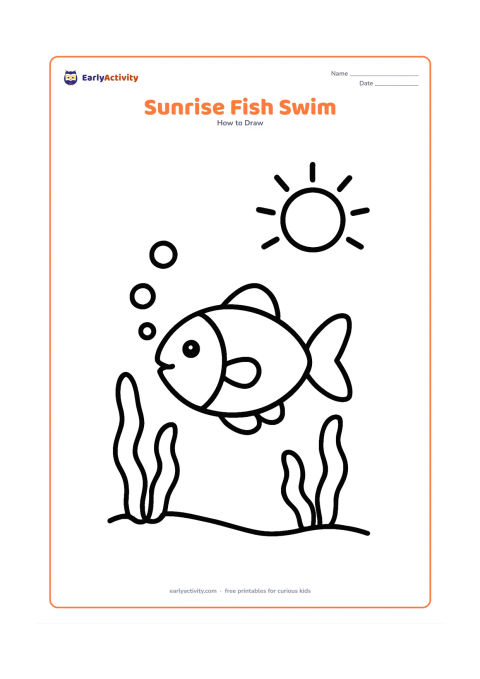
Show one large fish swimming toward the right beneath a simple rising sun, with three bubbles and two broad seaweed shapes. The fish should have a clear rounded body, tail, eye, and fins.
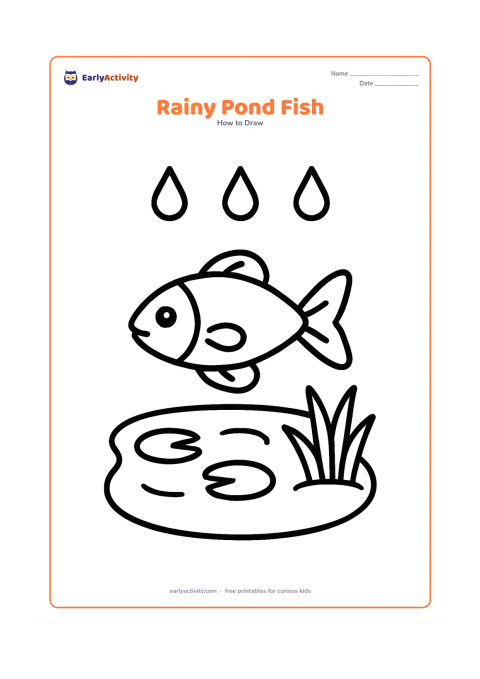
Show one large fish in a small pond beneath three simple raindrops, with two lily-pad shapes and one broad pond plant. Give the fish a clear body, tail, eye, and fins.
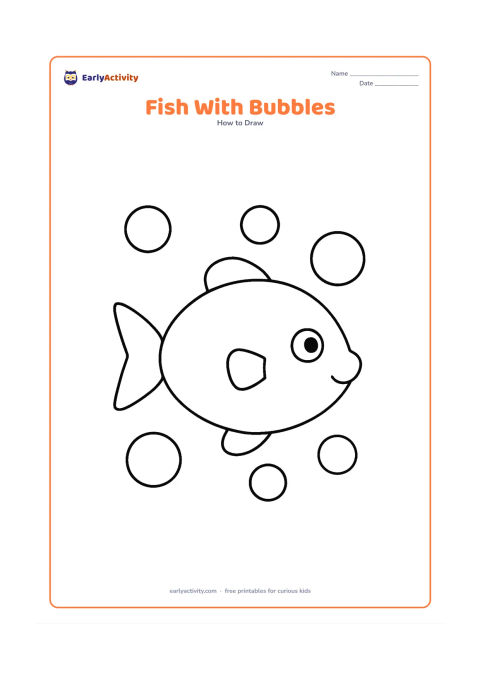
Show one very large side-view fish surrounded by five large round bubbles. Include a rounded body, triangle tail, one eye, and two simple fins, with no other background details.
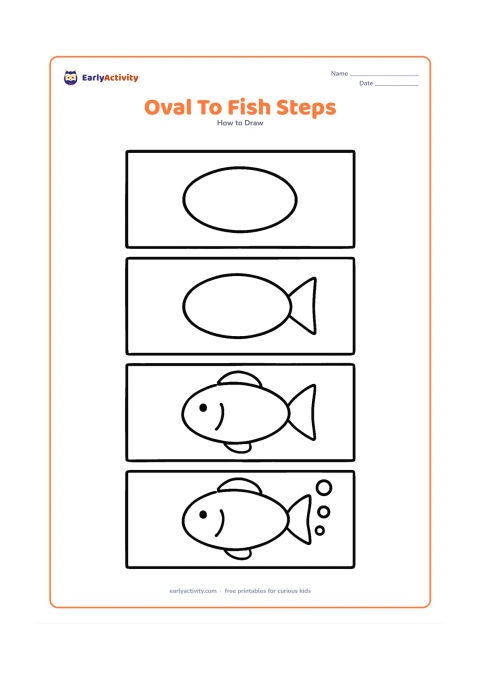
Arrange four large picture panels from left to right showing an oval, an oval with a tail, a fish with fins and an eye, and a finished fish with bubbles. Do not add labels or numbers to….
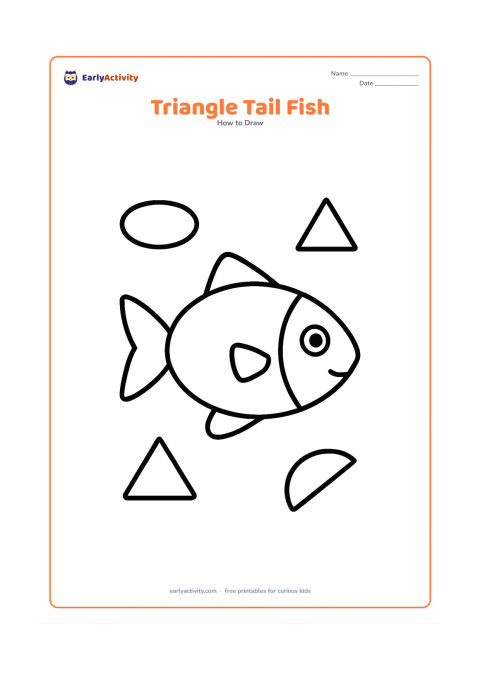
Show a medium-sized fish built from a rounded oval body, two triangular tail sections, two fins, and a round eye. Place a few separate oval, triangle, and curved-line practice shapes….
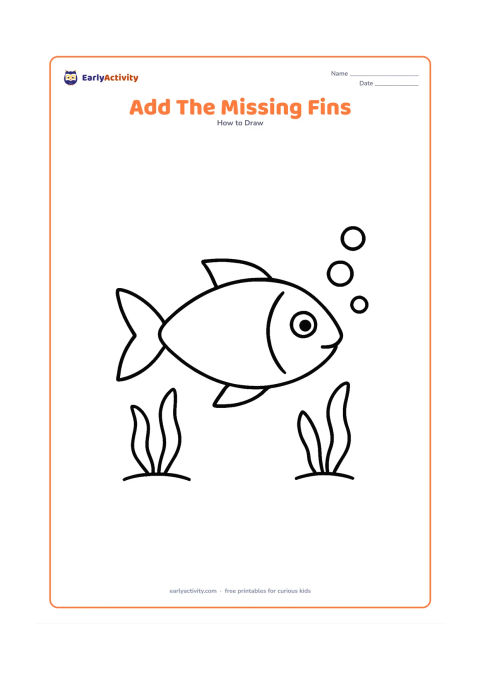
Show a side-view fish with its body, eye, tail, and gill line complete, but leave both fins as lightly indicated triangular gaps. Add two water plants and three bubbles behind the fish.
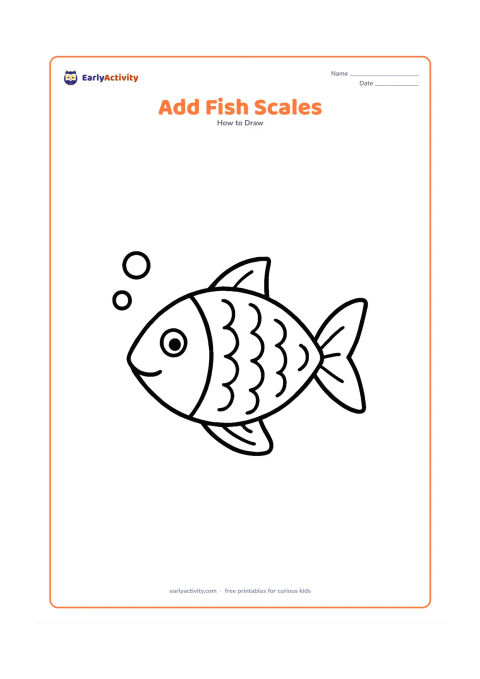
Show a finished side-view fish outline with eye, gill line, tail, and fins already present, leaving the body mostly open for children to add rows of overlapping curved scales. Include a….
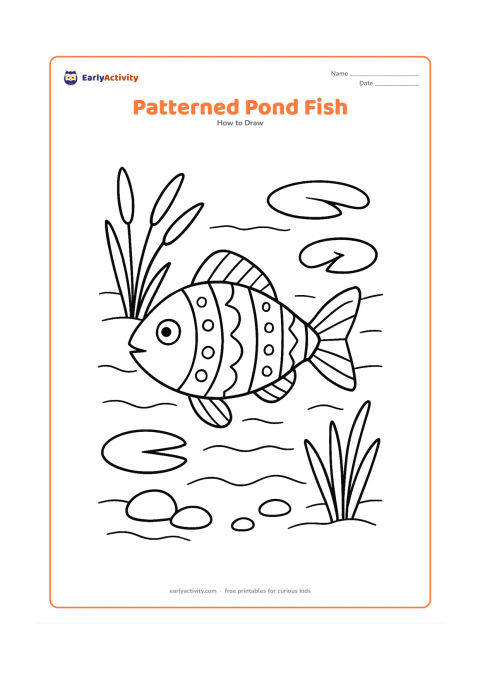
Show one fish swimming in a shallow pond with alternating stripes, round spots, and zigzag bands distributed across its body. Add reeds, lily pads, and a few pebbles around the fish.
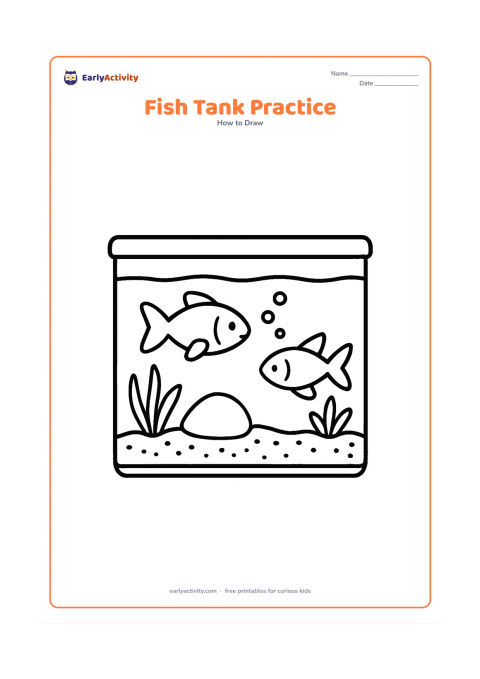
Show a rectangular home fish tank containing two differently shaped fish, a treasure-free smooth rock, two water plants, bubbles, and a curved gravel base. Keep the tank scene uncluttered.
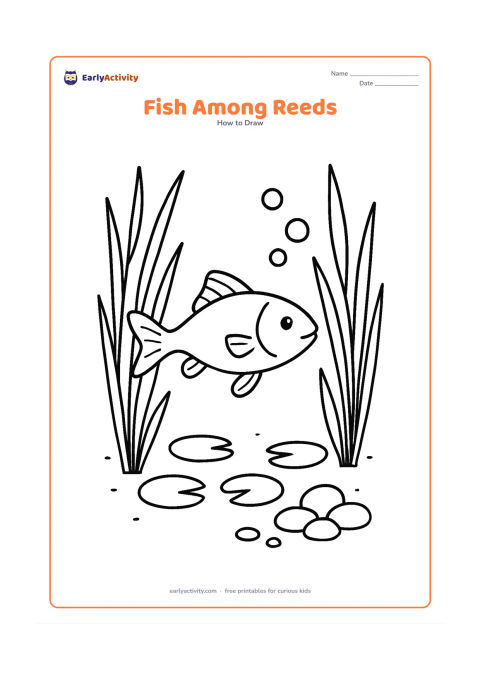
Show one fish swimming left through tall pond reeds, with a curved body line, spread fins, bubbles, three lily pads, and a small group of rounded stones. Use a clear side view.
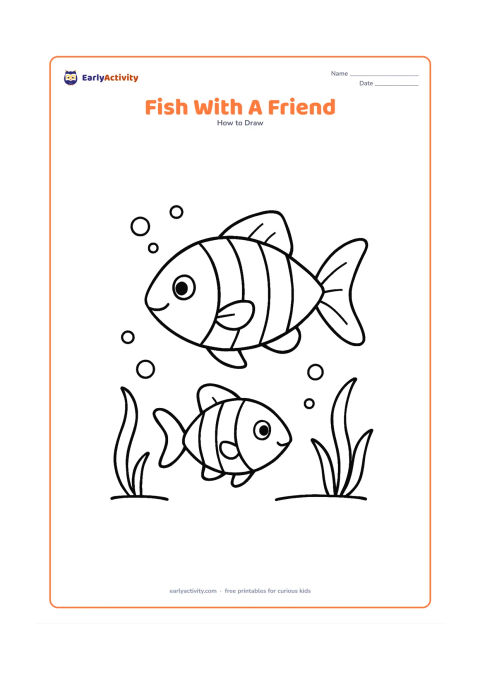
Show two fish swimming together in opposite directions, one larger and one smaller, with different tail shapes and simple stripe patterns. Add bubbles and two curved water plants in the….
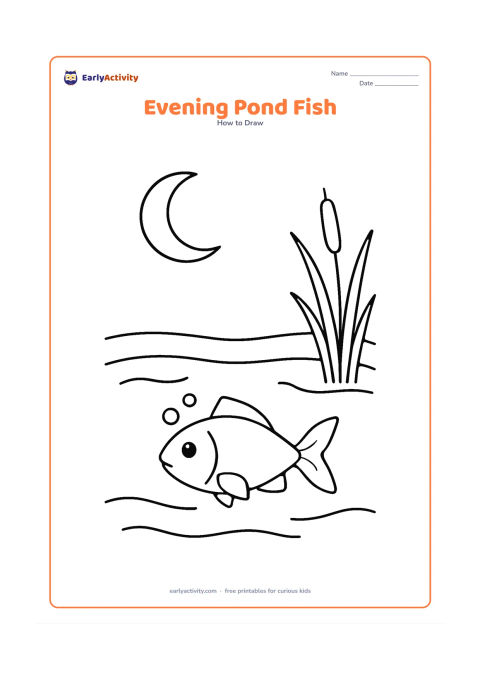
Show a fish swimming near the surface of a pond at evening, with a low crescent moon, two broad reeds, a few bubbles, and gentle curved water lines. The fish should have a clear body,….
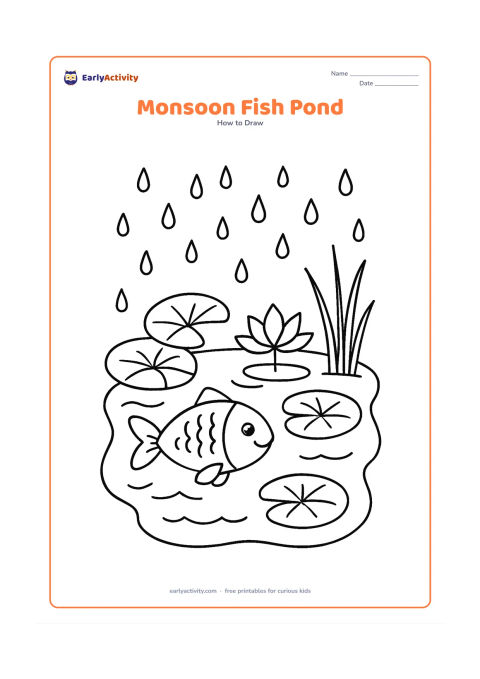
Show a small Indian-style garden pond during monsoon weather, with one fish below the water surface, lotus leaves, a simple lotus flower, reeds, and falling raindrops. Keep the fish as….
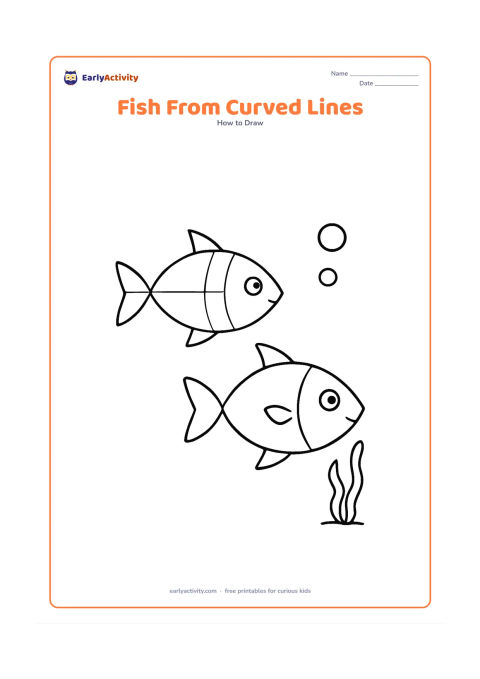
Show a large fish whose body, tail, fins, and gill are constructed from clearly separated curved and straight guide lines, followed by a clean finished outline beside it. Add two bubbles….
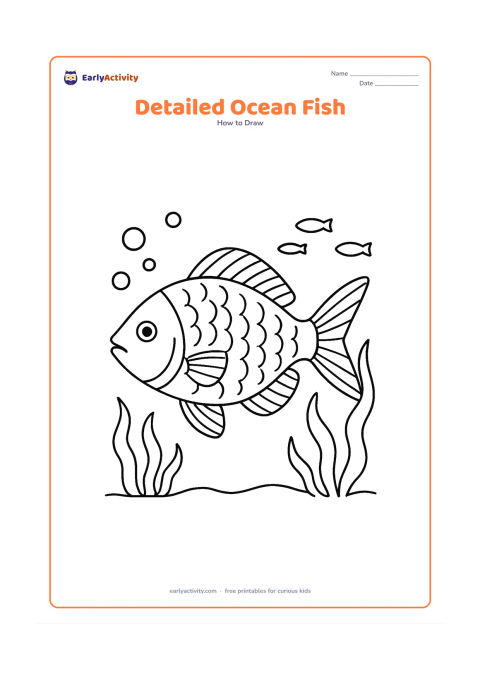
Show a side-view ocean fish with a carefully proportioned rounded body, forked tail, layered fins, gill cover, rows of scales, and subtle curved shading lines. Surround it with seaweed,….
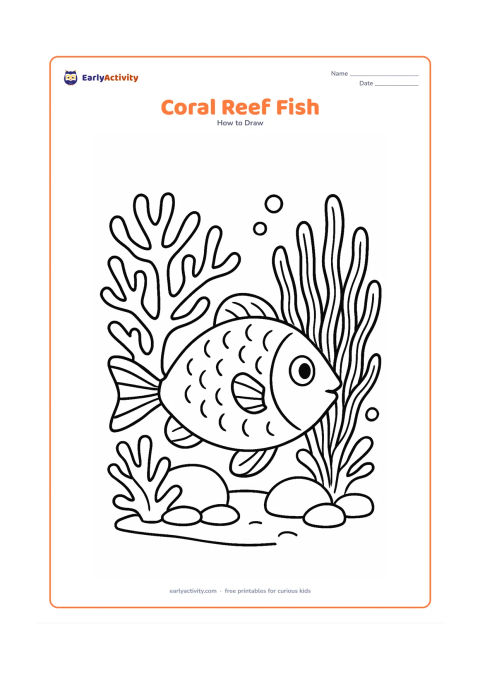
Show a detailed fish swimming beside branching coral, sea fans, small bubbles, and rounded reef stones. Give the fish an oval body, expressive fins, a patterned tail, scales, and several….
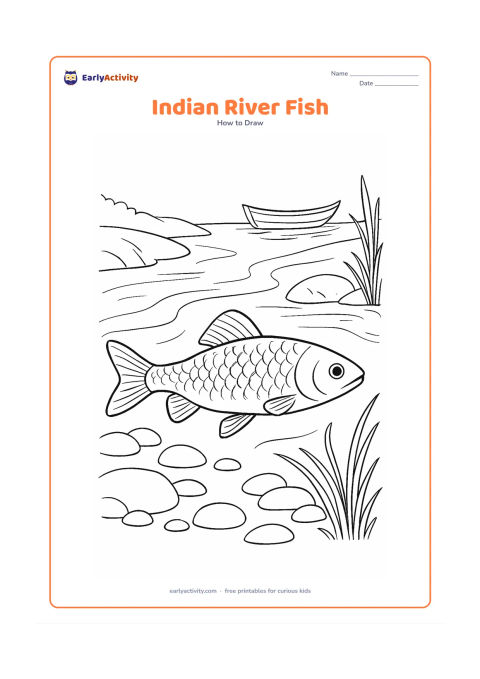
Show a detailed freshwater fish moving through an Indian river scene with smooth stones, river grass, a simple curved wooden boat in the far background, and soft current lines. Include….
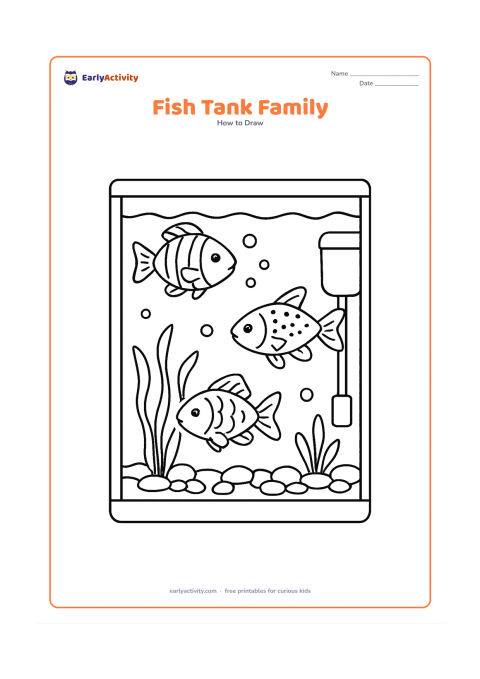
Show a detailed home aquarium with three different fish, each using a distinct body shape and pattern, along with aquatic plants, bubbles, smooth gravel, and a small filter shape. Keep….
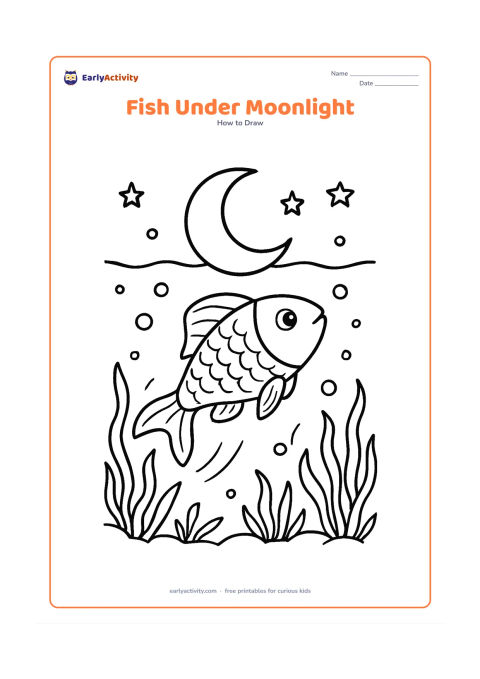
Show a detailed fish swimming upward at night beneath a large crescent moon seen through the water surface. Add layered water plants, bubbles, a few stars above the surface, scales, and….
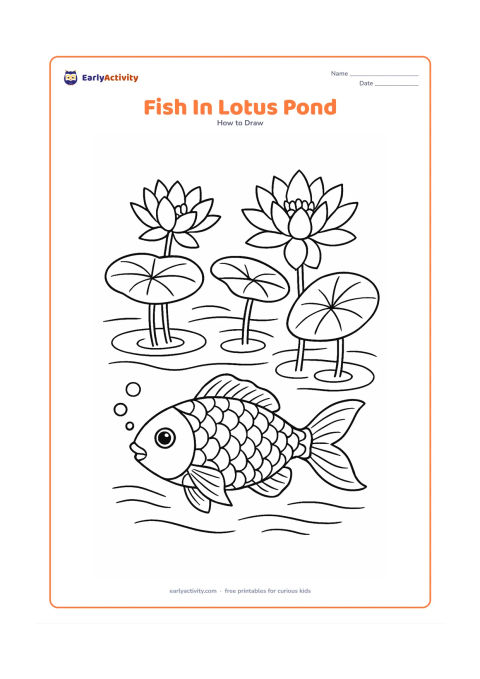
Show a detailed fish beneath a lotus pond surface with lotus leaves, two lotus flowers, long stems, rippling water, and a few small bubbles. Add careful scales, gills, fins, and a….
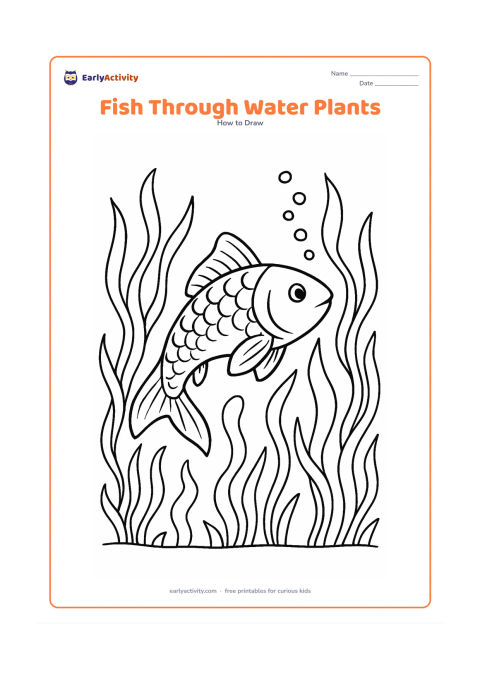
Show one detailed fish curving through dense but open water plants, with its body bent to suggest movement, fins angled in different directions, a patterned tail, scales, and a trail of….
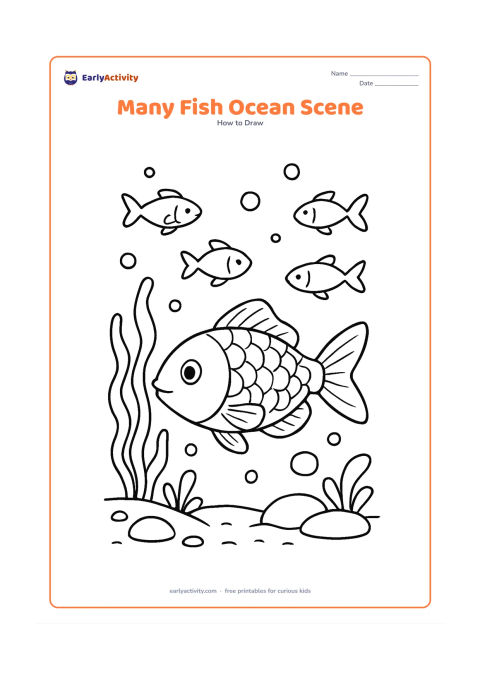
Show an underwater ocean scene with one large foreground fish and four smaller fish at different distances, plus seaweed, bubbles, a sandy bottom, and rounded stones. Give the foreground….
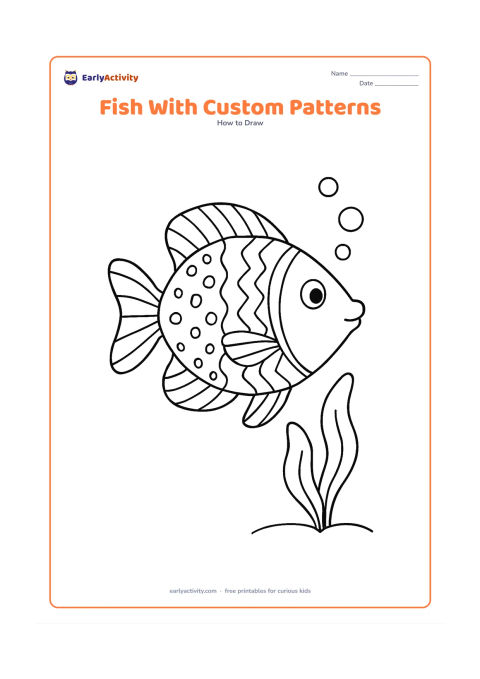
Show one large finished fish divided into open pattern areas containing broad stripes, spots, zigzags, curved bands, and a blank fin area for children to invent their own design. Add a….
This set takes children from simple fish outlines to more detailed drawing practice. Younger children can trace bold shapes, add an eye and colour a ready-made fish. Older children can follow step-by-step guides, draw fins and scales, add water plants, and create a fish with their own patterns. The activities use familiar shapes such as ovals, triangles and curved lines, so children can build the drawing one part at a time. Children who enjoy animal drawing may also like How to Draw an Elephant.
At home, begin with a short drawing session and let your child choose two or three colours for the fish and its surroundings. Keep the finished pictures together to make a small underwater gallery. In class, use the sheets for an art centre, an early-finisher task or a lesson about sea and freshwater animals. Ask children to draw a fish tank, pond or ocean background, then write one simple sentence about their picture. You can pair the activity with a short conversation about fins, tails, gills and how fish move through water.
Children often make the body too small for the tail, place the eye very close to the edge, or add scales before finishing the main outline. Show your child how to start with a large oval or rounded body, leave space for the tail, and add the fins after the body shape is clear. Encourage light pencil lines first, so unwanted marks can be changed. A fish does not need every scale or a perfectly straight line. For older children, ask them to notice the direction of the fins and use curved lines to show movement in the water.

Start with a large oval for the body, add a triangle or fan-shaped tail, and then draw the fins, eye and mouth. Simple shapes help children see how the fish is built.
First help your child finish the body outline. Then add small curved or overlapping lines in rows, leaving some open space so the picture does not become too dark.
Use a curved body line, angle the tail slightly and add bubbles, water plants or flowing lines around the fish. These details give the picture a sense of movement.
Yes. The printables are free to download with an EarlyActivity account. The PDFs are made for A4 and US Letter paper, and you can print them at Actual size, or 100%.
Yes. Older children can add shading, scales, patterns, water backgrounds and more than one kind of fish. They can also use the step guides as a starting point for an original underwater scene.
These how to draw a bird craft printables guide children through simple shapes, body parts, details and colouring. They suit children aged 4 to 12 and are free to print for home or classroom use.
These butterfly drawing craft printables guide children through simple shapes, wing patterns and colouring ideas. They suit children aged 4 to 12 and are free to print for use at home or in your own classroom.

These how to draw a car craft printables guide children through simple shapes, outlines and drawing details. They suit children aged 4 to 12 and are free to print for use at home or in your own classroom.
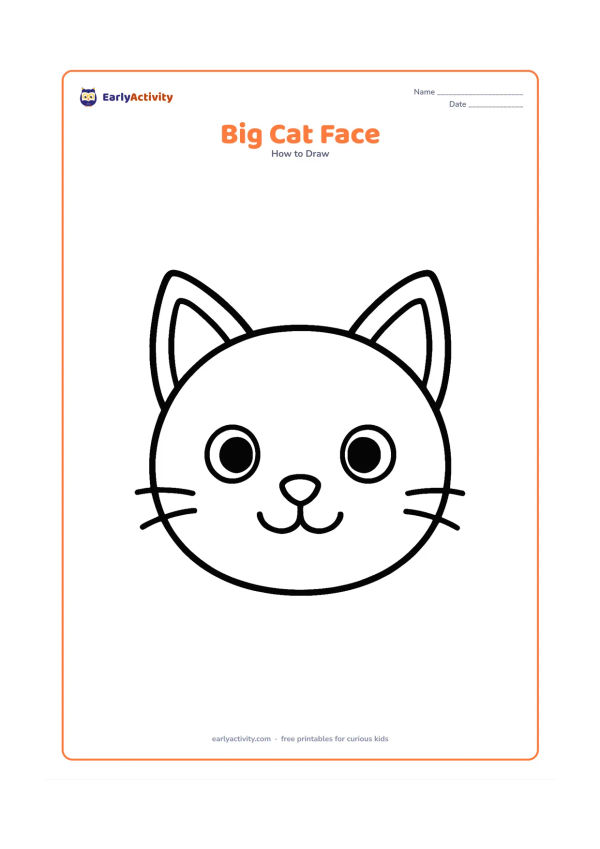
These how to draw a cat craft printables help children aged 4 to 12 practise simple shapes, lines and details while drawing cats. They are free to print for use at home or in your own classroom.
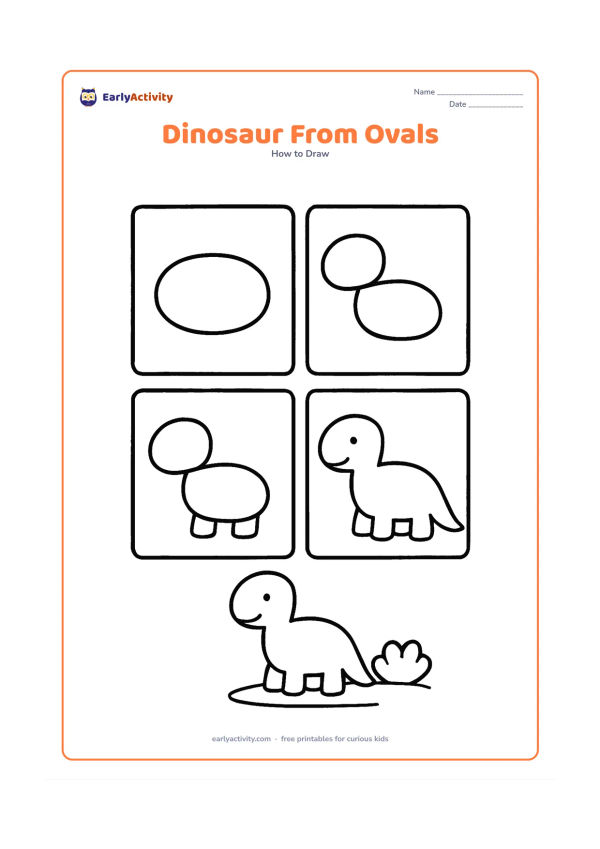
These how to draw a dinosaur craft printables help children aged 4 to 12 build a dinosaur picture one simple step at a time. They are free to print and suit drawing practice at home, in Nursery and primary classrooms, or during a dinosaur-themed activity.
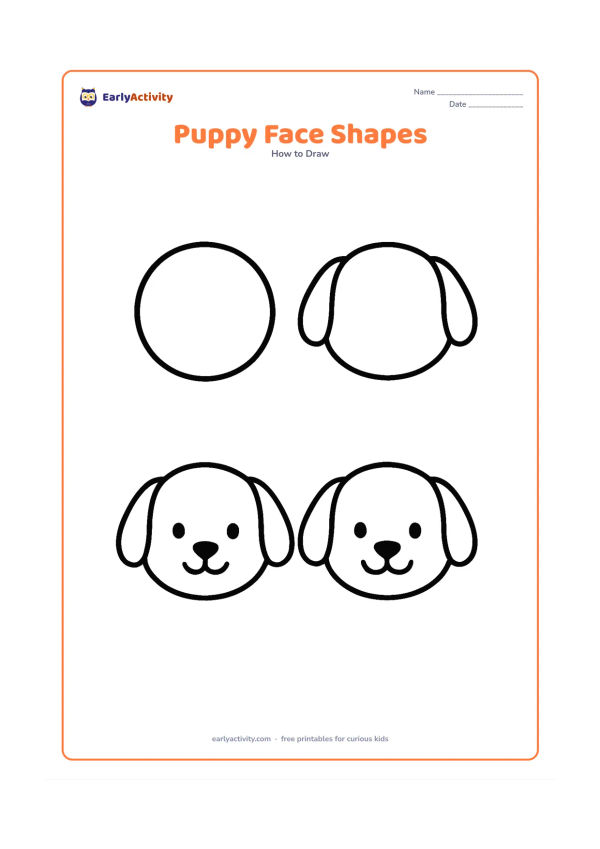
These how to draw a dog craft printables help children aged 4 to 12 build a dog picture step by step, from simple shapes to added details. They are free to print and suit quiet home practice, art time or classroom work.