
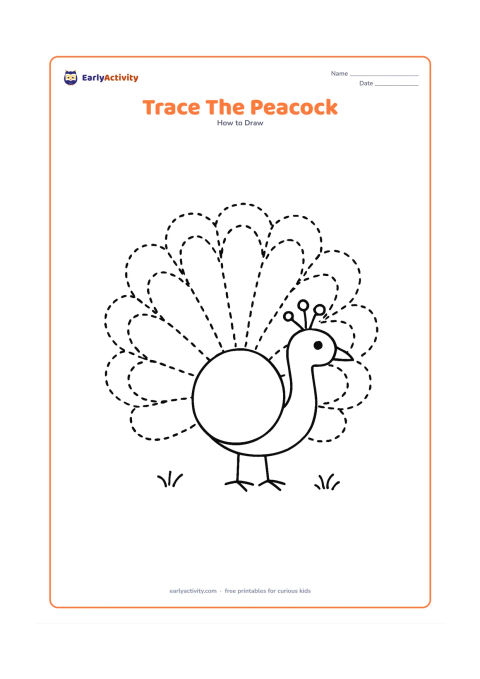
Trace The Peacock
A large peacock made from a round body, curved neck, simple head and wide fan tail, with dotted tracing outlines around each main shape. Leave generous blank space around the bird and….
هذه الصفحة غير متوفرة باللغة العربية بعد — نعرضها بالإنجليزية.
These how to draw a peacock craft printables guide children through simple shapes, lines and details to make their own peacock pictures. They suit children aged 4 to 12 and are free to print for home or classroom use.
يلزم حساب مجاني للتنزيل · 20 تنزيلًا مجانيًا كل يوم
A large peacock made from a round body, curved neck, simple head and wide fan tail, with dotted tracing outlines around each main shape. Leave generous blank space around the bird and….
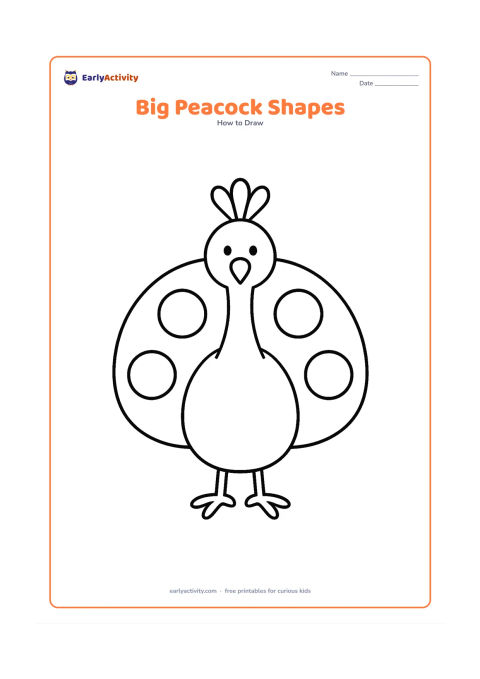
A front-facing peacock assembled from a large oval body, tall curved neck, circle head, simple crest and broad semicircle tail. Show the main shapes as separate bold outlines with three….
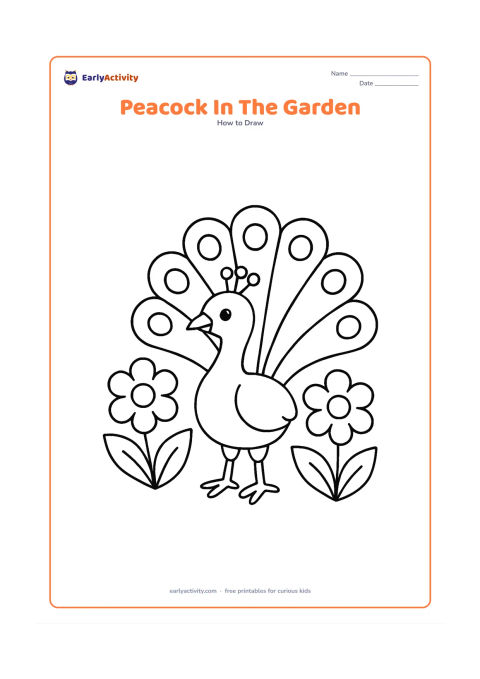
A standing peacock with a rounded body, curved neck and open fan tail beside two large flowers and three broad leaves. Place the bird centrally with the plants low on both sides.
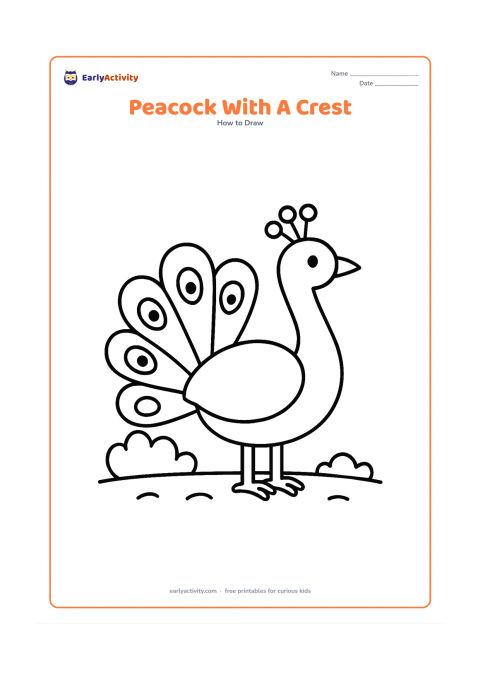
A side-view peacock standing proudly, built from a large circle body, curved neck, small beak, three-part crest and short legs. Add one large bush behind the tail and a few simple ground….
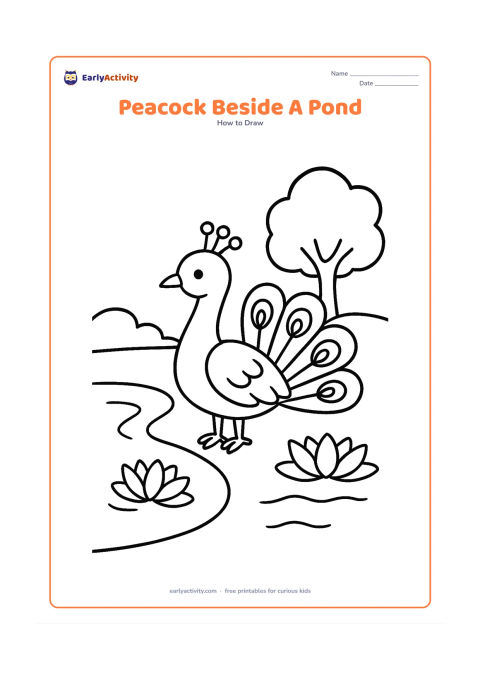
A simple peacock with a partly open tail standing beside a small pond. Include two large water lilies, a curved shoreline and one rounded tree in the distance.
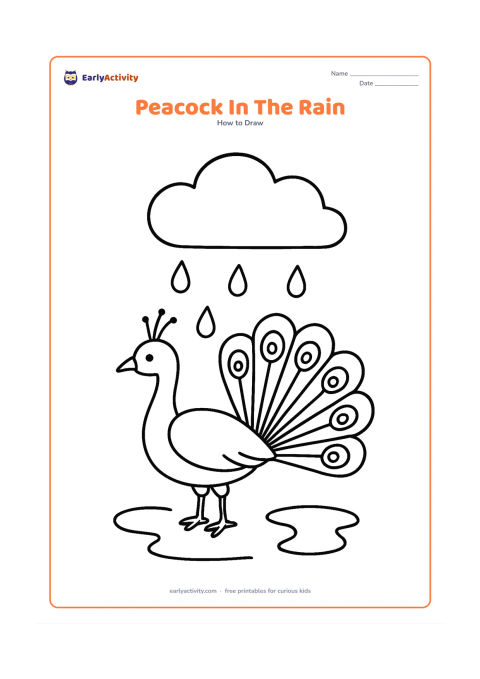
A peacock with its fan tail raised beneath one large cloud, with a few widely spaced raindrops and two puddle curves on the ground. The bird faces left with its neck gently curved.
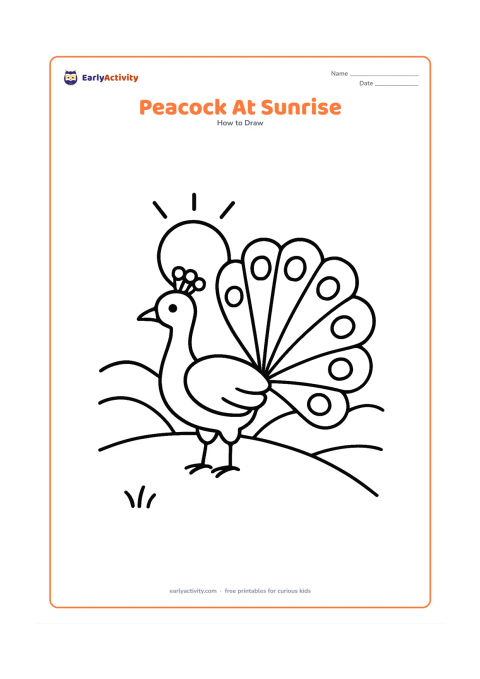
A side-view peacock stands on a low hill with a round sun behind its open tail. Add three simple rays, two distant hills and a short line of grass.
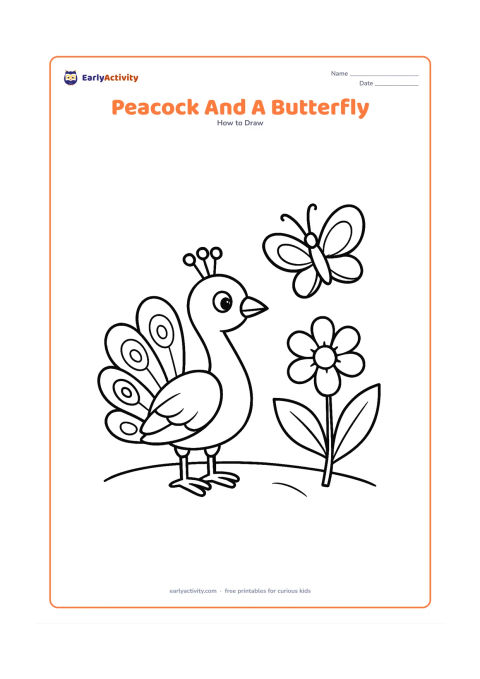
A simple standing peacock with a half-open tail looks toward one large butterfly above a flower. Add two broad leaves and a curved ground line.
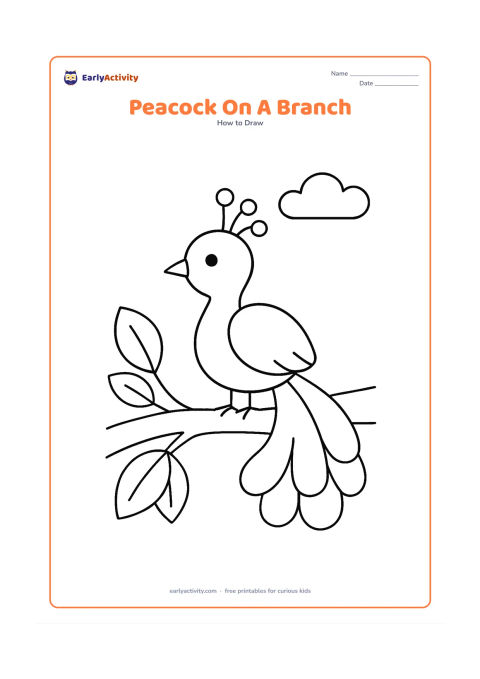
A small peacock balances on a thick, low branch, with its tail hanging in a rounded fan below it. Add two large leaves and one simple cloud in the background.
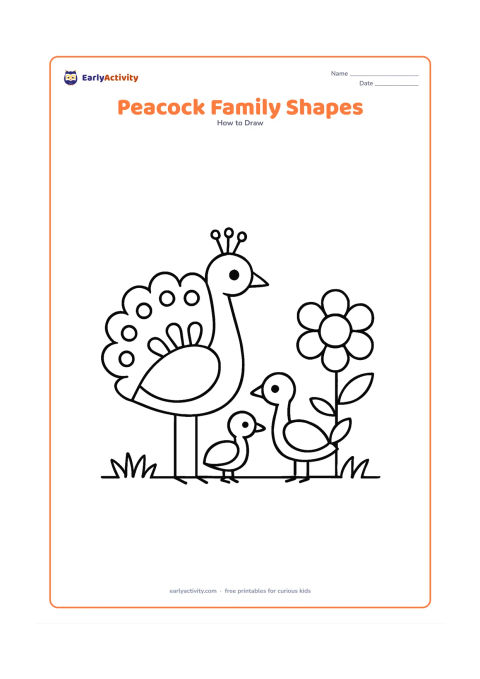
One large adult peacock stands beside two smaller peafowl, all made from simple circles, ovals, curved necks and fan shapes. Place them on a grassy line with one large flower.
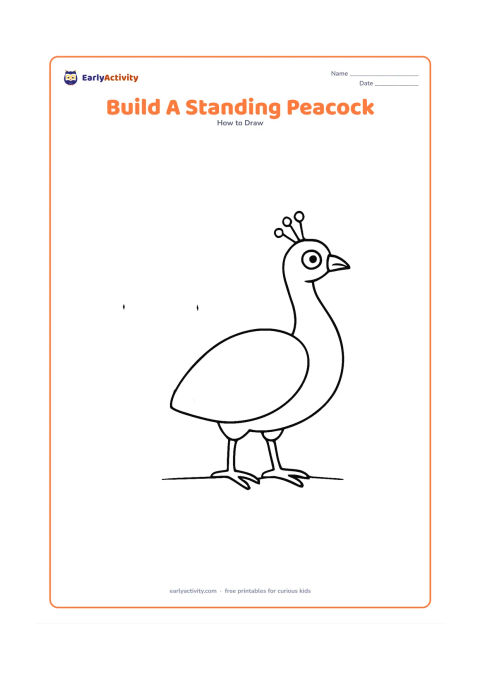
A standing peacock is shown as a guided drawing with lightly separated oval, circle and curved-line construction shapes leading to a finished body, neck, head, crest and tail. Place the….
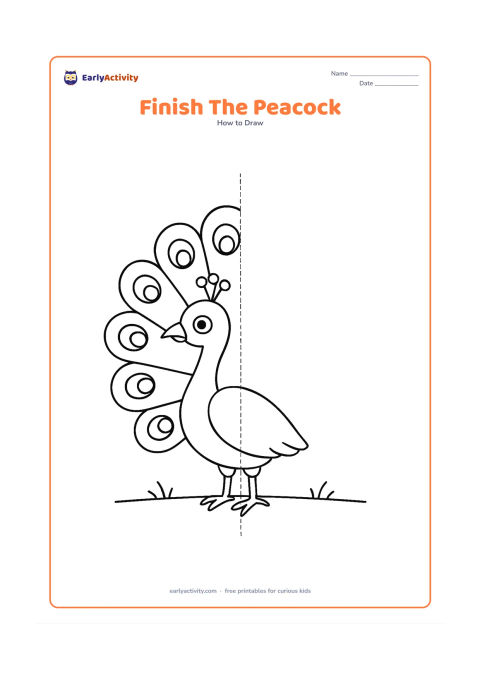
Show the left half of a peacock with its body, neck and half of the fan tail complete, while the right half is left open for the child to finish. Add a central vertical symmetry guide….
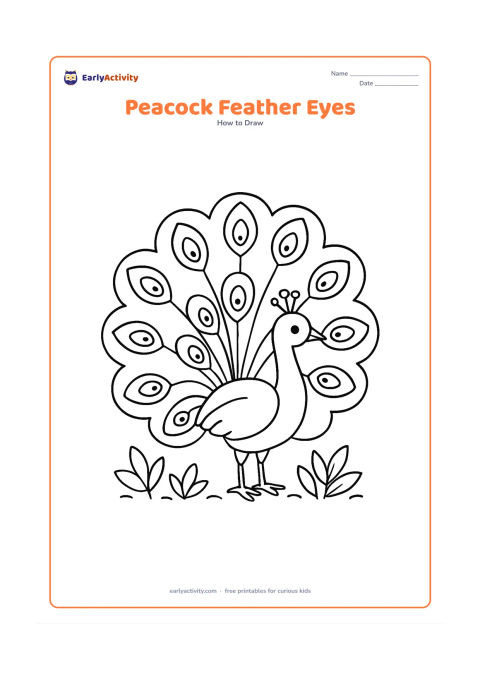
A peacock faces right with a wide open fan tail containing several large outlined feather eyes, each built from nested almond and oval shapes. Add a small garden border of leaves beneath….
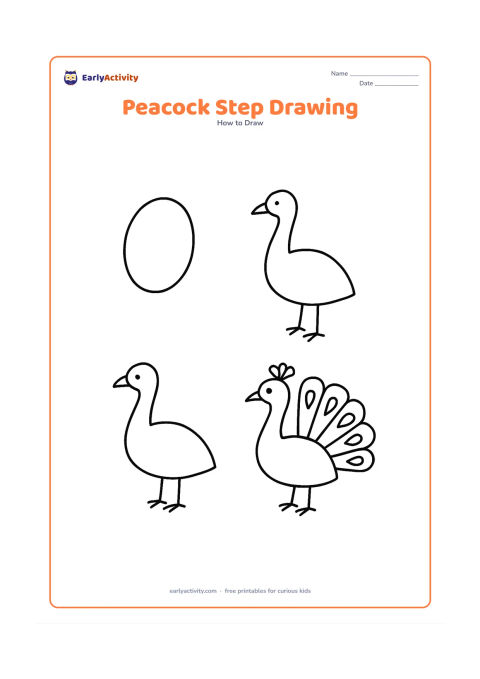
Arrange four separate drawing stages from basic body oval and neck curve to a finished standing peacock with crest, feet and fan tail. Each stage shows only shapes and lines, with no….
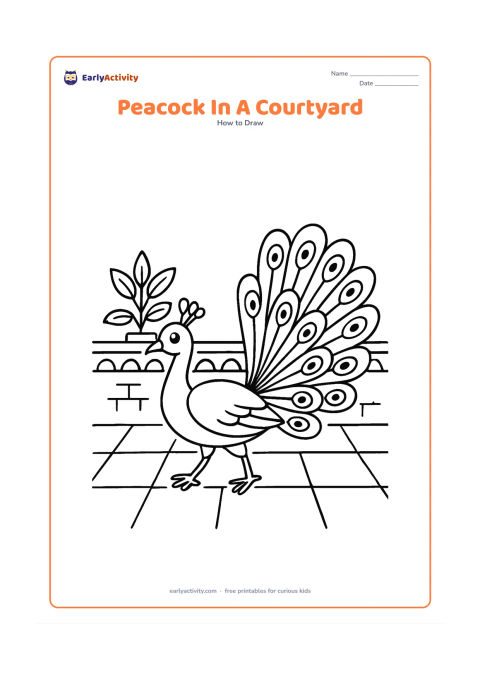
A peacock walks across an Indian home courtyard with its tail partly open. Include a low patterned wall, a clay pot with a leafy plant and simple floor tiles behind and below the bird.
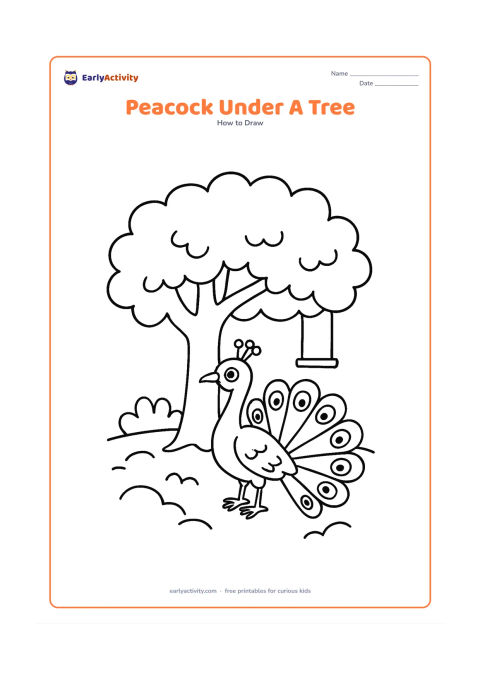
A peacock stands beneath a broad tree canopy with its tail fanned toward the viewer. Add a thick trunk, several large leaves, scattered ground curves and a small hanging bird-free swing….
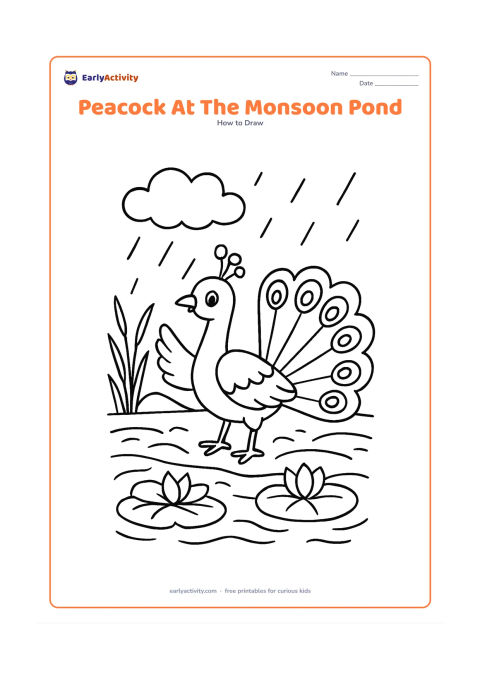
A peacock raises one wing beside a pond during light monsoon rain, with lotus leaves, reeds, a cloud and a distant low hill. Its open tail arcs behind the body.
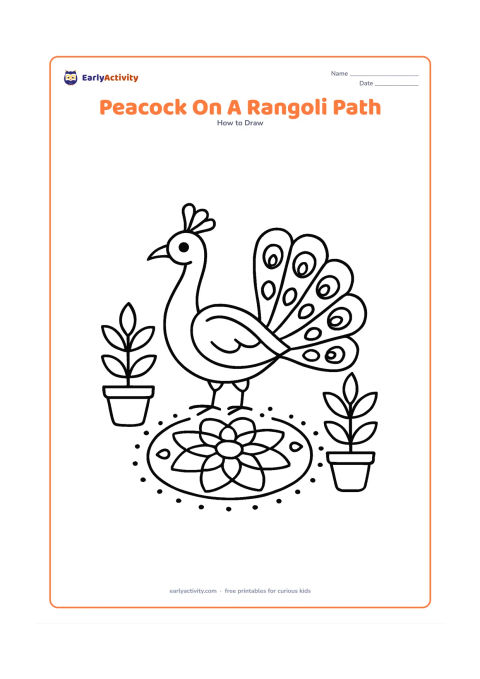
A standing peacock is framed by a simple unfilled rangoli of dots and petals on the ground, with two potted plants on either side. The bird has a curved neck, crest and broad patterned tail.
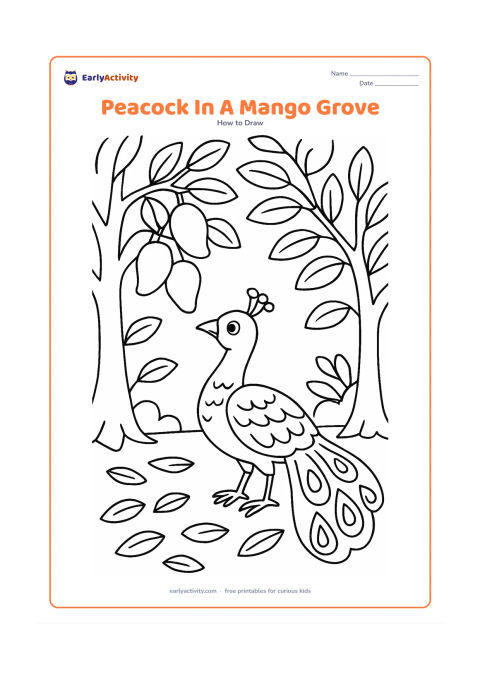
A peacock walks through an Indian mango grove, looking toward a low branch with several mangoes. Include two trunks, large leaves, fallen leaves and a partly open tail.
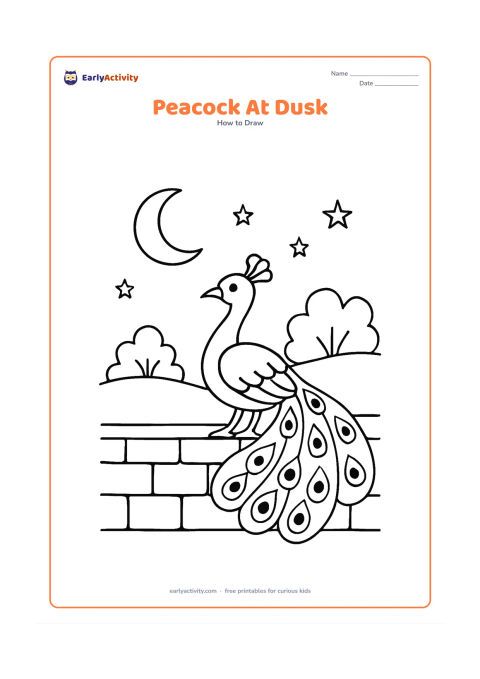
A peacock perches on a low stone wall at dusk with a crescent moon, a few stars, distant trees and an open tail behind it. The bird's silhouette and curved neck should remain easy to….
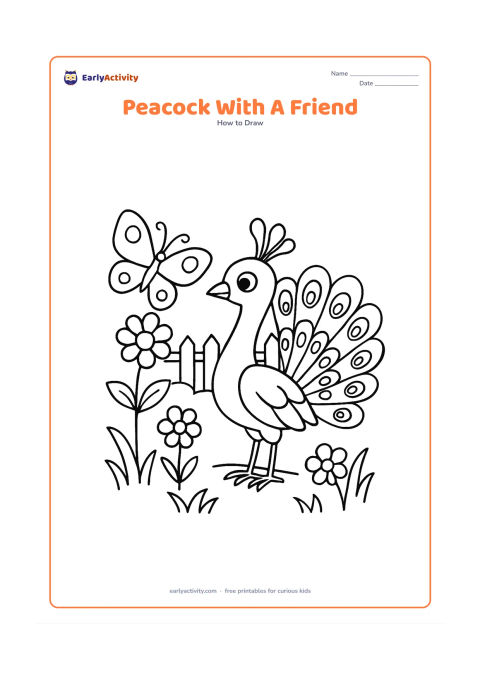
A peacock stands beside a butterfly on a flower stem, with its tail spread behind it. Add curved grass, three flowers and a distant garden fence, leaving space around each subject.
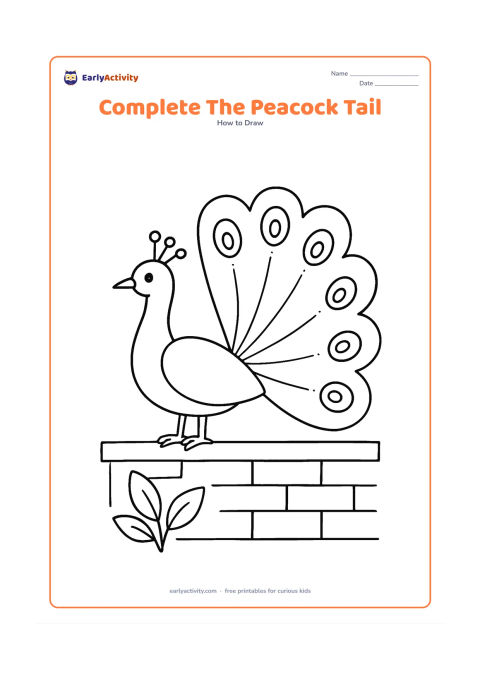
A peacock body and neck are complete while the wide fan tail has several missing outer feathers and feather eyes for the child to draw. Place the bird on a low garden wall with two….
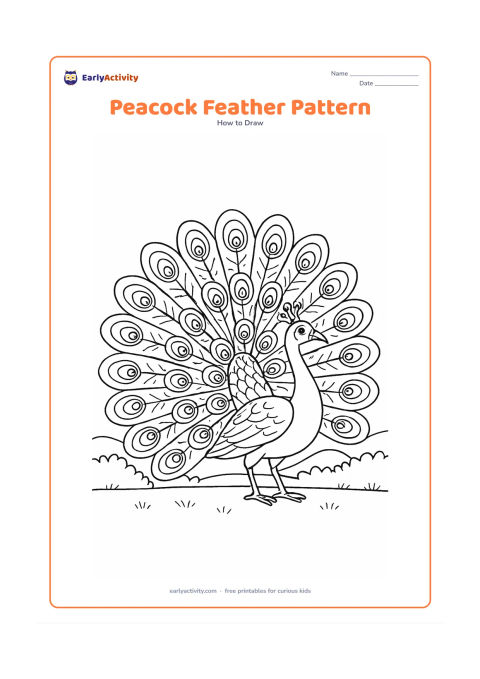
A full side-view peacock with a large open tail is divided into many clear feather sections, each containing layered eye shapes, curved lines and small decorative dots. Add a low hedge….
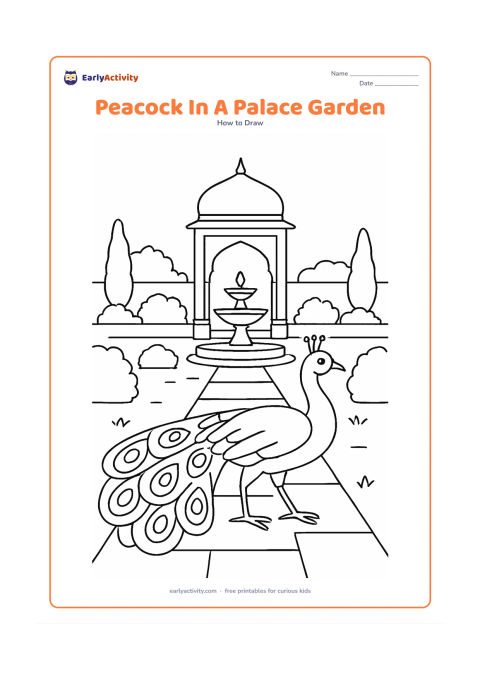
A peacock walks through a formal Indian palace garden with a domed arch, balanced shrubs, stone paving and a fountain in the background. Its tail is partly open and overlaps the garden path.
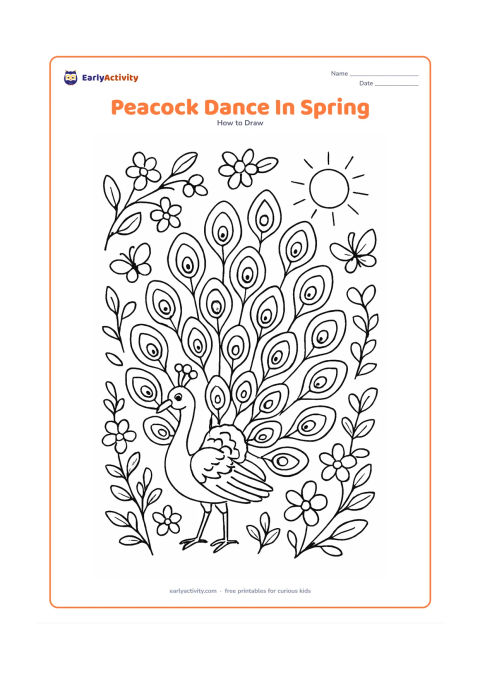
A peacock spreads both wings and fans its tail in a spring garden filled with flowering branches, butterflies, fresh leaves and a distant sun. Show the curved body and neck clearly….
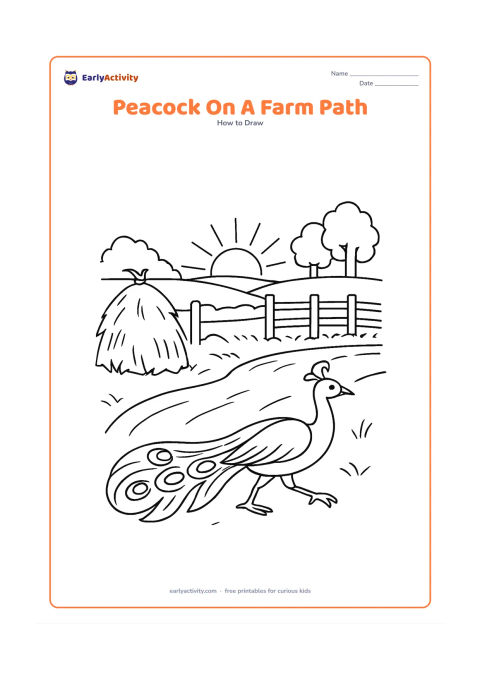
A peacock walks along a rural Indian farm path beside a low field, hay bundle and simple wooden fence. Add distant trees, a rising sun and a long tail trailing behind the moving bird.
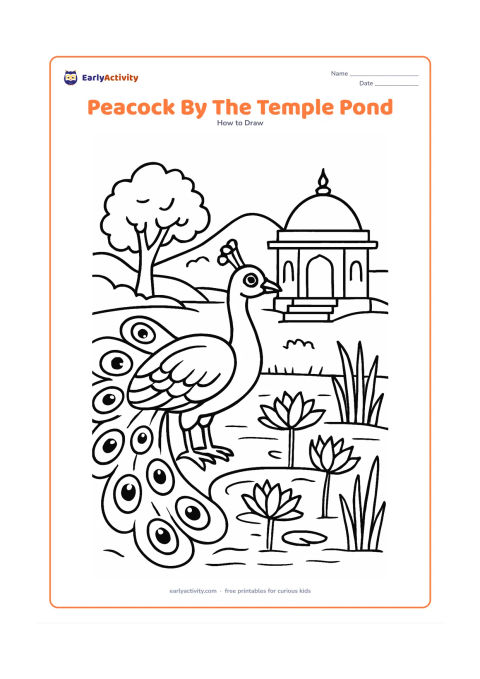
A peacock stands beside a lotus pond near a small Indian temple with steps, a tree and distant hills. The tail opens over the pond edge, with lotus flowers, reeds and several feather eyes.
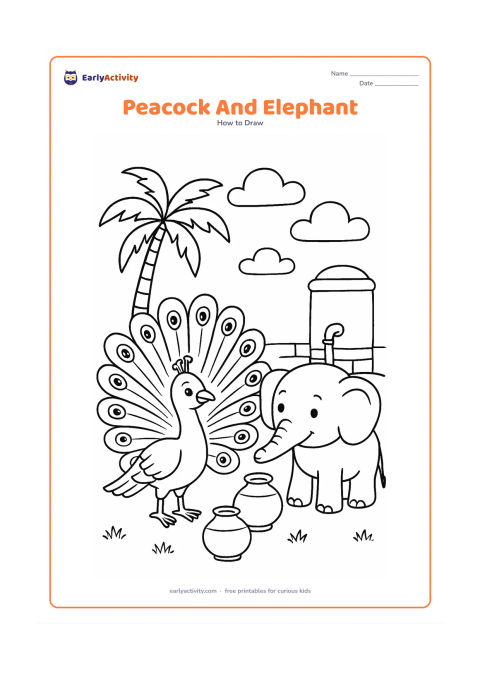
A peacock with an open tail stands beside a friendly small elephant near a village water tank. Include a palm tree, a low wall, simple pots and a few broad clouds in the background.
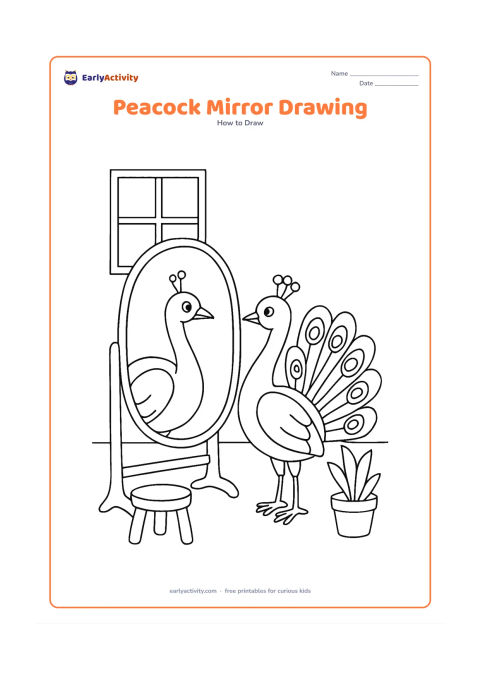
A peacock is shown beside a standing mirror, with the bird's reflection repeating its curved neck, crest and fan tail. Place the scene in a simple room with a window, low stool and….
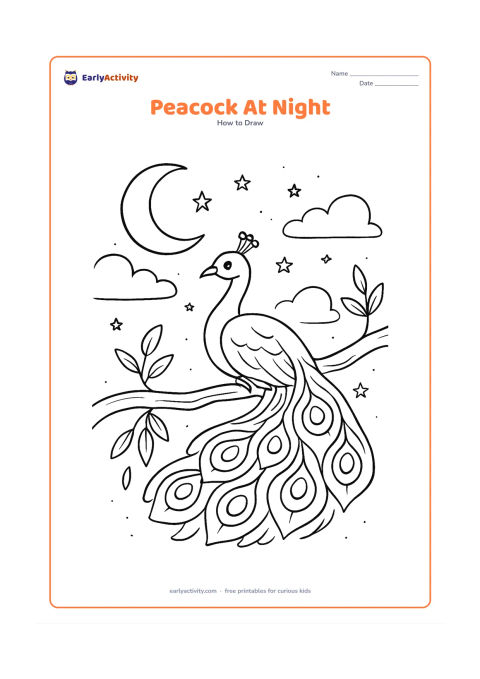
A peacock rests on a tree branch beneath a starry night sky, with a large moon, layered clouds, hanging leaves and a softly opened tail. The curved neck and crest remain clearly visible….
The set includes guided drawing sheets with clear steps for making a peacock from simple shapes. Younger children can trace bold lines, add colour and practise drawing the round body, curved neck and fan-shaped tail. Older children can follow lighter guides, add feather eyes, and create their own background. Some sheets focus on the whole bird, while others give children space to repeat a shape or finish an incomplete picture. The activities work well for Nursery, LKG, UKG and primary classes, with an adult choosing the level that suits each child.
At home, read each step aloud and let your child draw one part at a time before colouring. Place a finished picture near a mirror or window and ask your child to name the shapes used in the drawing. In class, use the sheets for an art centre, a bird-themed display or a short warm-up before a lesson about birds in India. Children can compare tail patterns without copying one another. Pair this activity with How to Draw an Elephant or How to Draw a Butterfly for a simple animal drawing folder.
Children often make the body too small for the large tail, place the neck at an awkward angle, or fill the tail with lines before planning the feather shapes. Help by asking them to start with light circles and curves, then check the size of the tail before adding details. A peacock does not need every feather to look identical. Show your child how to repeat a simple eye shape across the tail, leave small spaces between feathers, and use darker lines only after the main drawing looks right.

Start with the body, add the curved neck and head, then draw the wide tail behind the body. Finish with the crest, feet and repeated eye shapes on the feathers.
Children can use an oval for the body, a small circle for the head, curved lines for the neck and long rounded shapes for the tail feathers. These shapes make the drawing easier to plan.
Give the child a sheet with bold outlines or light tracing guides. Let them focus on the main body and fan-shaped tail before adding small feather details.
Add feather eyes, a small crest, curved lines on the neck and a simple garden or outdoor background. Older children can use repeated patterns and plan the colour arrangement first.
Download the free PDF after signing in to your free EarlyActivity account, then print it at Actual size, or 100 percent. The files are made for A4 and US Letter paper.
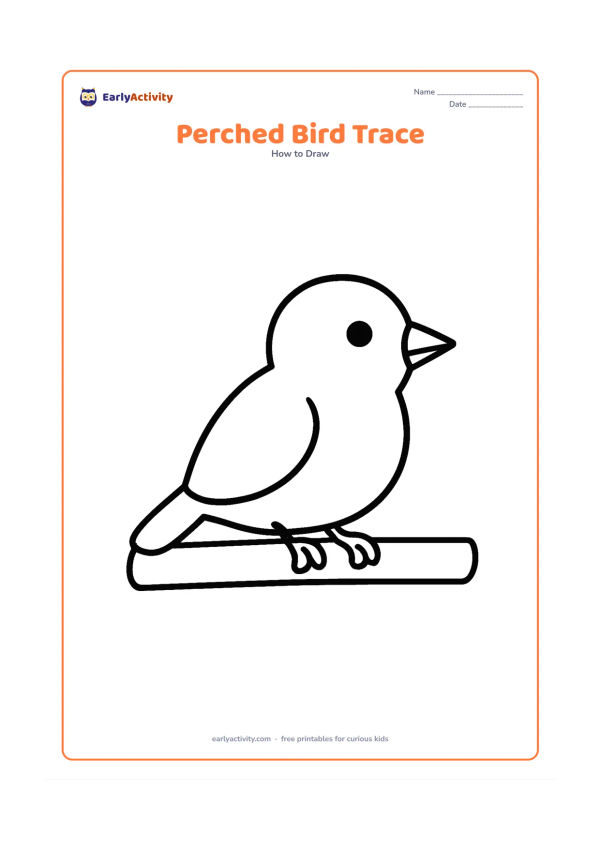
These how to draw a bird craft printables guide children through simple shapes, body parts, details and colouring. They suit children aged 4 to 12 and are free to print for home or classroom use.
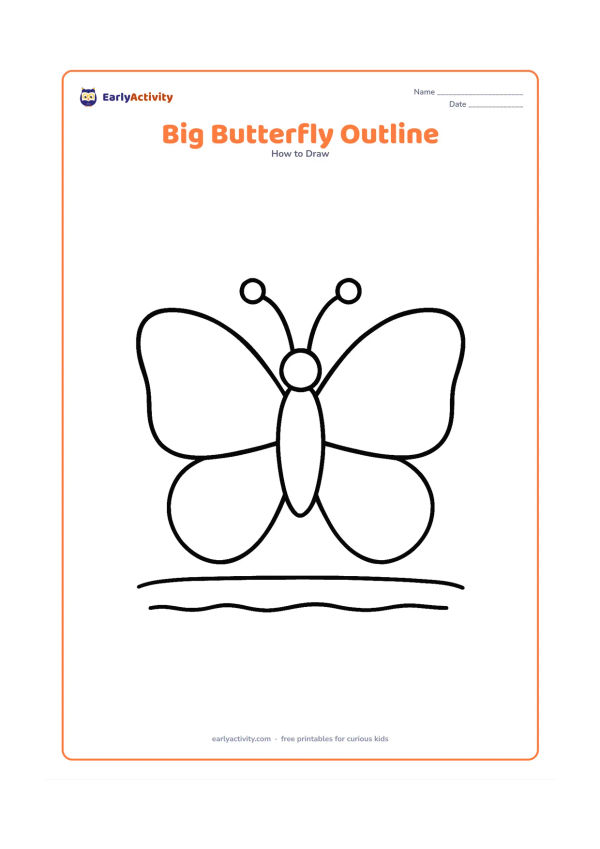
These butterfly drawing craft printables guide children through simple shapes, wing patterns and colouring ideas. They suit children aged 4 to 12 and are free to print for use at home or in your own classroom.
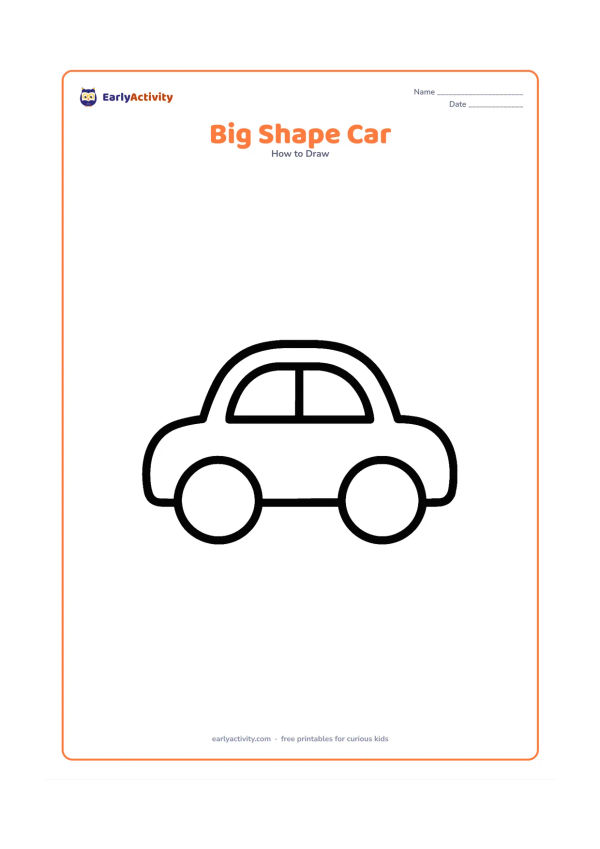
These how to draw a car craft printables guide children through simple shapes, outlines and drawing details. They suit children aged 4 to 12 and are free to print for use at home or in your own classroom.
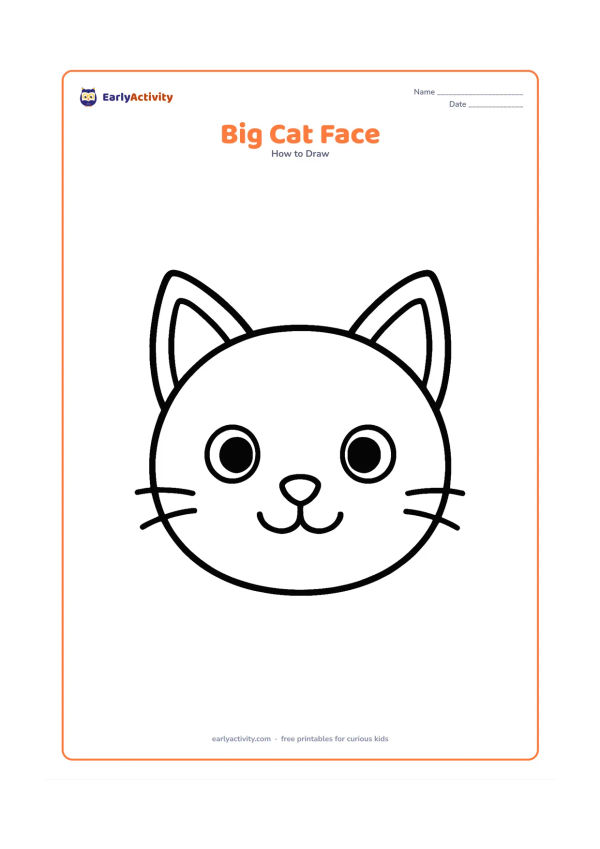
These how to draw a cat craft printables help children aged 4 to 12 practise simple shapes, lines and details while drawing cats. They are free to print for use at home or in your own classroom.
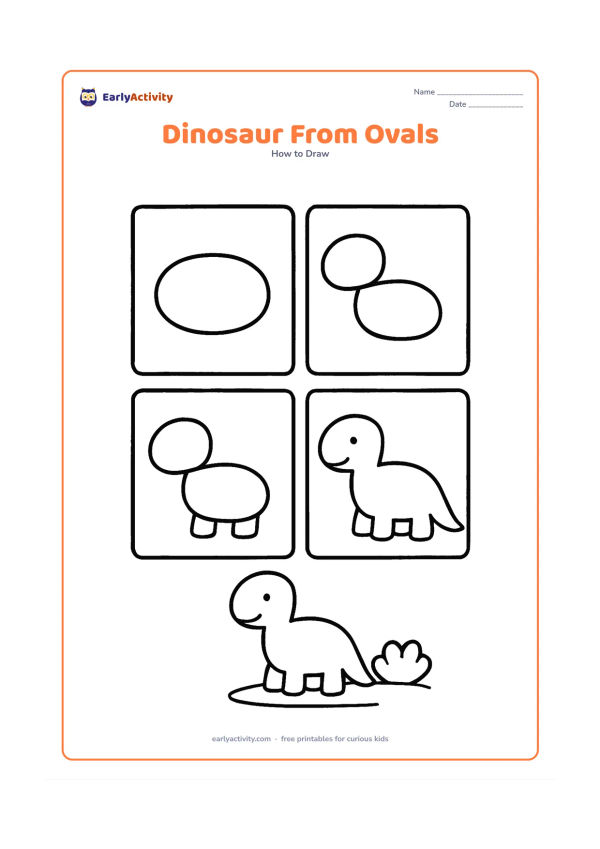
These how to draw a dinosaur craft printables help children aged 4 to 12 build a dinosaur picture one simple step at a time. They are free to print and suit drawing practice at home, in Nursery and primary classrooms, or during a dinosaur-themed activity.
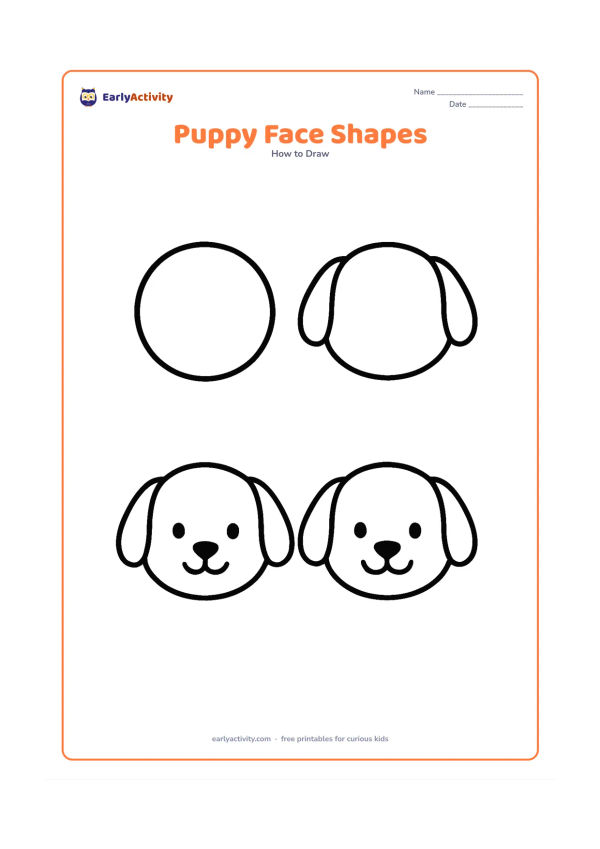
These how to draw a dog craft printables help children aged 4 to 12 build a dog picture step by step, from simple shapes to added details. They are free to print and suit quiet home practice, art time or classroom work.