
Cow In The Shed
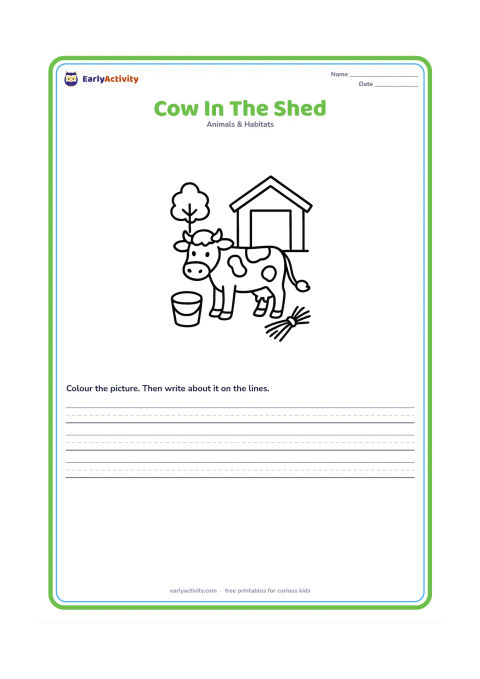
Draw one friendly cow standing beside a simple rural Indian cowshed, with a water bucket, hay bundle and a small tree behind it. Use a large side view with clear spaces around the cow….
هذه الصفحة غير متوفرة باللغة العربية بعد — نعرضها بالإنجليزية.
These animals worksheets help children aged 3 to 8 learn about familiar animals through colouring, matching, sorting and simple EVS tasks. They are free to print and suitable for home practice, nursery, LKG, UKG and primary classrooms.
يلزم حساب مجاني للتنزيل · 20 تنزيلًا مجانيًا كل يوم
Draw one friendly cow standing beside a simple rural Indian cowshed, with a water bucket, hay bundle and a small tree behind it. Use a large side view with clear spaces around the cow….
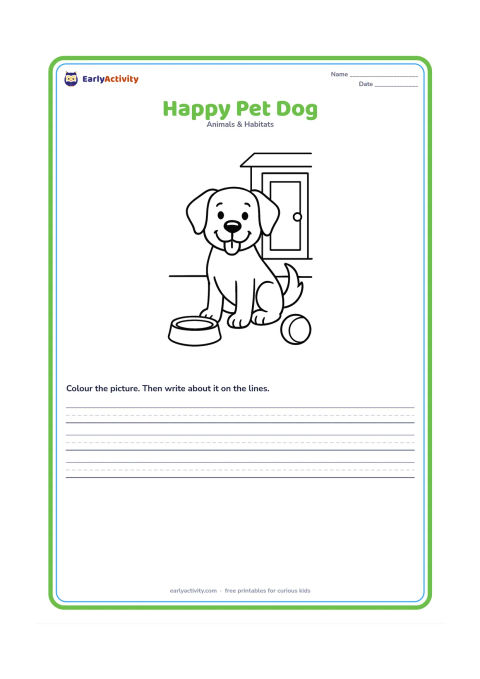
Draw a cheerful dog sitting beside a simple home doorway, with a bowl and a round toy nearby. Show the dog in a large front-facing pose with its tail clearly visible.
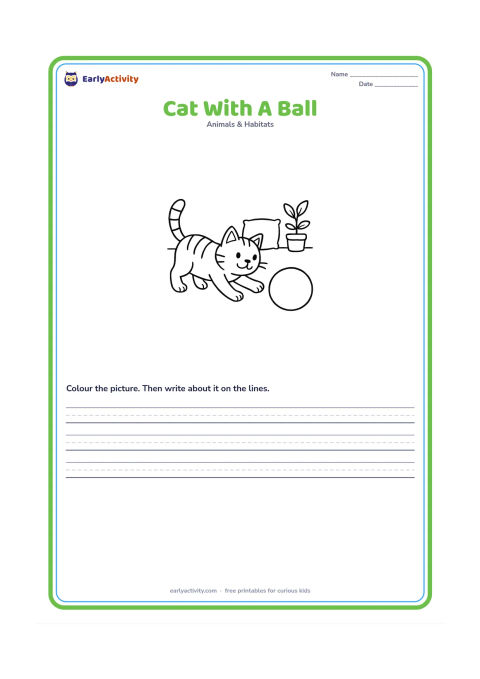
Draw a playful cat reaching toward a large ball on a plain floor, with one cushion and a small house plant in the background. Leave generous blank space around the cat.
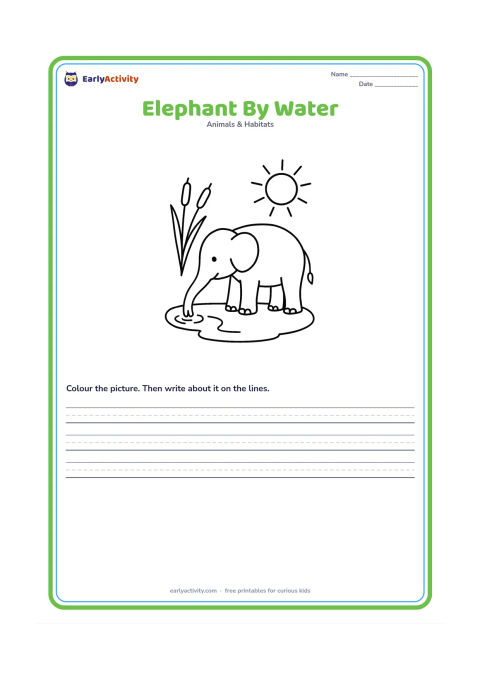
Draw one elephant using its trunk to drink from a shallow pond, with two large reeds and a sun in the background. Show the full elephant in a clear side view.
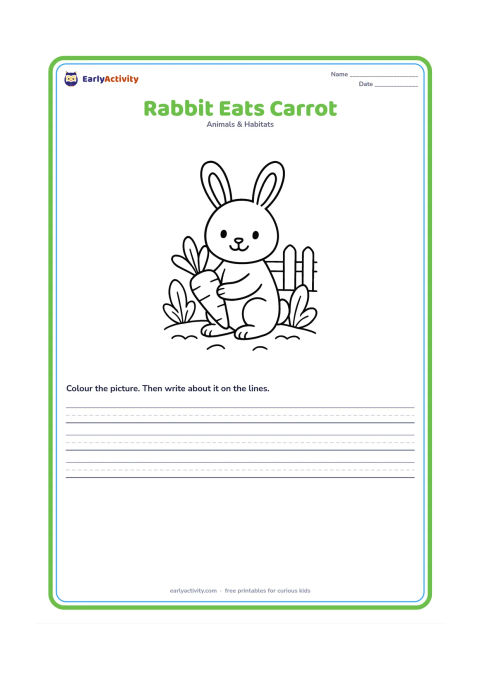
Draw a rabbit sitting in a small vegetable patch and holding a large carrot. Include two oversized leaves and a simple fence behind it.
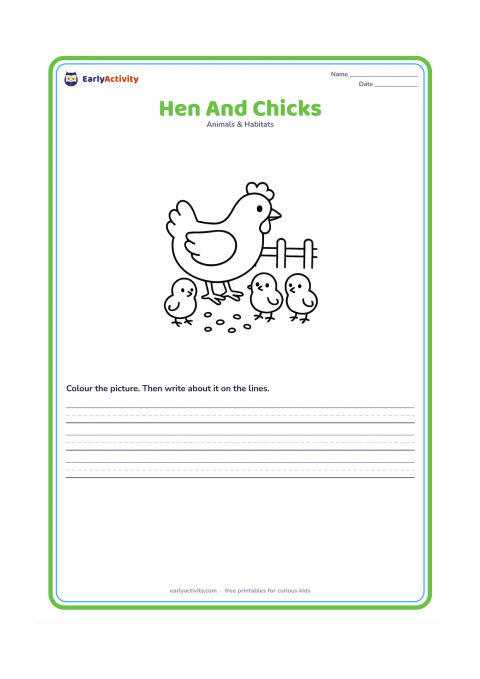
Draw a hen standing beside three round chicks in a simple farmyard, with a few grains on the ground and a low fence. Show the parent and babies clearly together.
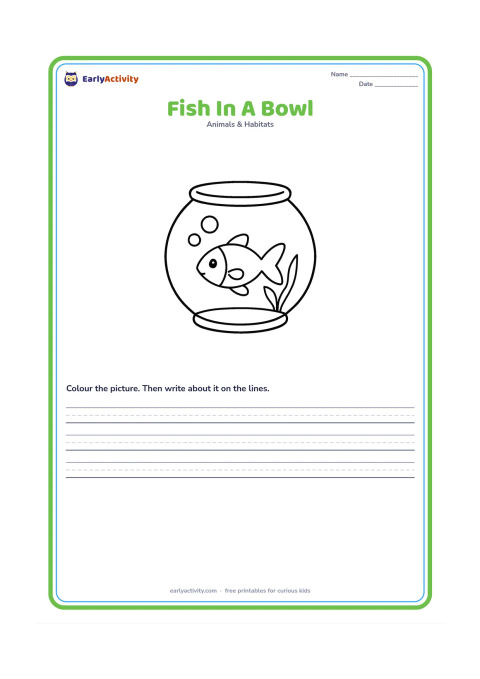
Draw one fish swimming in a round home fishbowl with two large bubbles and one simple aquatic plant. Keep the bowl centred and show the fish clearly inside it.
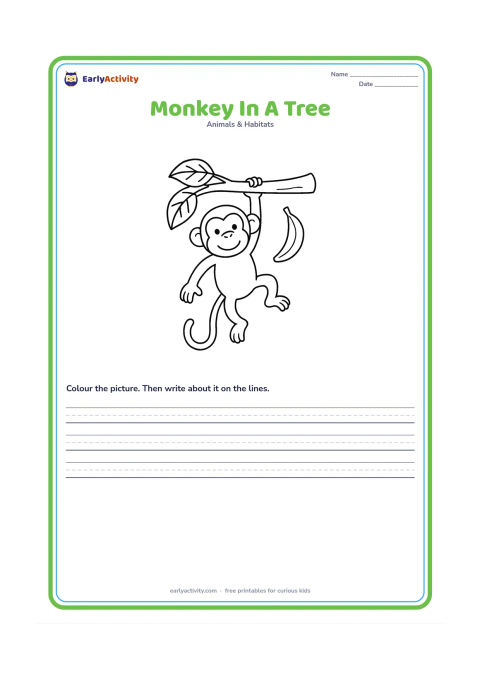
Draw a friendly monkey hanging by one arm from a thick tree branch, with two large leaves and one banana nearby. Show its long tail in a clear curve.
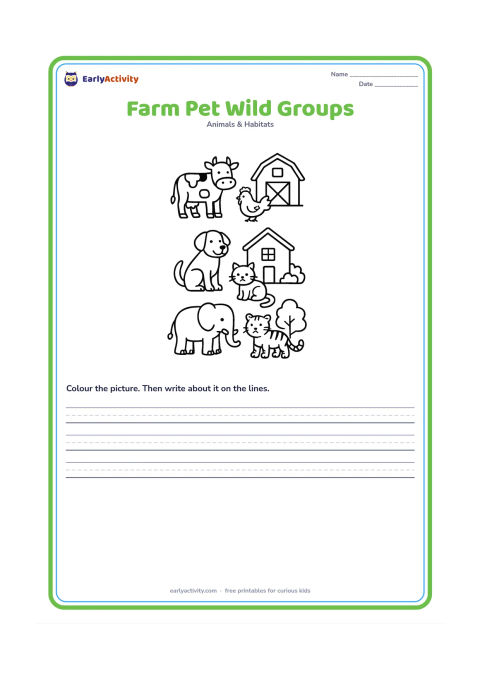
Create three clearly separated picture groups: a cow and hen on a farm, a dog and cat near a home, and an elephant and tiger in a forest. Leave open space between the groups for a….
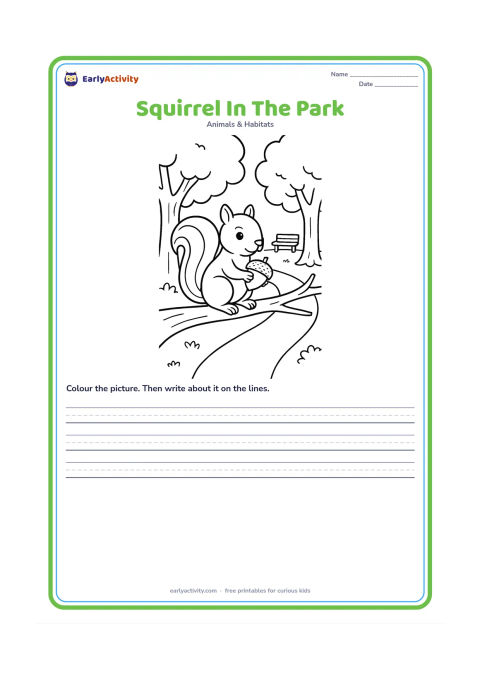
Draw a squirrel holding a nut on a low tree branch in an Indian neighbourhood park, with a curved path, two broad trees and a distant park bench. Show the bushy tail prominently.
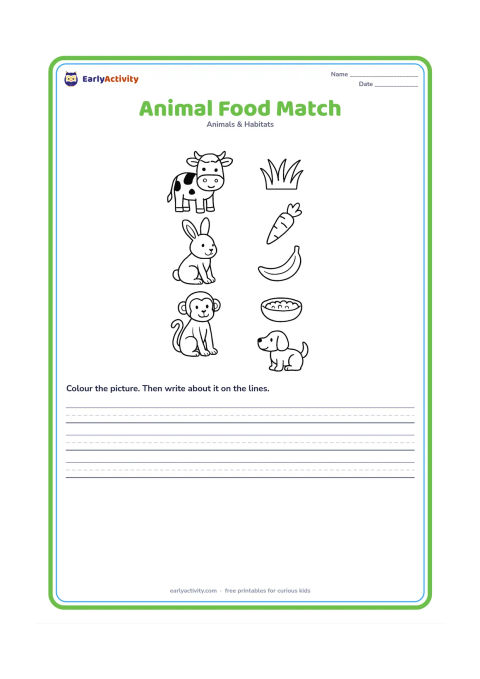
Arrange four animals in a left column, cow, rabbit, monkey and dog, and their foods in a separate right area, grass, carrot, banana and a bowl of food. Leave clear blank space between….
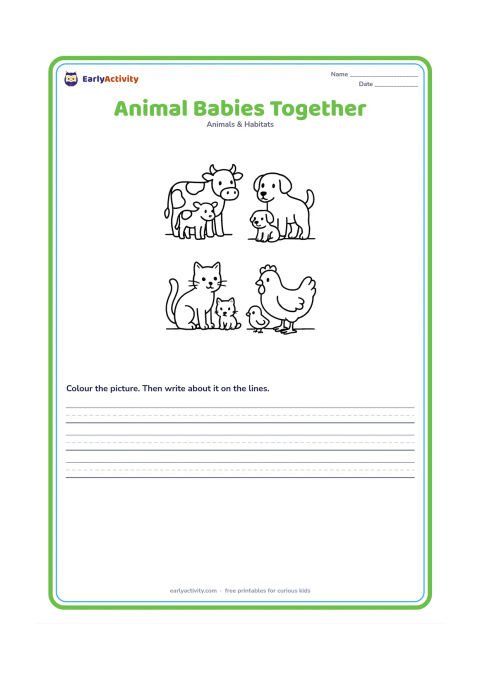
Show four parent-and-baby pairs in separate spaces: cow with calf, dog with puppy, cat with kitten and hen with chick. Use simple ground lines to keep each pair separate.
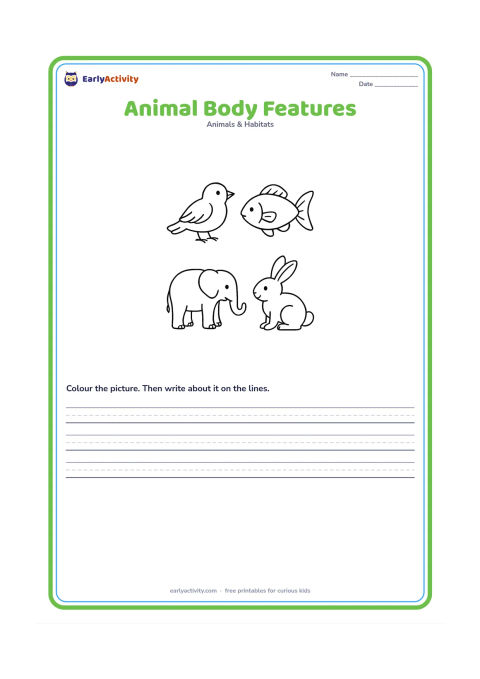
Draw a clear row of a bird, fish, elephant and rabbit, each in a separate open space. Show prominent feathers and wings, fins, trunk and long ears so children can compare body features.
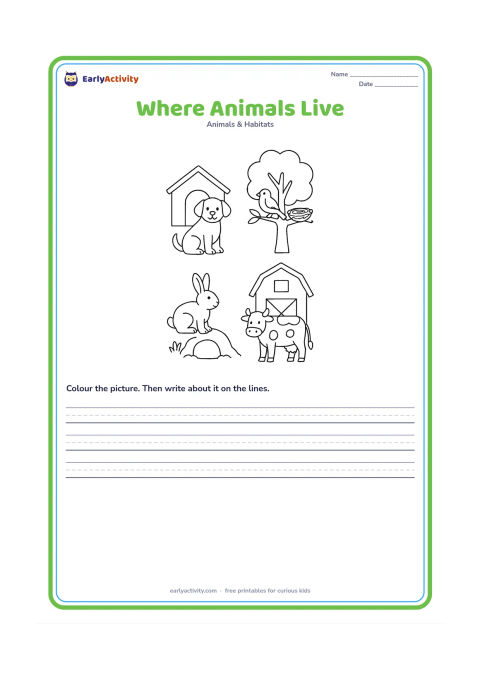
Place four animals near their homes: a dog beside a kennel, a bird beside a nest in a tree, a rabbit beside a burrow opening and a cow beside a shed. Keep each animal-home pair separated….
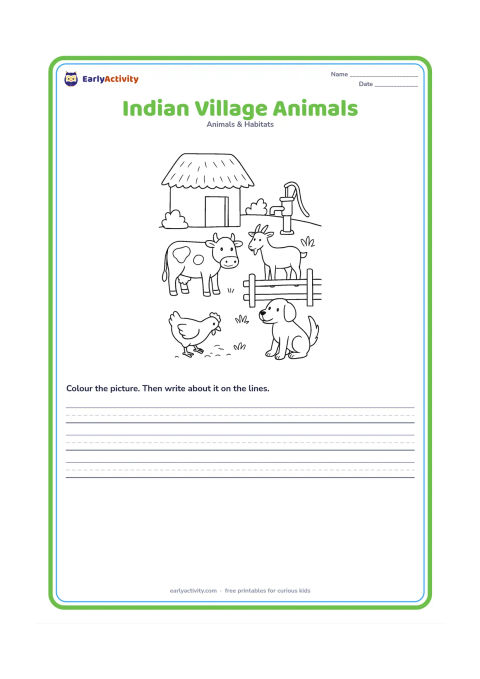
Draw a village scene with a cow near a thatched shed, a goat beside a fence, a hen scratching the earth and a dog near a doorway. Include a hand pump and a few simple plants in the….
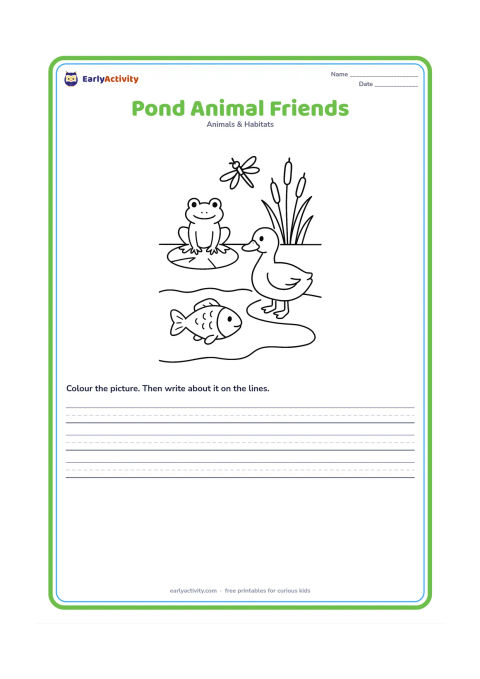
Show a frog on a lily pad, a fish below the water, a duck at the pond edge and a dragonfly above the reeds. Use a clear pond cross-section with each animal in its own visible area.
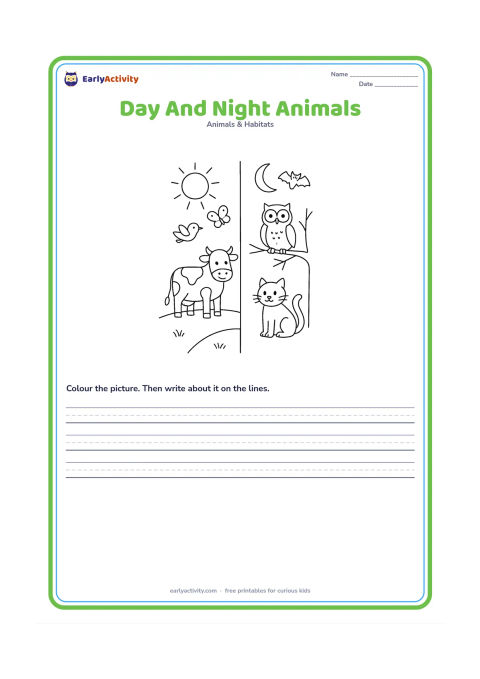
Divide the picture into two open landscape areas without written labels: a bright daytime area with a cow, bird and butterfly, and a moonlit area with an owl, bat and cat. Use visual sun….
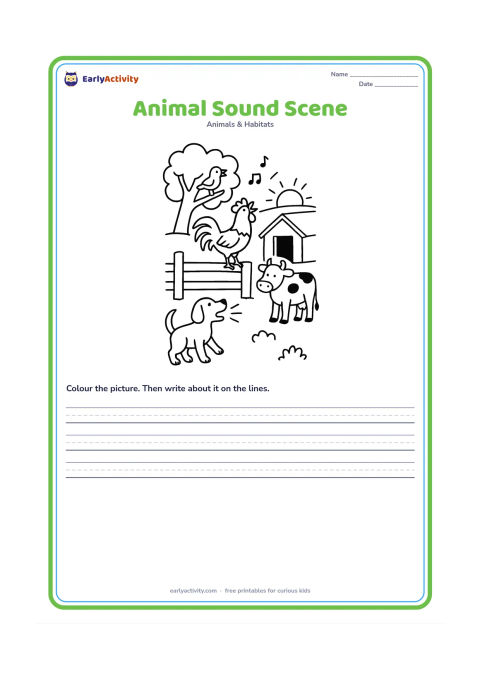
Draw a village morning scene with a rooster crowing, a dog barking, a cow standing near a shed and a bird singing in a tree. Use small curved sound marks near the animals but no speech….
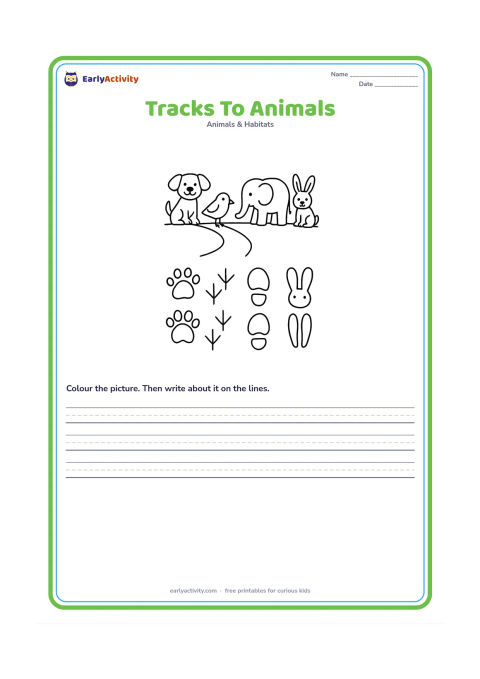
Show four animals at the top of a nature path, a dog, bird, elephant and rabbit, and four clear sets of footprints or tracks below them, with wide gaps for children to match them.
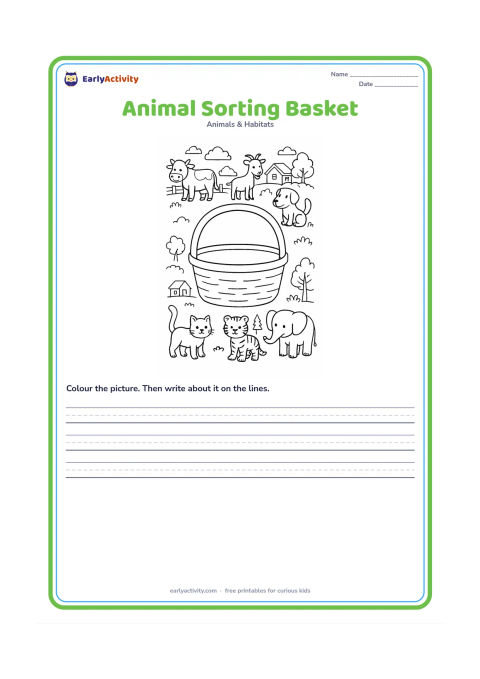
Draw a large open basket area surrounded by separate pictures of a cow, goat, dog, cat, tiger and elephant, with small visual scenes behind the animals suggesting farm, home or forest….
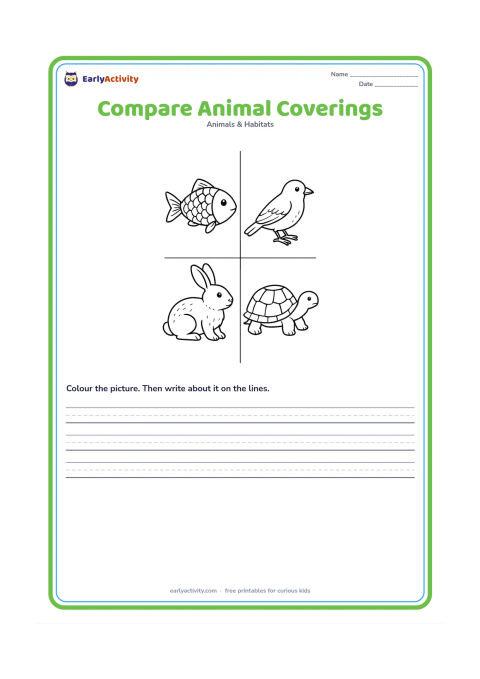
Arrange a fish with scales, a bird with feathers, a rabbit with fur and a turtle with a shell in four separate panels. Show each animal in a calm side view with its covering clearly visible.
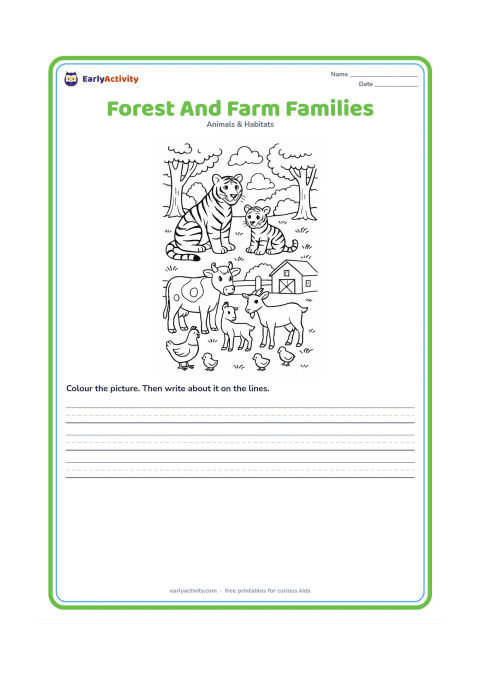
Create a detailed comparison scene with a tiger and cub in a forest clearing, and a cow with calf, goat with kid and hen with chicks in a nearby farm area separated by a fence. Keep all….
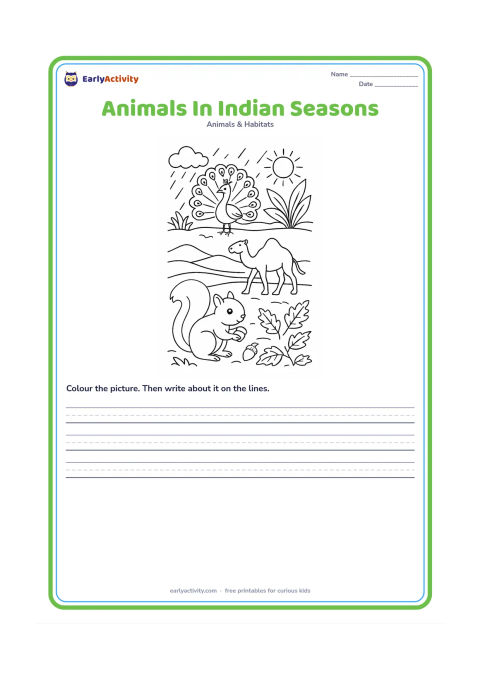
Show three connected seasonal scenes: a peacock in monsoon rain near green plants, a camel travelling across a sunny desert, and a squirrel gathering food among dry autumn leaves. Give….
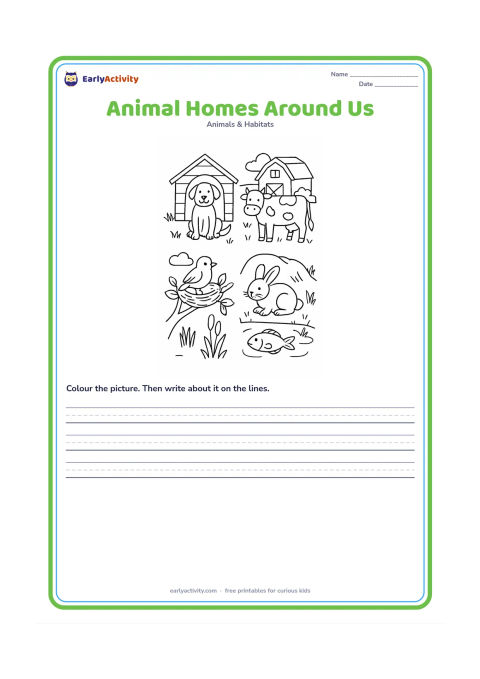
Create a detailed habitat comparison with a dog at a home kennel, a cow in a cowshed, a bird in a nest, a rabbit at a burrow and a fish among pond plants. Separate each home clearly with….
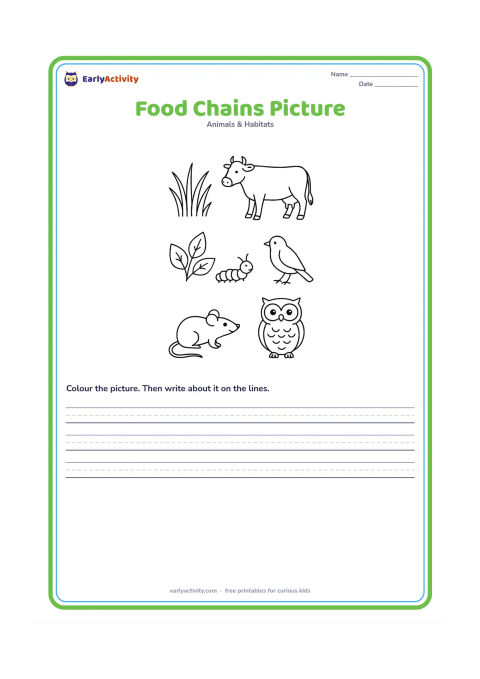
Show three simple visual food sequences in separate rows: grass near a cow, leaves near a caterpillar and a bird nearby, and seeds near a mouse with an owl above. Use open spaces between….
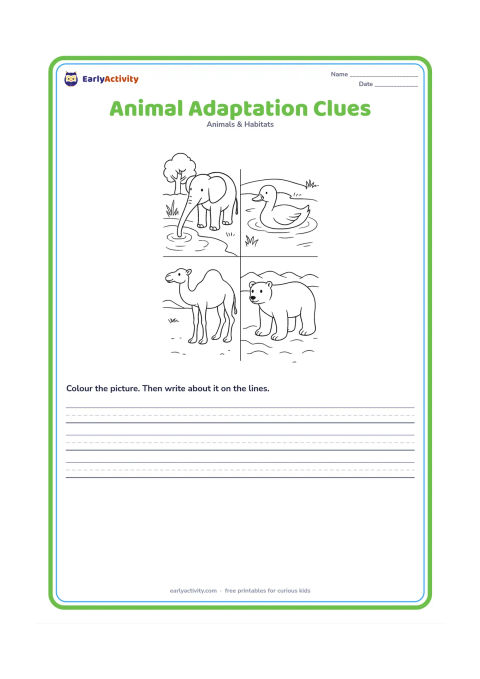
Draw an elephant with a long trunk near water, a duck with webbed feet at a pond, a camel with a hump in dry land and a polar bear on snowy ground. Give each animal a clear environmental….
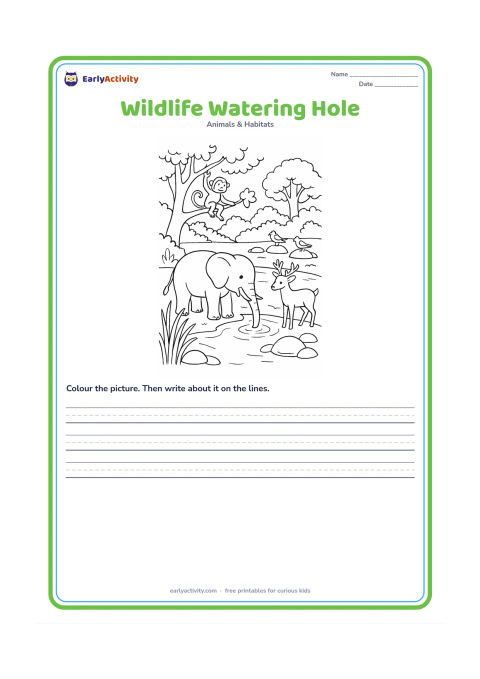
Draw a detailed Indian forest watering hole with an elephant drinking, a deer at the edge, a monkey in a tree and birds on nearby stones. Include reeds, rocks and distant trees while….
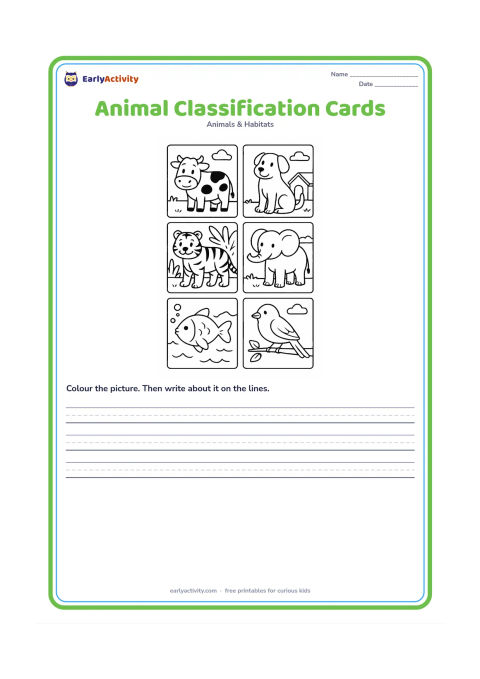
Arrange six separate card-like picture spaces containing a cow, dog, tiger, elephant, fish and sparrow. Give each space a small visual setting so children can classify farm, pet, wild or….
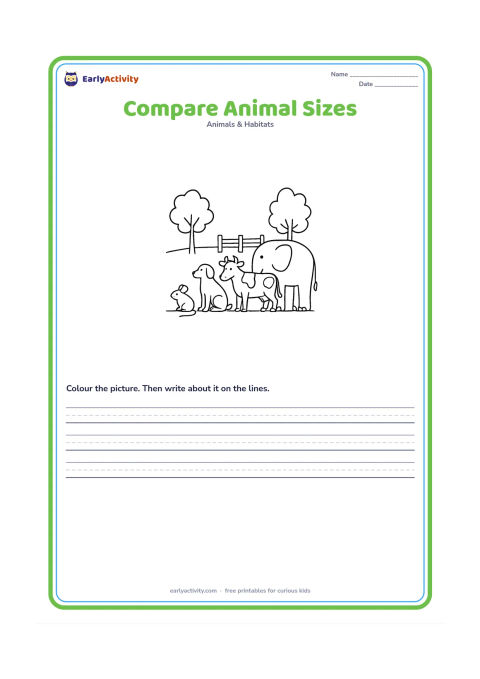
Place a mouse, rabbit, dog, cow and elephant on one ground line from smallest to largest, with a few simple background trees and a fence. Keep their full bodies visible for size comparison.
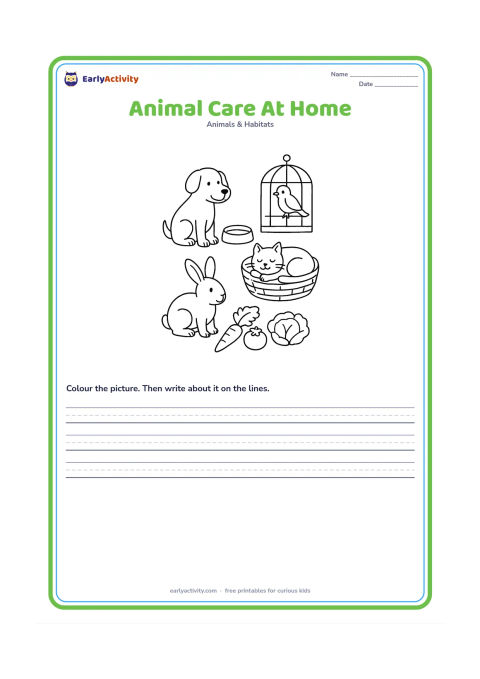
Draw a child-free pet-care scene showing a dog beside a water bowl, a cat resting in a basket, a rabbit near fresh vegetables and a bird in a clean cage. Include simple safe-care objects….
This set introduces common animals and simple facts in a way that suits young learners. Younger children can colour pictures, match animals to their food or sort familiar groups such as farm, pet and wild animals. Older children can read short clues, compare body features and complete simple classification tasks. The activities use clear pictures and short instructions, so you can read them aloud when needed. Children may meet animals from India as well as familiar animals from other parts of the world.
Choose one activity at a time and talk about the pictures before your child starts writing. At home, place a few toy animals beside the worksheet and ask your child to group them in the same way. In class, use a worksheet after a story, nature walk or circle-time discussion, then invite children to explain one answer to a partner. Older children can make a small animal word bank from the page. You can pair this set with Animal Habitats Worksheets when children are ready to connect animals with where they live.
Children often call every large animal wild, or assume that an animal's home is the same as its habitat. They may also mix up an animal's food, sound and baby name. Help by asking one clear question at a time, such as, "Where does it live?" or "What does it eat?" Use real examples from your area, such as cows, goats, dogs, crows and squirrels. If an answer is close but not quite right, ask your child to look at the picture clues and explain the choice rather than simply giving the answer.

Children practise recognising animals, comparing features, sorting groups, matching animals with food or homes and using simple science words.
This set suits children aged 3 to 8. Adults can read the instructions for younger children, while older children can complete the reading and classification tasks more independently.
Yes. You can use them for an EVS lesson, an early-finisher task, small-group work or home practice in your own classroom.
Most EarlyActivity printables are free. Create a free account to download them, then print the PDF at Actual size, or 100%, on A4 or US Letter paper.
Yes. Several activities build a starting understanding of where animals live. For more direct practice, use [Animal Homes Worksheets](/science-evs/animals-habitats/animal-homes-worksheets/) alongside this set.

These animal body coverings worksheets help children learn how fur, feathers, scales, shells and skin protect animals. The activities suit children aged 3 to 8 and are free to print for home or classroom use.
These animal habitats worksheets help children aged 3 to 8 learn where animals live through matching, sorting, colouring and simple EVS activities. They are free to download and print for use at home or in your classroom.
These animal homes worksheets help children aged 3 to 8 learn where animals live through matching, sorting, tracing, colouring and simple writing tasks. The free printables suit home practice, Nursery to Class 2 lessons and early science or EVS work.
These animal sounds worksheets help children aged 3 to 8 match familiar animals with the sounds they make. The free printables include simple matching, colouring, tracing and early reading activities for home or class use.
These animals and their babies worksheets help children aged 3 to 8 match parent animals with their young, trace or write names, and colour familiar pictures. They are free to print for home learning or classroom practice.
These birds worksheets help children aged 3 to 8 learn bird names, body parts, homes, food and simple features through tracing, matching, colouring and sorting. They are free to print for learning at home or in your own classroom.