How to calm a child after school: a gentle after-school plan
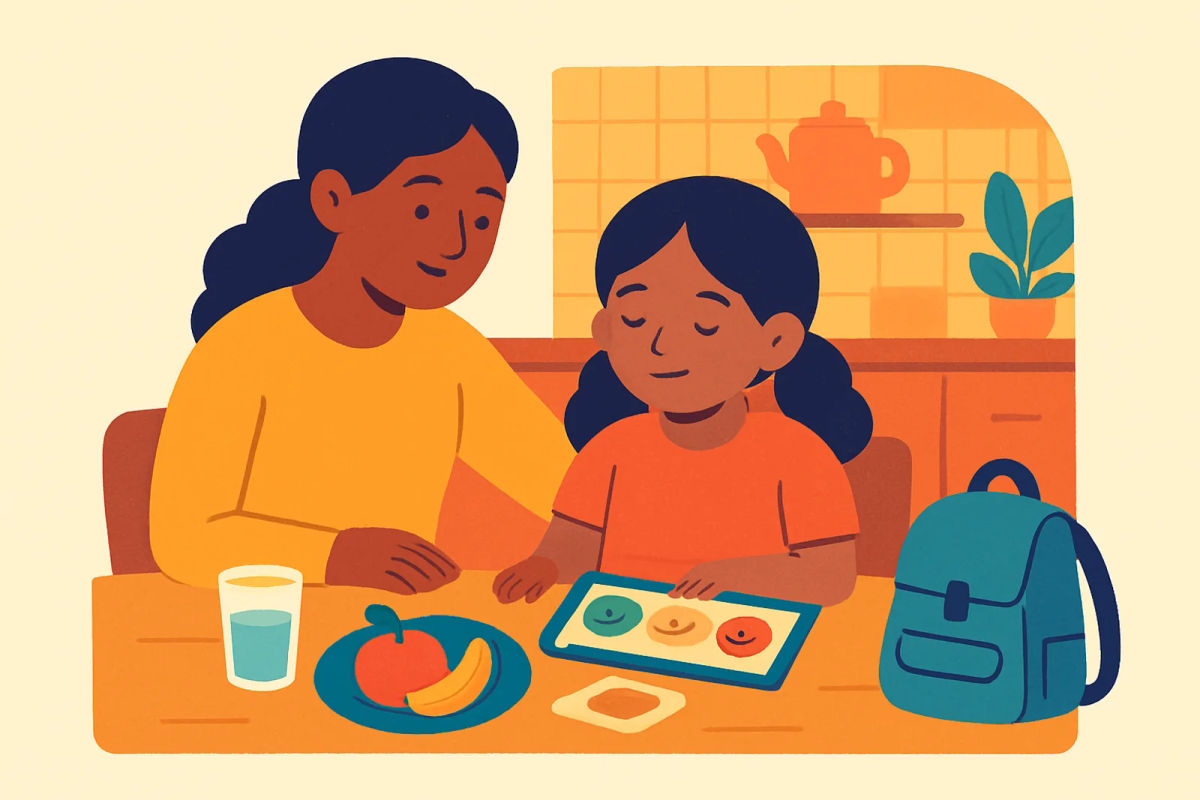
The hours after school can be hard when your child is tired, hungry or carrying a worry from the day. This gentle plan shows you how to calm a child after school with water, food, quiet time and a simple feelings check-in.
In short
- Offer water, a familiar snack and a brief warm greeting before asking about school.
- Give your child 15 to 30 minutes of quiet time and stay nearby without forcing conversation.
- Use a feelings chart or simple choices when your child finds it hard to explain the day.
- Listen first when your child shares a problem, then help with one small next step.
- Speak with the teacher or a doctor when distress keeps returning or affects daily life.
Why your child may need quiet after school
School asks children to manage noise, lessons, friendships, rules and changes in routine for many hours. By the time they reach home, they may have little energy left for questions. A child who seemed cheerful in the morning may come home upset, withdrawn or ready to cry.
A calm welcome often works better than asking many questions at the door. Stress can show as tears, anger, silence, clinginess, a headache or a tummy ache. These signs do not always mean that something serious happened, but they tell you to slow the pace and notice what your child may need.
Age makes a difference. A Nursery child may need you to name feelings and offer choices. A child in Class 3 to 5 may prefer a little privacy before talking. You can stay available without expecting an immediate report. Put away your phone, soften your voice and allow your child to settle first. Later, you can check in when both of you have more patience.
Start with water, food and a calm welcome
Begin with the basics. Offer water and a simple snack or meal before asking about the school day. Hunger and thirst can make an ordinary disappointment feel much bigger. Choose familiar food that suits your family routine, such as fruit, curd, idli, roti or a sandwich. Keep the portion and timing similar to what usually works for your child.
A brief greeting can feel reassuring without starting an interview. You might say, "I am happy to see you. You can take your time." A hug, a smile or sitting beside your child may be enough. Let your child know that home is a place to pause.
Try not to scold about the school bag, uniform or homework during the first few minutes. You can deal with these tasks after your child has eaten and settled. If the uniform is uncomfortable or the bag is heavy, make a note to discuss it later. A calmer beginning gives you a better chance of hearing what your child needs.
Give quiet time before asking about school
Set aside 15 to 30 minutes for your child to rest before you ask about the day. The quiet time might include a bath, drawing, reading, quiet play or sitting near you. Offer two calm choices instead of giving a long list: "Would you like to rest on the bed or colour at the table?" Small choices help your child regain a sense of control.
Stay nearby, especially for a younger child, but do not keep asking questions. You could fold clothes, prepare the evening snack or read your own book while your child plays. Say, "I am here if you need me." This shows care without pressure.
Screens may be part of your family routine, but try not to make them the only way your child settles. Follow the limits you already use at home and offer other quiet activities too. A child who wants silence may need a little space. Agree on a later time to talk, such as after the snack or before dinner, so the conversation is delayed rather than forgotten. For a familiar drawing activity, you could use the photo to coloring page tool to make a simple picture from a family photograph.

Lumi's tips
- Lumi's tip: Keep the first few minutes after school slow, with water ready and your voice gentle.
- Lumi's tip: Offer two quiet choices instead of giving many instructions at once.
- Lumi's tip: Let your child point to a feeling before asking for a story.
- Lumi's tip: Write down repeated worries with dates so you can share clear examples with the teacher.
Use a simple feelings check-in
After quiet time, use a simple feelings check-in rather than asking, "How was school?" Show your child a printable feelings chart and ask them to point to a face, colour or word that matches the feeling. Then ask one gentle question, such as "Was the day easy, hard or in between?" or "Do you want me to listen or help?"
Accept, "I do not want to talk yet." You can reply, "That is okay. We will check again after dinner." Keeping this promise helps your child know that you are interested without feeling chased.
For younger children, name two or three feelings and model them with your face or body. You might say, "This face looks worried. This body feels tired." Older children can write one word or rate the day from 1 to 5. Do not treat the number as a score to correct. Use it as a starting point. A child who chooses 2 might want a cuddle, a snack or a quiet evening before explaining more.
Make and use a printable feelings chart
A simple feelings chart can make talking easier because your child can point instead of finding all the words. On one A4 page, include a few clear feeling faces or words, a space for the child's name and one box labelled, "What might help?" Choices in that box could include a hug, water, quiet time, help with a problem or talking later.
Your child can point, circle, colour or add a sticker. You can write the words for a Nursery child, while an older child may add their own word. Keep the chart familiar and uncluttered. Too many faces can make choosing harder.
Use it at the same time each afternoon for a few days, perhaps after the snack. Then put it away if it begins to feel like a test. A chart is a communication aid, not proof of how your child feels. You can find suitable options in the free printables library. EarlyActivity printables are PDF files sized for A4 and US Letter paper. Print at Actual size, or 100 percent, so the chart keeps its intended layout.
What to say when your child shares a problem
When your child begins to talk, listen before trying to fix the situation. Put the main point into simple words so your child knows you heard it: "You felt left out when the groups were chosen." If you have misunderstood, your child can correct you. Keep your voice steady, even when the story makes you angry.
Ask what kind of support is wanted. You might say, "Do you want comfort, help with a plan or time to think?" Your child may want a cuddle today and practical help tomorrow. Both needs are reasonable.
Avoid saying, "You should not feel that way." Do not compare your child with a sibling or demand every detail at once. Help with one small next step. You could pack a needed item, practise a sentence such as "Can I join you?" or plan which adult at school your child can approach. If the problem involves another child, do not promise revenge or tell your child to solve everything alone. Write down what was shared while it is fresh, then decide calmly what support is needed.
When to speak with the teacher or a doctor
Contact the teacher when the same worry keeps returning, your child names bullying or exclusion, school refusal begins, or learning and friendships seem affected. Share clear examples, dates and what helps at home. A calm message gives the teacher useful information. Avoid sending an angry message in the moment, especially before you know the full picture.
Speak with a doctor when physical complaints, sleep or eating changes, strong fear, sadness, anger or withdrawal continue and concern you. A doctor can help you decide what support is suitable. You can also tell the school about ongoing concerns so home and school can watch for patterns together.
Seek urgent help if your child talks about self-harm or harming someone else. Stay with your child, remove immediate dangers if you can do so safely and follow local emergency guidance. If you are unsure how serious a statement is, treat it as important and seek prompt professional help. Your child does not need to explain everything perfectly before an adult listens and acts.
Questions parents ask
How long should I let my child rest before asking about school?
Try 15 to 30 minutes after your child comes home, with water, food and a quiet activity first. Adjust the timing for your child's age and routine. Agree on a later check-in if your child needs more time.
What should I do if my child refuses to talk after school?
Accept the refusal without pressure and say that you are available when your child is ready. Offer a feelings chart, drawing or a simple choice instead of more questions. Check in again at the time you agreed, and pay attention to repeated changes in mood or behaviour.
How can I tell the difference between ordinary tiredness and a repeated school concern?
Ordinary tiredness often improves with food, rest and a calmer evening. A repeated concern may return over several days or affect sleep, eating, friendships, learning or willingness to attend school. Write down what you notice and discuss the pattern with your child's teacher.
Can a feelings chart help a child who has trouble naming emotions?
Yes, it gives your child a way to point, circle or colour instead of explaining everything aloud. Use a small number of clear faces or words and model a few feelings yourself. Stop using it for a while if your child starts to feel tested.
When should I contact my child's teacher or doctor about after-school distress?
Contact the teacher when the same worry keeps returning, your child reports bullying or exclusion, school refusal begins, or learning and friendships are affected. Speak with a doctor when physical complaints or strong emotional changes continue and concern you. Seek urgent help if your child talks about self-harm or harming someone else.