How to teach following instructions to preschoolers through play
This guide shows you how to teach following instructions to preschoolers through short, playful activities at home or in class. You will learn how to give two-step directions, use movement games and picture cards, and set up a simple printable scavenger hunt.
In short
- Start with two familiar actions and objects your child already knows.
- Give one short instruction at a time, then allow a few seconds for thinking and action.
- Movement games, picture cards and scavenger hunts make listening practice active and clear.
- Change only one part of an instruction when your child needs extra help.
- Check attention, hearing, tiredness and language understanding before calling a missed step disobedience.
What are two-step instructions?
A two-step instruction asks your child to complete two actions in order. For example, you might say, "Pick up the red crayon and put it in the box." Your child needs to remember both parts, find the right crayon and then place it correctly.
A one-step direction has one action, such as "Pick up the crayon" or "Put the book on the shelf." A two-step direction joins two actions, such as "Pick up the book and put it on the shelf." At home, you could say, "Get your shoes and bring them to me." In a classroom, you could say, "Take a block and place it in the basket."
Begin with objects and actions your child already knows. Crayons, blocks, shoes, cups and books are useful because your child can see them and has used them before. Start with the objects close by. Once your child is comfortable, place them a little farther away or add a colour, size or position word.
How should you give a two-step instruction?
First, get down to your child's level. Say your child's name and wait for them to look towards you or show that they are listening. Turn off the television, move away from noisy play and keep only the needed objects nearby.
Use a short sentence with one action in each part. Say, "Take the cup and place it on the table." Pause after giving the instruction. Your child may need a few seconds to hear the words, remember them and plan what to do. Give only one instruction at a time instead of adding another direction while your child is moving.
You can gently ask, "What will you do first?" or "Tell me what you heard." This should feel like help, not a test. If your child forgets, repeat the same words once or show the first action. Keep your voice calm and your face turned towards your child.
Praise the exact effort you saw. Say, "You picked up the red crayon and put it in the box." Specific words help your child notice both parts of the instruction.
How can movement games build listening skills?
Movement games give your child a reason to listen, remember and act. Begin with two familiar actions, such as "Touch your head and clap your hands" or "Jump to the door and sit on the mat." Show the actions first if needed, then say the instruction without demonstrating it.
Keep the first rounds slow. When your child can manage them, change one feature at a time. You might change the speed, the place or the body movement. Try, "Walk to the chair and tap it," then later, "Crawl to the mat and sit down." Avoid making the instructions harder and faster in the same round.
Children enjoy taking turns. Let your child give an instruction to you, a sibling or a friend. You can act it out carefully, even when the child gives a funny direction. In a Nursery, LKG or UKG room, pairs can take turns while the rest of the group watches quietly.
Keep practice brief. Stop when children become tired, rush through the actions or start guessing. A few happy turns during the day work better than a long session that feels like work.

Lumi's tips
- Lumi says to keep the objects close at first, so your child can listen instead of searching.
- Use the same short phrase several times before changing the activity.
- Let your child be the teacher for one turn and follow their instruction carefully.
- Keep a picture card or two in your bag for waiting time at home or school.
- Notice both steps and name them clearly when your child completes them.
How can picture cards make the steps clear?
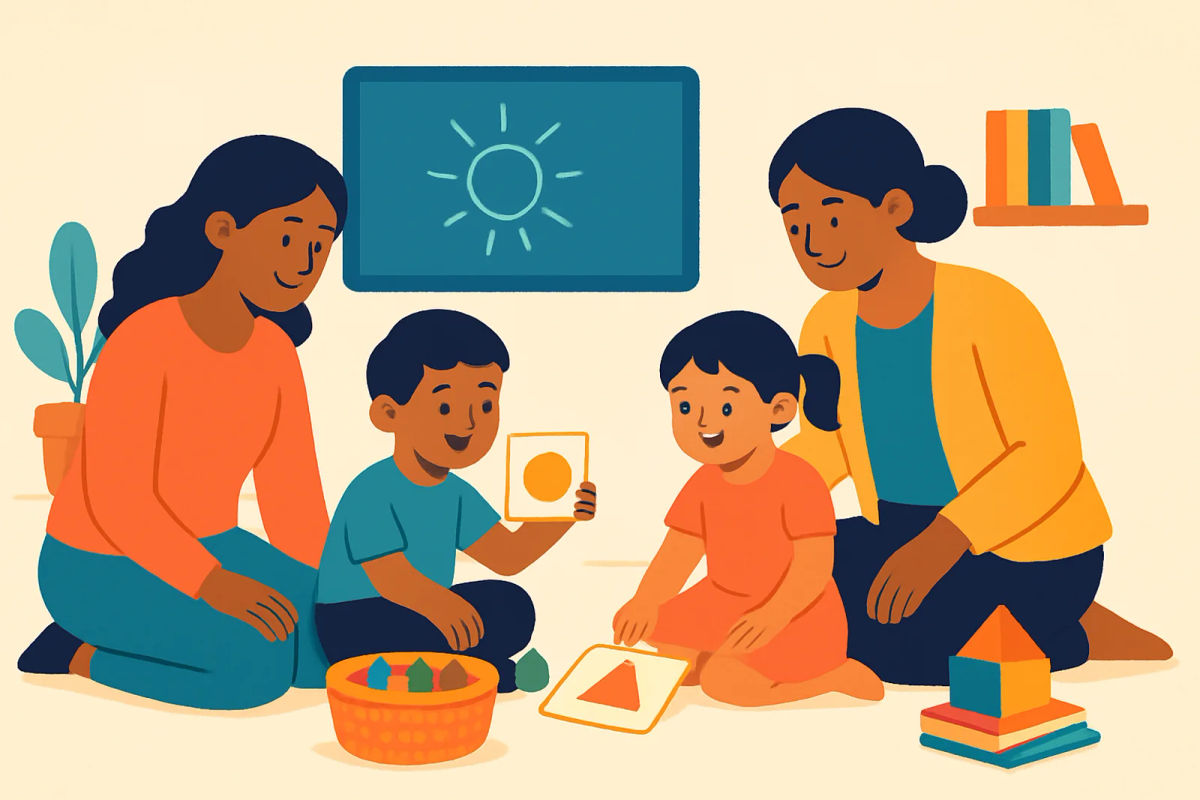
Picture cards show the order of two actions. One card might show a child picking up a ball. The next can show the ball being placed in a basket. Ask your child to look at both cards, complete the actions and then place the cards in the correct order again.
Start with actions that are easy to see and do. Use cards for washing hands, putting away blocks or taking a book to the shelf. After that, add less familiar classroom routines, such as choosing a worksheet and sitting at a table. Keep the pictures simple, with one main action in each card.
You can make cards with quick drawings or photographs of objects in your home or classroom. Cover them with clear tape if you want to reuse them. Place the cards on the floor or table, read the instruction aloud and let your child point to the first action before beginning.
For a small-group activity, give each pair two cards and a matching object. Children can sort the cards, complete the task and check one another's order. You can also browse the free printables library for activity ideas that suit your child's age and routine.
How can a printable scavenger hunt work in class?
A printable classroom scavenger hunt can turn two-step directions into a short group activity. Prepare picture clues with tasks such as, "Find the blue pencil and place it beside the book." Read one clue aloud, help children repeat it and let them work in pairs.
Use objects already in the Nursery, LKG or UKG room. Pencils, books, blocks, crayons, chairs and baskets are enough. Children can focus on listening instead of searching for unusual materials. Before starting, remove objects that could cause trips and set clear boundaries about where children may walk.
Give one clue to each pair, or read the same clue to the whole group. Ask children to point to the item before they pick it up. When they return, ask what they did first and next. This gives you a quick way to see which part was missed.
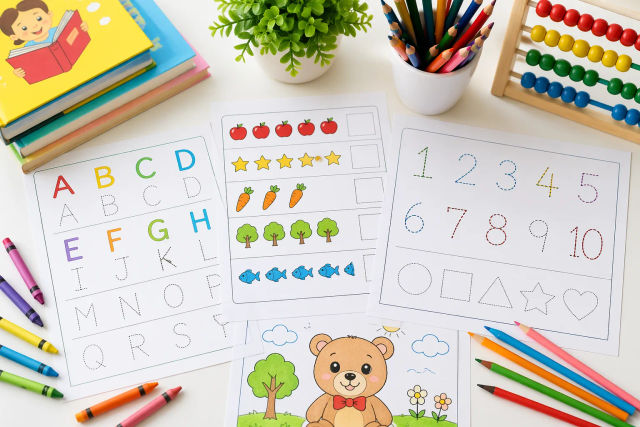
Print the PDF at Actual size, or 100%, on A4 or US Letter paper. You can draw extra picture clues that match your room, then cover the cards for reuse. Keep a few easier clues ready for children who need a smaller step, and let confident children take a turn reading the pictures to a partner.
How can you adjust the activity for different preschool ages?
Children develop this skill at different rates, so adjust the words, objects and distance rather than expecting every child to manage the same task. For a child around age 2 or 3, use two very familiar actions with objects close by. Say, "Get the spoon and give it to me." You may need to point to the spoon after giving the instruction.
For a child around age 4, add one detail such as colour, position or size. Try, "Take the small yellow block and put it under the chair." Keep the room quiet and use objects that can be seen easily.
For an older preschooler around age 5, use classroom routines, three picture choices or a less familiar action. You could say, "Choose the handwashing card and place it near the sink." Make sure the instruction is still short enough to remember.
When your child needs help, change only one part. Keep the same action but remove the colour word, move the object closer or use a picture. Repeat that pattern several times before adding a new challenge. A child who can follow "get the cup and bring it to me" may next manage a colour word, then a position word.
What mistakes should adults avoid?
Long directions can be hard to remember, especially when several children are talking or a television is playing. Avoid giving many steps, background noise and extra words at the same time. Instead of saying, "Go over there, get your things, bring the blue one and put everything away before we leave," split the task into short parts.
Try not to repeat the instruction many times while your child is acting. Too much talking can make it unclear which words still matter. Repeat it once, wait and offer a quiet prompt if needed. You can also show the first action, then allow your child to complete the second.
A missed step is not automatically disobedience. Check whether your child was listening, understood the words, could hear you, felt tired or found the room distracting. Consider whether the object, colour or position was clear. Calmly say, "The crayon is here. Pick it up, then put it in the box," and try again.
Praise the completed part specifically. If your child picks up the correct crayon but forgets the box, say, "You found the red crayon. Now let us put it in the box." If this happens often even in a quiet setting, share your observations with the school and ask a doctor for guidance when needed.
How can parents and teachers practise this every day?
Daily routines give children natural practice without setting aside a formal lesson. At home, say, "Put your plate in the sink and bring your water bottle." You could also say, "Choose your socks and sit on the mat." In class, try, "Take a pencil and sit at your table," or, "Put the blocks away and bring your book."
Use the same wording when a routine repeats. If the school says "put it in the basket," family members can use that phrase too. Familiar words help your child focus on the actions instead of working out a new sentence each time.
Keep a small note on your phone or in a notebook. Write down two-step directions your child follows without help and words that cause confusion. You might notice that colour words are easy but position words need practise, or that your child follows directions at home but not in a busy classroom. Share this pattern with the teacher.
If a child often cannot follow simple instructions even in a quiet setting, discuss it with the school. Ask a doctor for guidance if you are concerned about hearing, understanding language, attention or development. One missed direction is common. A repeated pattern deserves a calm, shared look at what support may help.
Questions parents ask
At what age can a child follow two-step instructions?
Many children begin managing very simple two-step directions during the preschool years, but the timing varies. A child around age 2 or 3 may need familiar objects and help, while an older preschooler may manage colour, position or classroom words. Give your child time and adjust the task to their current ability.
What should I do if my preschooler completes only the first step?
Stay calm and name the part your child completed. Repeat the second step in a short sentence, point to the needed object if necessary, and try the same pattern again. Check that the instruction was clear and that your child was not tired or distracted.
Should I repeat a two-step instruction or show my child what to do?
Repeat the instruction once using the same words, then wait a few seconds. If your child still needs help, show or point to the first action and let them complete the next part. Avoid giving a long explanation while your child is trying to act.
How can I teach following instructions to preschoolers who are easily distracted?
Move close, say your child's name and reduce noise before speaking. Use one short instruction with objects nearby, then give your child time to act. Movement games can help, but keep turns brief and stop before your child becomes tired or starts guessing.
Can picture cards and classroom scavenger hunts help children follow directions?
Yes, picture cards make the order of two actions visible, while a scavenger hunt gives children a reason to listen and act. Use familiar objects, read one clue at a time and let children work in pairs with clear safety rules. Pictures support the words, so continue saying the instruction aloud as children use them.