How to teach beginning sounds: a 10-minute routine for your 5-year-old
This short routine shows you how to teach beginning sounds through picture cards, listening games and a simple worksheet. In 10 minutes a day, your child can practise hearing the first sound in familiar words without feeling tested.
In short
- A beginning sound is the first sound you hear when a word is spoken.
- Let your child listen and answer orally before showing the written letter.
- Use two or three sound groups and familiar objects during each short practice.
- A 10-minute routine can include listening, sorting, an oral game and a worksheet.
- Home-language words can support sound practice while your child learns English.
What is a beginning sound?
A beginning sound is the first sound we hear when someone says a word. For example, mat starts with /m/ and sun starts with /s/. Your child is listening to the word, rather than counting letters or naming the whole alphabet.
Say the word first and let your child hear it before showing the written letter. This helps your child pay attention to the sounds in speech. Hold up a ball, cup, fan, mango or spoon and say the word naturally. Ask, "What sound do you hear first?" You can repeat the word once if needed.
At this stage, keep the focus on hearing and saying the first sound. Your child does not need to name or write every letter yet. A child may know that a word starts with /m/ before remembering that the letter is called M. That is a useful step. Keep the activity connected to objects and pictures your child sees at home, in Nursery, LKG or UKG.
What to prepare before the 10-minute routine
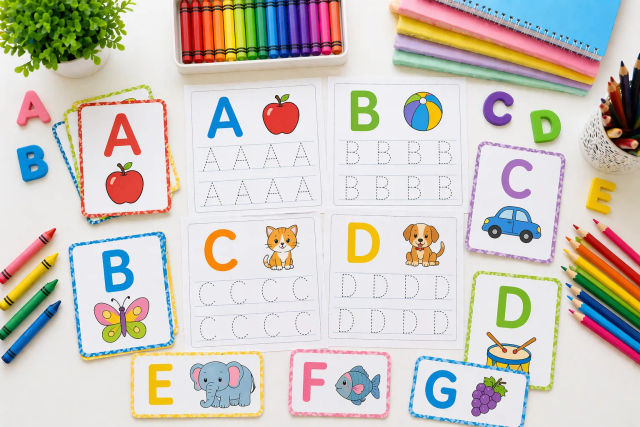
Gather six to ten picture cards showing objects your child can name. You can draw simple pictures, cut pictures from an old magazine, or use small objects from around the house. Keep a pencil or crayon nearby for the final activity.
Choose two or three target sounds, such as /m/, /s/ and /t/. Teaching a small group makes it easier for your child to hear the difference. Select words your child already knows, such as mango, mat, sun, sock, tap and top.
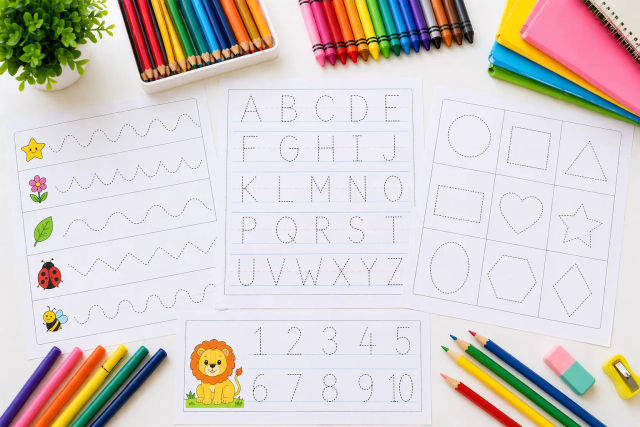
Print a beginning-sounds worksheet on A4 or US Letter paper. In the print settings, select Actual size or 100% so the pictures and letters keep their intended size. You can also use the free printables library to find suitable practice pages. If you want cards that match your home, take clear photographs of familiar objects and turn them into simple pictures with the Photo to Coloring Page tool. Check each picture before using it, since your child may know more than one name for it.
A simple 10-minute daily routine
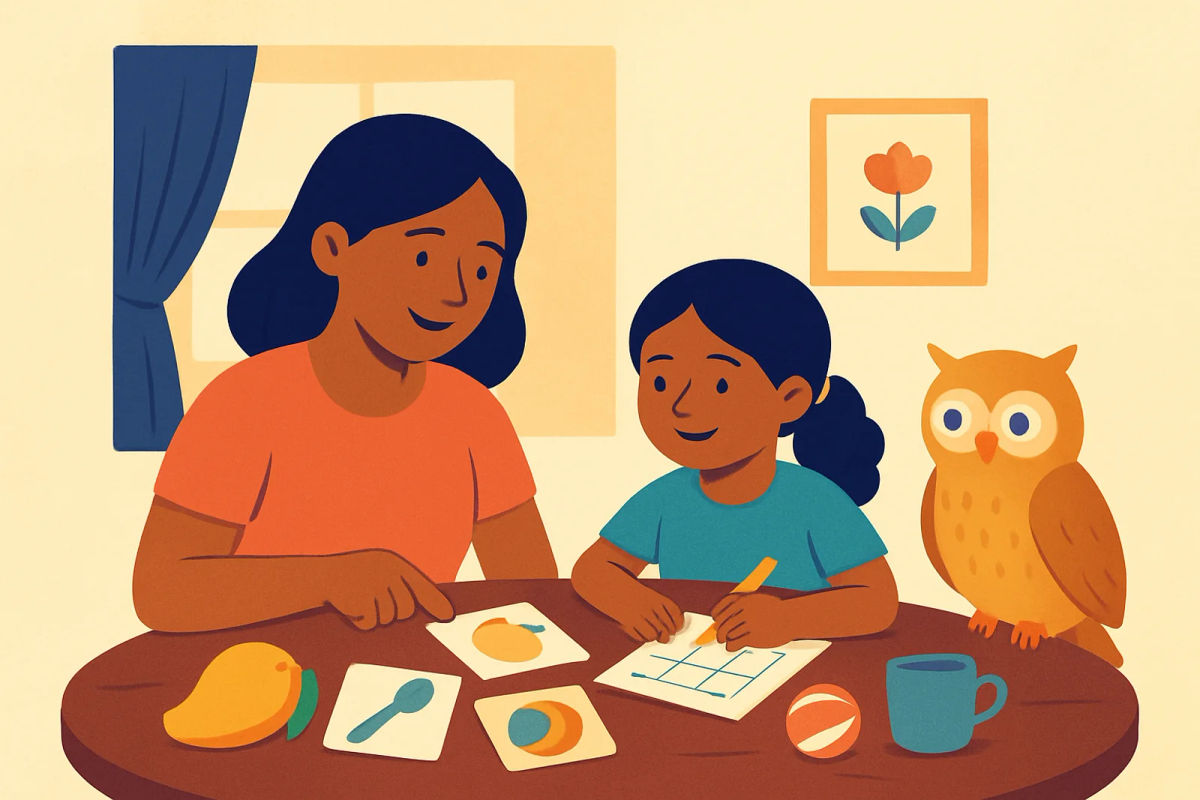
Keep the routine short and follow the same order each day. Sit beside your child so you can hear the words clearly and give help without taking over.
- First two minutes: Say one word slowly but naturally and ask, "What sound do you hear first?" Use words such as sun, sock, map and mango. Let your child answer aloud.
- Next three minutes: Sort the picture cards into groups by their first sound. Say each word as your child places it. For example, make one /m/ group and one /s/ group.
- Next three minutes: Play an oral game. Ask your child to find something in the room that starts with /b/, or give a thumbs-up when two words start with the same sound. Try ball and book, then ball and cup.
- Final two minutes: Use a beginning-sounds worksheet. Let your child name each picture, circle the matching letter or sound, and check the work together. Stop when the 10 minutes are over, even if one item remains.

Lumi's tips
- Keep the cards near a basket of everyday objects, so I can help you begin without a long setup.
- Let me hear your child say the word before I show the letter. Listening comes first.
- If a picture has two possible names, choose one name for today and use it consistently.
- Stop while the practice is still manageable, then return tomorrow with two familiar cards.
- I like a small note beside the worksheet to show which sounds your child is hearing well.
Picture-card games that need no reading
Picture cards let your child practise listening without needing to read a word. Begin with cards that have clear, familiar names. Say each word yourself if your child is unsure what a picture shows.
Try same or different. Place sun and sock together and ask if they start with the same sound. Then place sun and map together. Your child can answer by speaking, pointing or giving a thumbs-up.
For a hiding game, place three cards in front of your child, then hide one. Give a clue such as, "Find the picture that starts with /k/." Your child can point to cat or cup. You can also say three words and ask which one starts differently, such as cat, cup and fan.
Accept a spoken answer first. Add the written letter after your child can hear the sound with more confidence. If your child says the whole word, repeat it and draw attention to the first sound. The aim is careful listening, not a quick performance.
How to support a child learning English or another language
Begin with picture names your child already knows in the home language. This gives your child a way to understand the picture before dealing with a new English word. When useful, say both words. For example, name a familiar fruit in your home language, then add mango in English and listen for /m/.
Choose words with a clear first sound and say them naturally. Avoid stretching every sound for too long, since this can make the word sound unusual. Say sun clearly, then repeat it at a comfortable pace.
Check whether a picture could have different names. A picture may be called cap by one child and hat by another. Agree on one word for that activity and use it consistently. You can ask your child's teacher which words are being used in class.
Do not correct an accent. Repeat the word clearly and ask your child to listen again. A gentle response might be, "I heard you say sun. Listen to my first sound, /s/." Keep the practice conversational, especially when your child is learning English, Hindi or a regional language alongside another home language.
How to make the activity easier or harder
Adjust the activity to your child's listening skills, not just their age. A child who is just starting may need only two sound groups and objects that are easy to name. Give two choices: "Does sun start with /s/ or /m/?" Let your child point before asking for a spoken answer.
If your child needs more practice, repeat the same cards across several days. Add real objects from the kitchen, school bag or play area, such as a bottle, book, pencil or plate. Familiar objects reduce the effort needed to name the picture.
For a child who is ready for more, remove the pictures and ask for another word with the same beginning sound. You can then connect the sound to its letter. Ask, "What sound starts map? Which letter shows /m/?"
A Nursery or LKG child may need more oral games and pointing. A child in UKG or Class 1 may be ready to complete a short worksheet independently, then explain one or two answers. Keep the challenge small enough that your child can listen carefully.
Mistakes to avoid during sound practice
Letter names and speech sounds are related, but they are not the same. Do not teach the letter name as a replacement for listening. Ask for the sound first, then name the letter when your child is ready. For sun, ask for /s/ before saying that the letter is S.
When modelling a sound, avoid adding an extra vowel. Say /b/ briefly rather than saying "buh" if you are asking your child to hear the sound in ball. Some sounds, such as /m/, can be held gently. Others should be kept short and clear.
Use only a few cards and stop when your child becomes tired. Ten focused minutes is enough for one session. If your child makes a mistake, do not mark every answer immediately. Repeat the word, give a choice, and praise careful listening. You might say, "Listen again. Is fan /f/ or /m/?"
Avoid turning the worksheet into a test. Put it away if your child is rubbing out repeatedly or losing interest. You can return to the same sound through a real object or a short conversation the next day.
When to change the plan or ask for help
Keep a simple note of the sounds your child can hear and the ones that still need practise. You might write, "Hears /m/ and /s/ in familiar words. Needs more help with /t/." This helps you choose the next cards without repeating every sound at once.
Ask your child's class teacher for examples of the sounds and words being taught. Matching home practice with school work can make the routine easier for your child. The teacher may also tell you which picture names are being used in class.
Change the plan if your child is regularly upset by listening tasks. Use fewer cards, offer more pointing and speaking, and include familiar home-language words. Worksheets should be short practice, not a measure of your child's ability. Oral games and real conversations remain part of learning.
If your child cannot follow simple spoken directions, or you have concerns about hearing or speech, speak with the school. Ask a doctor or qualified speech professional for advice. A school can also help you decide whether your child needs a different kind of support.
Questions parents ask
How many beginning sounds should I teach at one time?
Start with two sound groups, then add a third when your child can sort the first two with less help. Use six to ten cards and choose familiar words. A small set gives your child more chances to listen carefully.
Should I teach the letter name or the sound first?
Ask your child to hear and say the beginning sound first. Once the sound is familiar, connect it to the letter name and shape. For example, hear /m/ in **mat**, then introduce M as the letter that represents that sound.
What can I do if my child gives the wrong sound every time?
Reduce the choices to two sounds and use real objects your child knows well. Say the word again, highlight the first sound, and let your child point before answering aloud. If the difficulty continues or your child becomes upset, discuss it with the class teacher.
Can I teach beginning sounds in a home language before English?
Yes. Start with picture names your child understands in the home language, then add the English word when useful. This builds the listening routine without making your child guess the picture name and the sound at the same time.
How often should my 5-year-old use a beginning-sounds worksheet?
A short worksheet can be used a few times each week, usually for the final two minutes of the routine. Oral games, picture sorting and real conversations should make up much of the practice. Stop if your child is tired and try again another day.