How to teach children to share and take turns with siblings
Learning how to teach children to share and take turns becomes easier when practice is short, predictable and calm. You will learn how to use simple games, a timer, feeling words and printable turn cards to guide sibling play at home.
In short
- Sharing means allowing someone else to use something, while taking turns gives each child a fair chance.
- Short, predictable turns are easier for young children than long waits.
- A timer, simple scripts and a small job can help the waiting child manage the pause.
- Practise with easy games when siblings are fed and rested, before arguments begin.
- Children may share activities while still keeping some personal belongings private.
Why sharing and taking turns are different skills
Sharing means allowing another person to use a toy, book or material. Taking turns means waiting, then getting a fair chance to use it. A child may be happy to give a block to a sibling but still find it hard to wait for the red car to come back. Teaching these as separate skills makes your guidance clearer.
Toddlers often protect favourite toys and need an adult close by. They may understand your words but still need help to stop their hands and wait. Children in Nursery, LKG and UKG usually manage best with very short turns, repeated practice and clear reminders such as, "Aarav's turn, then Meera's turn."
Children in Class 1 to 5 can begin to agree on rules, use a timer and solve small disagreements with less help. They can suggest who goes first, decide how many minutes a turn lasts and use phrases such as, "My turn next." Even older children may need support when they are tired, hungry or very excited about a game.
Set up a simple turn-taking routine
Start with one toy or activity that siblings often argue over. A building set, ball, puzzle or set of coloured pencils can work well. Put away other toys for a few minutes so the children can focus on one clear routine.
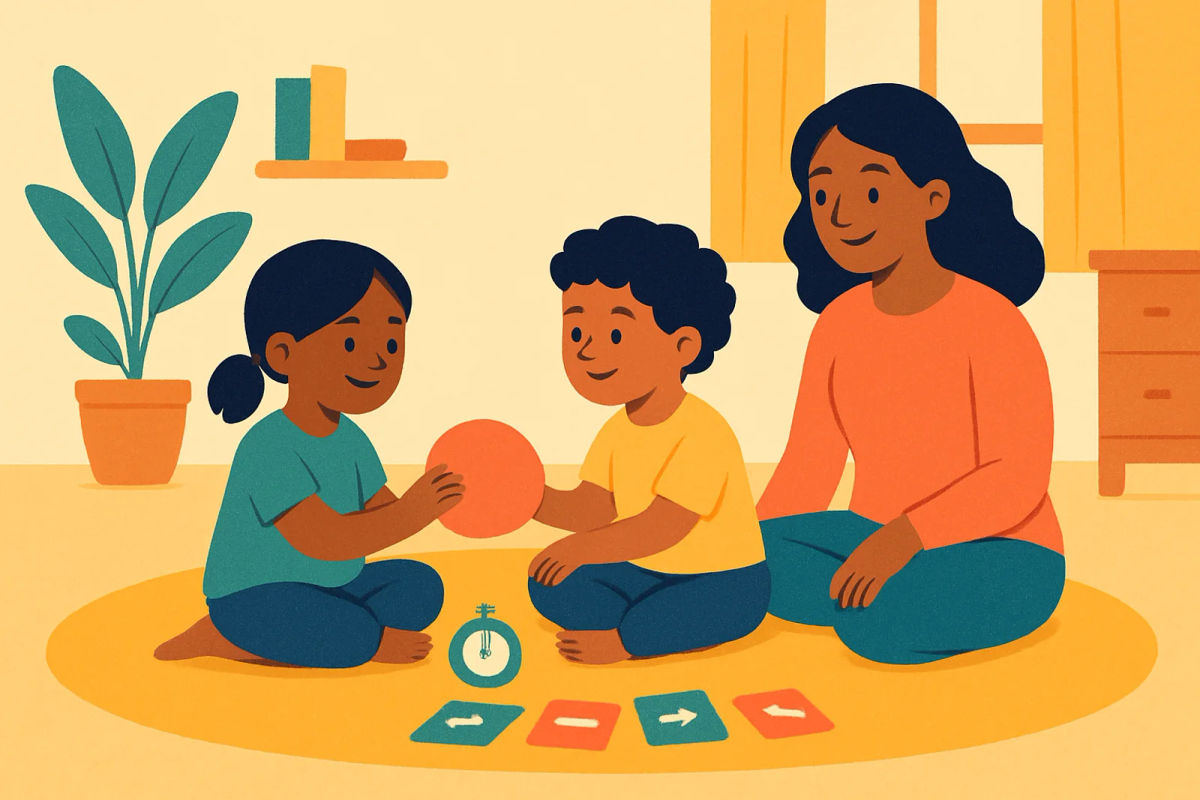
Use a short timer, such as two or three minutes. A timer helps the waiting child see that the change will happen soon. Keep the same steps each time:
- Say, "Aarav's turn, then Meera's turn."
- Give the first child the toy and start the timer.
- When it rings, say, "Aarav's turn is finished. Meera's turn now."
- Reset the timer and praise safe handover.
Give the waiting child a small job. They might choose the next colour, hold the turn card, set up the next puzzle piece or press the timer with your help. Keep your words calm and brief. If a child protests, repeat the order rather than giving a long explanation. The routine should feel familiar, not like a debate each time.
Play short games to practise before conflicts start
Practise turn-taking when the children are fed and rested, rather than starting with the toy they are already fighting over. The aim is to help them experience a successful handover before a real disagreement makes waiting harder.
Try rolling a ball to one another, adding blocks to one tower, passing a soft toy around a circle or taking turns drawing one line on a shared picture. A simple colouring activity, such as big and simple animal coloring pages, can work well when each child adds one colour at a time.
Begin with turns lasting less than five minutes. For a toddler, even one minute may be enough. Slowly make turns longer if both children manage well. Stop while the activity is still going smoothly, then try again another day.
Give specific feedback instead of general praise. Say, "You waited while your sister rolled the ball," or, "You handed it over when the timer rang." These words tell children exactly what they did. If the game becomes tense, shorten the turn or return to a simpler activity.

Lumi's tips
- Lumi suggests keeping the timer and turn cards in the same place so your children know where to find them.
- Start with a game that is easy to stop, such as rolling a ball, before using a favourite toy.
- If waiting is hard today, shorten the turn instead of giving a long lecture.
- Use the same calm words at home and ask other adults in the family to use them too.
Use feeling words and calm scripts
Name the feeling without blaming either child. You might say, "You feel upset because you wanted the red car," or, "You are disappointed that the puzzle piece is not with you yet." Naming the feeling does not mean changing the agreed turn. It shows your child that you understand the problem while keeping the boundary clear.
Teach short phrases that children can practise when everyone is calm:
- "My turn next."
- "Can I have a turn after you?"
- "I need help."
- "Please give it to me when the timer rings."
Acknowledge the child who is waiting. Say, "You are waiting, and that is hard. Your turn is next." If a sibling grabs the toy, stop the game, return the toy safely and repeat the next turn. Avoid shouting across the room or asking children to solve a problem that is too big for them. Model the response you want to see: pause, use a calm voice, state the order and restart with a shorter turn if needed.
Make and use printable turn cards at home
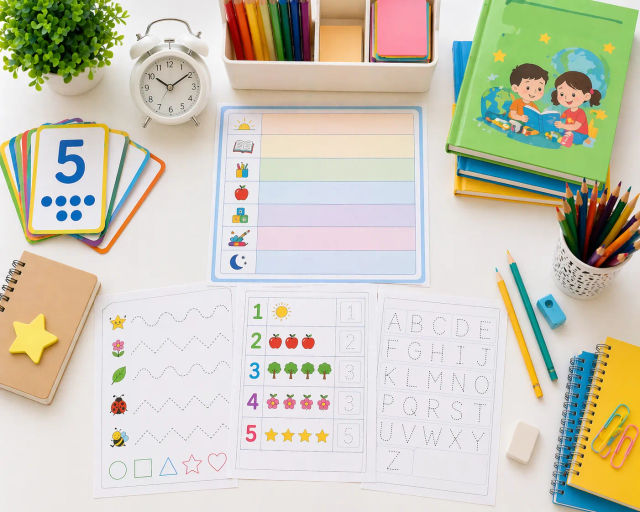
Simple cards give children something they can see and hold. Make one card for each child with their name or photo, along with a "my turn" card, a "your turn" or "waiting" card and a small timer reminder. Use different colours if that helps your child recognise the cards, but keep the words large and simple.
You can print a ready-made set from the free printables library if one suits your activity, or create your own cards in a word processor or simple free card-making programme. Add names, colours or clear pictures, then print on A4 paper. Select "Actual size" or 100% in the print settings, cut out the cards and keep them near the toy basket or play mat.
For home practice, place two cards on the fridge. Aarav holds the "my turn" card while he plays. Meera holds the "waiting" card until the timer rings. Then they swap cards and positions. For a child who cannot read yet, use a photo or a coloured dot. Keep the cards for one activity at first. Once the routine is familiar, you can use them with a ball, building set or puzzle.
Common mistakes and what to do instead
Do not demand that a child hand over a special comfort toy immediately. Some belongings can stay private. Begin with shared toys and activities, then discuss which items are for everyone and which items are kept safely in a child's own place.
Avoid making one child wait for an unusually long turn. Young children often lose control when the wait feels endless. Use short, predictable turns and tell the waiting child what will happen next. A timer is more useful when it matches the child's age and patience.
You do not need to ask, "Who had it first?" during every argument. If the children cannot agree, set a fresh order yourself. Say, "We will start again. Meera goes first for two minutes, then Aarav." This removes the need to prove a past claim and gives both children a clear next step.
Forced sharing should not be the only answer. Teach children that personal belongings may stay private, while shared games need agreed turns. A child can say no to lending a special toy and still learn to take turns with a puzzle, ball or building set.
When siblings need more help
Stay close during practice if one child snatches, hits, throws toys or repeatedly refuses every turn. Your first task is safety. Move the toy out of reach, block hitting gently if needed and use a short sentence such as, "I will not let you hit. We are taking a break."
Separate the children briefly when play is no longer safe. Once they are calmer, help them name the problem in simple words. You might say, "You both wanted the blue truck." Restart with an easier activity, a shorter turn or one adult sitting beside them. Do not expect a successful game straight after a heated argument.
Ask the school teacher for ideas if the same difficulties appear often in class and at home. The teacher may notice when the problem happens and which reminders help. Speak with a doctor or child development professional if you have wider concerns about communication, strong distress or behaviour that puts anyone at risk. You can share what you have observed, how often it happens and what helps or makes it worse. This information can guide the next conversation.
Questions parents ask
At what age can children start learning to share and take turns?
You can begin with very small steps in the toddler years. Young children need close adult help, short waits and repeated practice. Children in Nursery, LKG and UKG can practise simple turn routines, while older children can help agree on rules and solve small disagreements.
How long should a child's turn last when siblings are arguing?
Start with one to three minutes, depending on the children's ages and the activity. A toddler may need a turn of about one minute, while an older child may manage longer. Shorten the turn if either child is becoming distressed or unsafe.
Should I make my child share a favourite toy?
No, a child may keep a special comfort toy or personal belonging private. Choose a shared toy or activity for early practice. Explain that some things belong to one person, while shared games use an agreed turn order.
What can I do if my child grabs the toy or refuses to wait?
Stop the game and keep the toy safe without shouting. Name the feeling, repeat the turn order and offer a simple phrase such as, "My turn next" or "I need help." If grabbing continues, separate the children briefly and restart later with a shorter turn or easier activity.
Can a timer or printable turn cards really help children practise at home?
They can make the routine easier to see and repeat. A timer shows when the turn changes, while cards give children a clear role. They work best when an adult stays nearby, uses the same words and chooses turns that are short enough for the children to manage.