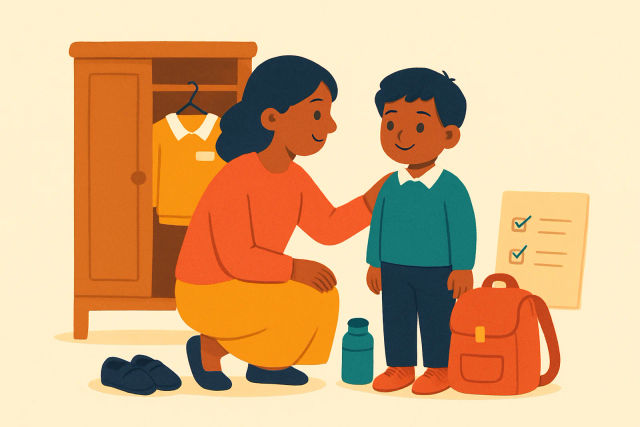
school readiness self help skills: practise opening lunch boxes, bottles and school bags
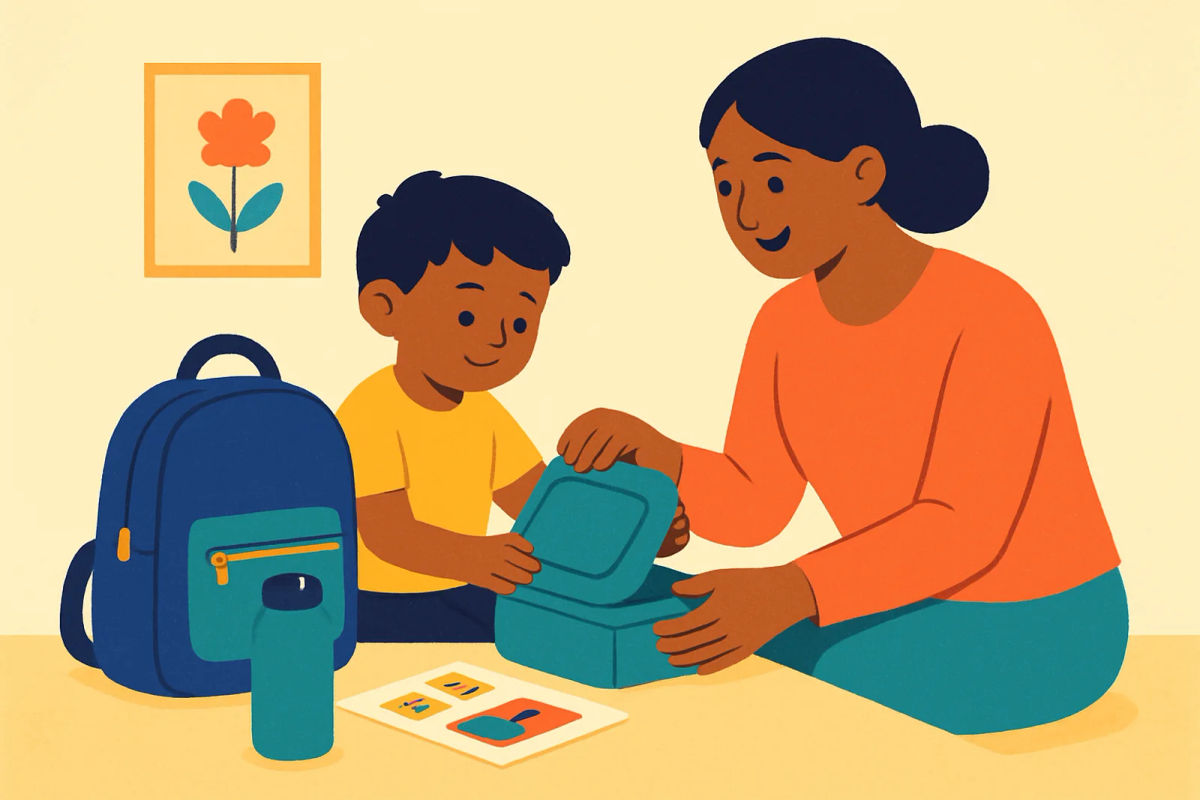
School readiness self help skills become easier when your child practises with the real lunch box, bottle and bag they will carry. This guide shows you how to build a short daily routine and record progress with a simple picture chart, without rushing in to do every task.
In short
- Practise with the exact lunch box, bottle and bag your child will use at school.
- Keep practice short and show one step before allowing your child to try.
- Teach the whole routine, including taking items out and putting them away.
- Mark effort and the kind of help needed, not just tasks done alone.
- Choose containers that match your child's hand strength and comfort.
What school self help skills should your child practise first?
Start with the small tasks your child will need during an ordinary school day. These may include opening the lunch box, opening and closing the water bottle, unzipping the school bag, and taking out a book or pencil pouch. Your child may also need to put these items back after eating or using them.
Begin with the items your child will actually carry. A lunch box that is easy for you may have a lid that feels stiff to a small hand. A bag with two zips may need a different action from a bag with one large zip. Practising with unfamiliar containers can make the task seem harder than it is.
The aim is to make each task easier to manage, not to make your child do everything quickly. Allow time for slow movements, pauses and a second attempt. You can add these steps to a wider Back to School Activities routine as the first day gets closer.
How can you practise with your child's own school items?
Set aside 5 to 10 minutes after breakfast or in the evening. A short session that happens often is easier to manage than a long session once a week. Keep the school bag, lunch box, bottle and pencil pouch in one place so your child can practise the same routine each time.
Show one task slowly, using few words. Then let your child try while you give only the help needed. You might point to the zip pull, steady the bag or say, "Try turning the lid." Wait a little before taking over.
Practise the full routine when your child is ready:
- Pick up the bag and place it on a chair or table.
- Open the zip and remove the lunch box and bottle.
- Open the lunch box and bottle, then close both again.
- Put the lunch box first, the bottle next, and the books and pencil pouch after that.
- Zip the bag and place it near the door.
Use the same school uniform bag too, if possible. This helps your child practise the movements needed on a real school morning.
How do you teach lunch box and bottle skills?
Begin with an easy lunch box lid or latch. When your child can manage it, practise a tighter lid or a box with more than one compartment. Change one feature at a time so your child can tell which movement is new.
Show your child how to place the box on a table or hold it firmly against the body before opening it. A steady box is easier to open than one that slides around. Ask your child to take out the food, close the box, and put it back without turning it upside down.
Check that the bottle lid closes properly without being so tight that your child cannot reopen it. Practise opening the bottle, drinking, closing it and checking for leaks over a sink or table. A small spill is a useful chance to show how to wipe the surface and try again.
Before school, test the complete routine with the food container and bottle empty. Then use the foods your child usually carries. Teach your child to keep the bottle upright and to return both items to the bag after drinking or eating.

Lumi's tips
- Lumi suggests placing the bag near the door so your child can practise the same final step each day.
- Let your child choose a sticker or coloured pencil for the picture chart, then mark an attempt together.
- Keep one spare cloth nearby for spills so your child can practise cleaning up without worry.
- If a zip feels hard, Lumi says to check the crowded bag before adding more practice.
How do you teach zips, bags and putting things away?
First practise finding the zip pull. Ask your child to hold the fabric steady with one hand and pull the zip along its track with the other. If the zip is stiff, check if the bag is overfilled or if a book is pressing against it before assuming your child needs more practice.
Teach one simple order for packing. For example, the lunch box goes in first, the bottle next, followed by books and the pencil pouch. Your child does not need to pack exactly like this, but a regular order makes it easier to remember what belongs in the bag.
Add a short check before leaving home:
- Lunch box packed
- Bottle packed
- Bag zipped
- Bag placed near the door
At first, say each item aloud. Later, point to the bag and wait for your child to check it. A child who forgets one item can return to the routine and fix it, rather than hearing that everything is wrong. Keep the bag light enough for your child to lift and carry comfortably.
How can a picture chart record progress without pressure?
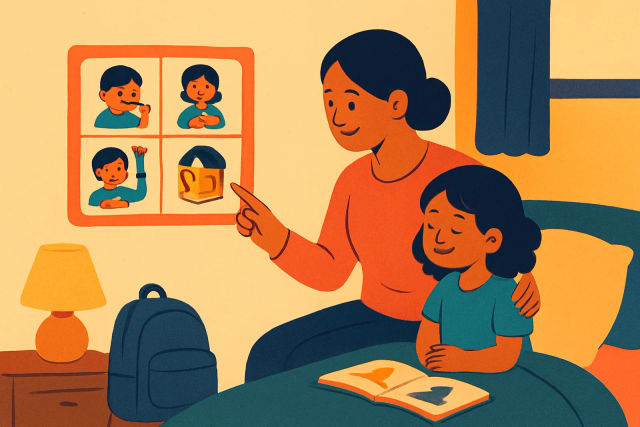
A picture chart gives your child a clear reminder of the routine. Make four spaces with simple drawings or words: open lunch box, open bottle, open bag and pack everything away. Draw pictures your child recognises, such as the actual red bottle or the bag with its name tag.
Let your child add a tick, sticker or coloured circle after trying each task. Mark an attempt even when you gave some help. You can write a small note beside the chart, such as "watched", "needed one reminder" or "did it alone". This records progress without making independence the only success.
Keep the chart where practice happens, such as beside the school bag. Review it once or twice a week and choose one step to practise next. Avoid asking your child to fill it in perfectly every day. The chart is a prompt for practice, not a score sheet.
You can print a blank page from the free printables library on A4 or US Letter paper at Actual size, or draw a simple chart yourself. Leave enough space for your child's marks and use large pictures for younger children.
How should practice change for different ages?
For a Nursery or LKG child, practise one action at a time. Use larger items with easy-to-hold lids and zip pulls. Demonstrate slowly, then allow your child to copy one movement. You may need to steady the bag or place the box in the right position several times.
For a UKG or Class 1 child, practise the whole lunch and bag routine. Encourage your child to say, "Please help me with the lid" or "I cannot pull the zip" instead of handing the item straight to you. Asking clearly is a useful part of managing a school task.
For children in Classes 2 to 5, add checks such as looking at the bottle cap, carrying the bag safely and repacking items after lunch. Your child can also check that the lunch box is closed before putting it into the bag.
Use your child's actual hand strength, coordination and comfort as your guide. Do not compare your child with a sibling or classmate. Some children manage a zip but need help with a tight bottle cap, while others need support with a crowded bag. Adjust the item or the task when needed.
What mistakes should parents avoid before school starts?
It is tempting to do the task because you can finish it quickly. Try to pause when your child has started learning the steps. You can ask, "Which part would you like help with?" and assist with that part while leaving the rest to your child.
Avoid changing containers often. A different lid, zip or bag can make a familiar task feel new. If you need to replace an item, give your child several short practice sessions with the new one before school begins.
Do not turn practice into a test. Spills, dropped pencils and an open zip are ordinary parts of learning this routine. Reset the item and try again calmly. If your child is tired or upset, stop and practise another day.
Ask the school about difficult fasteners or lunch routines that may need a small change at home. The teacher may be able to explain how children are expected to store lunch boxes, bottles or bags. If a container remains too difficult after practice, choose a safer, easier option rather than asking your child to struggle with it.
Questions parents ask
When should I start practising lunch box, bottle and school bag skills?
Start a few weeks before school if you can, but any short practice is useful. Begin with one item your child will use every day, then add the full routine when that movement feels familiar.
What should I do if my child cannot open the bottle or lunch box independently?
Watch which part is difficult. Try a container with an easier lid, make sure the box is steady, or loosen the bottle lid slightly while keeping it closed safely. Give your child one small part to do and help with the rest, then ask the school if the item suits the classroom routine.
Should I buy easy-open containers for school?
Yes, an easy-open container can be a sensible choice when your child cannot manage the current one after regular practice. Test it with your child before buying several items, and check that it closes securely and does not spill in the bag.
How can I help my child without doing the whole task for them?
Give a short prompt, point to the next step or steady the item while your child moves it. Wait before helping again, and name the part you will do, such as holding the bag while your child pulls the zip. Mark the attempt on the chart even when your child needed help.