How to write a paragraph from a picture: a simple Class 2 guide
This guide shows you how to write a paragraph from a picture using four simple parts: place, people or objects, action and one detail. You will also find picture prompts, a word bank and writing frames for children who need three to six lines.
In short
- Start with the place, then name people or objects, describe the action and add one detail.
- Use four questions to help your child read the picture before writing.
- Offer three, four, five or six lines to match your child's current writing ability.
- Accept clear ideas first, then check capital letters, full stops, spacing and spelling.
Teach the four-part picture plan
A child can often talk about a picture before they can turn those ideas into writing. Give your child a simple plan with four parts. First, name the place. It may be a park, classroom, market, garden or home. Next, name the people, animals or objects that you can see. Then say what is happening. Finally, add one small detail about colour, size, time or weather.
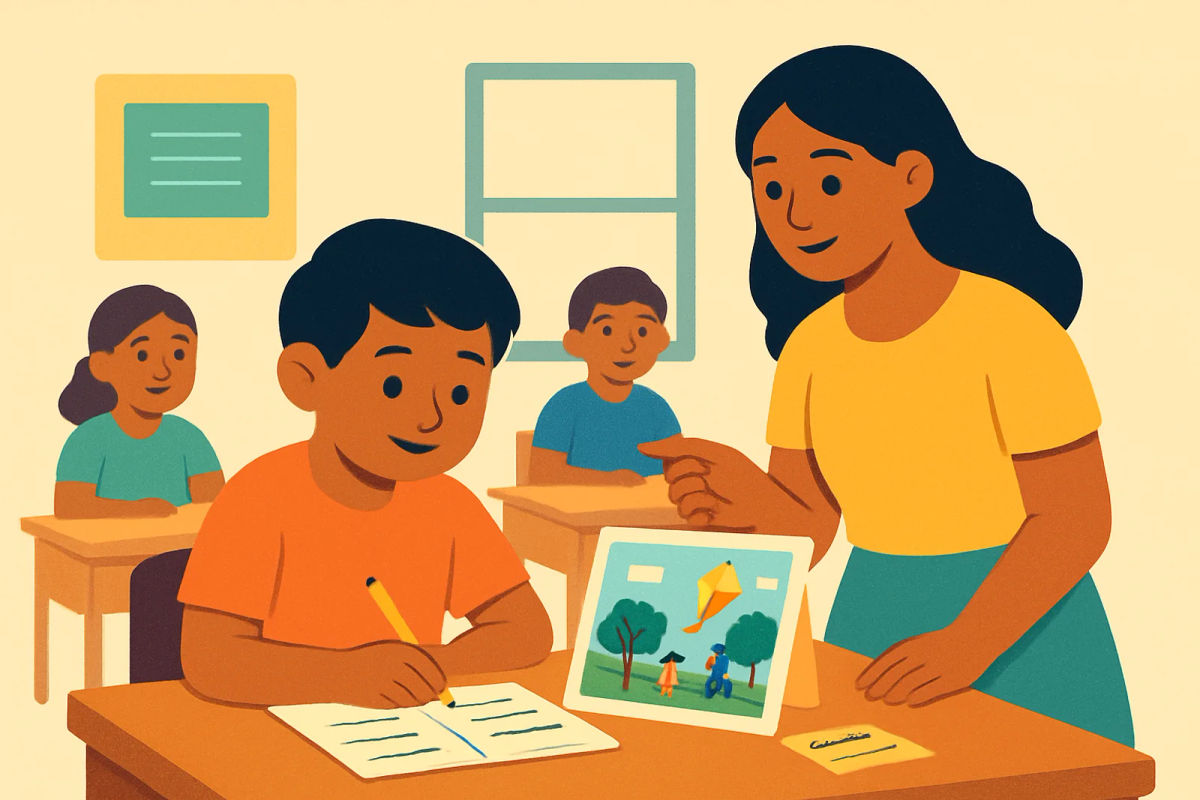
Write the four parts on a piece of paper and use them while you look at a picture together. For example, a child may say, "It is a park. I can see two girls, a boy, a kite and a tree. The girls are flying a kite. The sky is blue."
Show your child how these answers can become four connected sentences. The children are in a park. Two girls are flying a kite. A boy is sitting under a tree. The sky is blue. The sentences do not need difficult words. They need to stay connected to the same picture and give the reader a clear idea of what is happening.
Use questions to read the picture
Questions help your child notice details in an organised way. Ask one question at a time and first accept short spoken answers.
- Where are they?
- Who or what can you see?
- What are they doing?
- What else do you notice?
Model the answers before asking your child to join them into a paragraph. For a classroom picture, you might say, "Where are they? In the classroom. Who can you see? Children and a teacher. What are they doing? The children are reading books. What else do you notice? The teacher is near the board."
Now turn the answers into sentences: The children are in the classroom. They are reading books. A teacher is standing near the board. Add a detail if the picture shows one, such as open books or a window.
Remind your child to write what can be seen or what can be sensibly inferred. If a child is holding an umbrella, it is reasonable to say that it may be raining. It is not reasonable to invent the child's name, destination or feelings unless the picture gives a clue.
Give picture prompts that support writing
Choose a picture with a clear setting and a few easy actions. Useful prompts include a family at a park, children planting a tree, a rainy school day and a busy fruit market. In an Indian home, you might use a picture of children buying mangoes at a market or pupils watering plants in the school garden.
Match the speaking and writing task to the child's stage. A Nursery or LKG child can name the place, people, colours and objects. Ask the child to speak in short phrases rather than expect a full paragraph. A Class 1 child may say two or three sentences with your help. For a Class 2 child, ask for three to six lines using the four-part plan.
A stronger Class 2 writer can add one sentence about feelings, sounds, a reason or what may happen next. For example, "The children are happy because they planted a tree." Only add this kind of sentence when the picture gives a sensible clue. You can also ask, "What may happen next?" and let the child mark that sentence as a guess.

Lumi's tips
- Lumi says to let your child speak the four answers before asking for written sentences.
- Keep the word bank beside the writing page so your child can use it without stopping the activity.
- Read the finished paragraph aloud together and circle one thing that is clear before correcting one small error.
- Use a familiar home photograph when your child is unsure how to begin.
Build a small word bank
A word bank gives your child useful choices without taking away the thinking. Make four small groups on a sheet of paper.
- Place: park, classroom, market, garden, home, road
- People and objects: children, teacher, tree, kite, basket, books
- Action words: sitting, running, reading, carrying, playing, watering
- Detail words: sunny, rainy, blue, big, small, two, near
Add joining words such as and, while, because and then when they fit naturally. For example, "The children are planting a tree and the teacher is helping them." Keep the bank short enough for your child to use. A long list can make choosing harder.
Ask your child to choose words from the bank before writing. Then invite the child to replace one word with a more exact word. Instead of "going", the child might use "walking" or "running". Instead of "thing", the child might write "basket" or "watering can". Read the sentence aloud together to check that the chosen word matches the picture.
Offer three-line to six-line writing choices
A writing frame helps you adjust the task without changing the picture. Children do not all need to write the same number of lines on the first attempt.
For a child who needs support, use a three-line frame:
- Write the place.
- Write the people or objects.
- Write the main action.
A four-line frame gives one sentence for each part of the plan. This works well for many Class 2 children. Children who are ready for more can write five or six lines by adding a detail, a second action or a closing sentence about what may happen next.
Accept clear short sentences first. Then help your child check one feature at a time: a capital letter at the beginning, a full stop at the end, spaces between words and familiar spellings. You can say the sentence slowly while the child writes it. Avoid correcting every word while the child is still forming ideas. A child who finishes three clear lines has completed a useful writing task, even when a longer frame is available.
Show a model paragraph and common mistakes
Use one simple model and point to the picture as you read it. Here is an example: "The children are in a park. Two girls are flying a kite. A boy is sitting under a tree. The sky is blue." Each sentence gives information about the same picture. The paragraph has a place, people, an action and a detail.
Children may list objects without saying what is happening: "There is a tree, a kite, a boy and a ball." Ask, "What is the boy doing?" This usually helps the child add an action. Another common problem is starting every sentence with the same words. Help the child change "There is" to "The boy is" or "Two girls are" when it is accurate.
Check for missing full stops, lower-case sentence beginnings and words written without spaces. Also ask the child to remove details that the picture does not show. A child may write that the boy is happy, but the picture may give no clue about his feelings. Finally, ask your child to read the paragraph aloud. If it sounds unfinished, ask which part of the four-part plan is missing.
Use a printable for guided practice
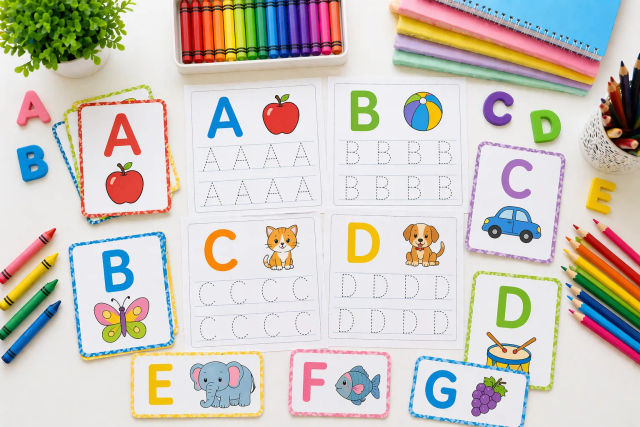
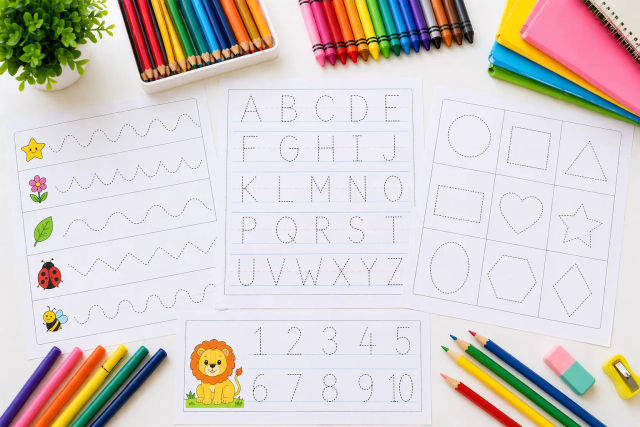
A picture-writing worksheet can keep the activity organised. Choose one with a picture box, four planning questions, a word bank and lined space. The child can look at the picture, write key words beside the questions and then use those words to make sentences. You can find related practice in the free printable English worksheets section.
A free maker can help a teacher or parent prepare a new prompt with chosen vocabulary and a three-line, four-line, five-line or six-line writing frame. Select words that suit the lesson, such as garden actions for an EVS connection or market objects for a speaking activity. If you want to make a picture from a familiar photograph, the Photo to Coloring Page tool can provide a simple outline for a child to observe and describe, though you should use it only when the picture is clear enough for writing.
Use the same worksheet three times. First, ask for oral answers. Next, write a paragraph together. Finally, let the child work independently. EarlyActivity printables are PDFs sized for A4 and US Letter paper. Print at Actual size, 100 percent. The free printables library has more activities for home and classroom use.
Adapt the activity at home or in class
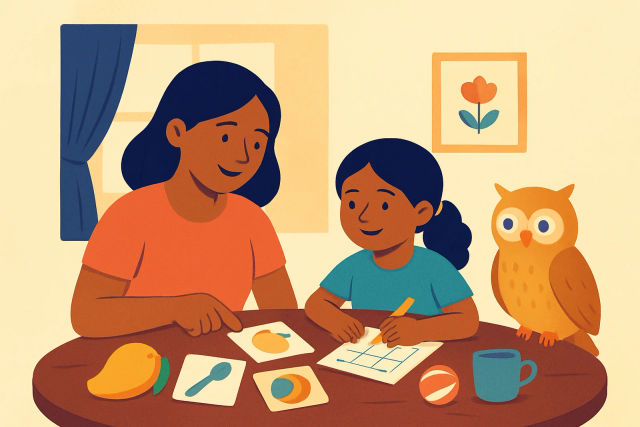
At home, choose a photograph of a familiar place, such as your balcony, a local park or a family picnic. Let your child tell the paragraph before writing it. You can write the four key answers on small slips of paper and place them in order. This makes the move from speaking to writing less sudden.
In a Class 2 classroom, pair children for a short speaking task. One child asks the four questions while the other writes key words. Swap roles for a second picture. After this, each child can write independently. The pair work gives children practise in listening, asking questions and selecting useful details.
For children who need more help, allow drawing, oral rehearsal, a word bank and sentence starters such as "The children are in..." or "I can see..." Give one line at a time if the full page feels difficult. For children ready for more, ask them to add a title, two describing words or a final sentence about what may happen next. Keep the main goal clear: the writing should help a reader understand the picture.
Questions parents ask
How many sentences should a Class 2 child write from a picture?
Three to six lines are a useful range for a Class 2 child. Four sentences match the four-part plan, while a child who needs support may begin with three lines. A child who is ready can add a detail, another action or a closing sentence.
What should I do if my child can describe the picture but cannot start writing?
Let your child say the paragraph aloud first. Write four key words or short answers under the questions, then help the child turn the first answer into one sentence. Sentence starters such as "The children are in..." can provide a clear beginning.
Should children write only what they can see in the picture?
They should write details they can see or sensibly infer. For example, an umbrella may suggest rain, but it does not show a person's name or exact destination. Mark guesses about what may happen next as predictions rather than facts.
How can I help a child who repeats the same words in every sentence?
Build a small word bank with place words, action words and exact names for objects. Ask the child to replace one repeated word, such as "going", with a word that matches the picture, such as "walking" or "running". Read the sentences aloud to hear which word sounds clearer.
Can I use a picture-writing worksheet for children who write at different levels?
Yes. Use the same picture and change the writing frame. One child can name objects or complete three lines, while another can write four to six lines with a detail or prediction. Oral answers, word banks and sentence starters can support children who need more help.