How to prepare a child for a school admission interview without rehearsing answers
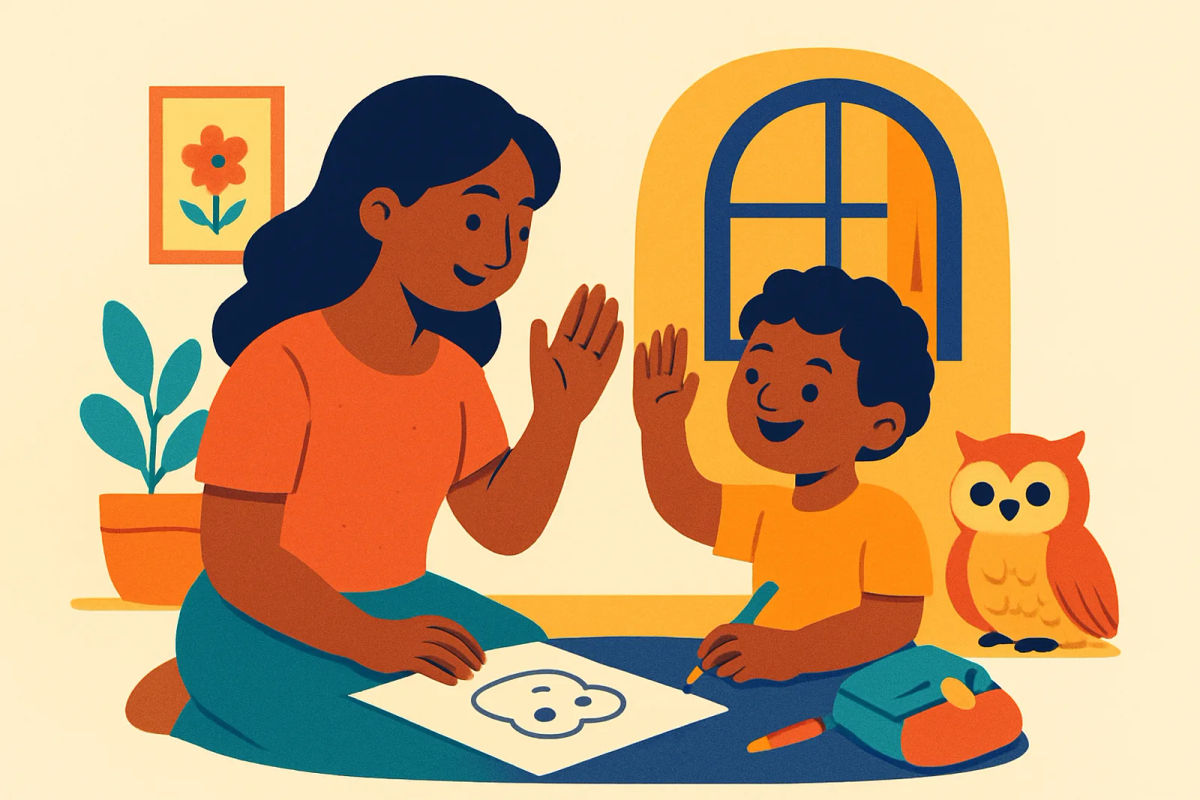
Knowing how to prepare a child for a school admission interview can feel simpler when practice happens through play, conversation and familiar routines. You will learn how to build useful words, use a picture-talk or name activity, and support your child calmly on the day.
In short
- Use pretend play to practise greetings, introductions, listening and asking for help.
- Let your child talk about familiar people, objects, books and activities instead of memorising a script.
- Picture-talk and name-tracing activities can make short practice sessions feel familiar and manageable.
- Adjust practice to your child's age and stop before tiredness turns it into pressure.
- On the day, give simple information, allow settling time and listen kindly afterwards.
What children may experience during a school admission visit
A school admission visit may include meeting an adult, seeing a classroom, answering simple questions or joining a short activity. A child may be asked to say their name, identify colours, talk about a toy, follow an instruction or share something about home. The exact experience depends on the school and the child's age.
Schools may be noticing how a child communicates, listens, plays and asks for help. They are not expecting a Nursery, LKG or UKG child to give polished, long answers. A Class 1 to 5 child may be expected to listen to a question and reply in a fuller sentence, but the conversation should still be about familiar things.
Tell your child that it is fine to take a moment to think. They can say, "I do not know," ask for the question again or ask a parent for support when this is appropriate. A calm explanation before the visit can help your child understand that it is a new place to visit, not a performance that needs perfect answers.
Practise useful words through everyday play
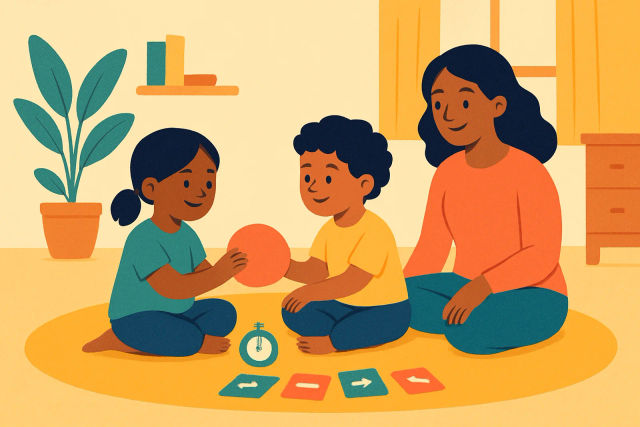
Pretend play gives your child a safe way to practise a few useful words. Sit opposite your child and take turns being the visitor, teacher and child. Begin with a simple greeting such as, "Good morning," followed by, "My name is Riya." Ask, "How are you?" and accept a natural answer such as, "I am fine," "I am happy" or a nod.
Give your child chances to ask for help during play. Useful phrases include, "Please help me," "Can you say that again?" and, "I do not understand." You can pause while opening a box, finding a pencil or completing a small puzzle so your child has a real reason to use one of these phrases.
Talk about a favourite book, toy, food, family member, pet or weekend activity for two or three minutes. Change roles often. When your child acts as the teacher or visitor, answer simply and warmly. This shows that adults can listen, repeat a question and help when someone needs support.
Use picture talk instead of memorised answers
Choose a picture of a home, park, classroom or family. Ask open questions such as, "What do you see?" "What is the child doing?" and, "What might happen next?" Your child may point, use one word, speak in short sentences or give a longer explanation. All of these are useful ways to communicate, depending on age and comfort.
Model good conversation without correcting every small grammar mistake. You might say, "I will look carefully before I answer," then take a moment, look at the speaker and speak clearly. If your child gives a brief answer, add one gentle prompt such as, "Tell me one more thing." Stop if the questions begin to feel like a test.
A picture-talk printable gives your child a familiar way to practise noticing, describing and sharing ideas. You can use a page from the free printables library or draw a simple scene yourself. Keep the conversation connected to your child's own experience, such as a visit to a park, a family meal or a classroom activity.

Lumi's tips
- Lumi's tip: Keep one pretend interview shorter than a favourite story, then finish while your child is still comfortable.
- Lumi's tip: Place a toy near you and let your child practise asking for help with a real puzzle or block activity.
- Lumi's tip: Use your child's home language when discussing the visit, then practise only the school phrases that feel useful.
- Lumi's tip: Pack the checklist the night before so the morning can stay calm and unhurried.
Try a name-tracing and introduction activity
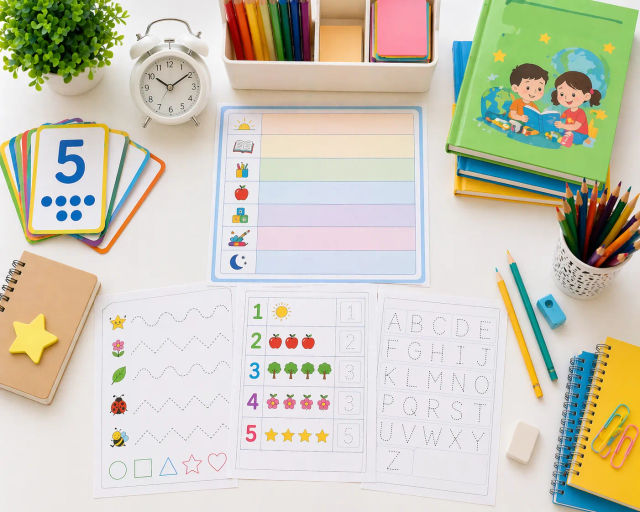
Print a name-tracing page and let your child trace or copy their name. After writing, invite your child to say the name aloud. Keep this as a gentle activity, not a test of neat writing or memory. You can make a page with the Name Tracing Worksheet Maker and print it at Actual size, or use a familiar tracing sheet such as Handwriting Practice Tracing.
For a younger child, add a photo or a simple drawing of a family member, favourite colour, toy or daily routine. Ask, "Who is this?" or, "What do you like about your toy?" The child can point, name the object or say a short sentence. For an older child, add prompts about school interests, a book they enjoyed, a hobby or something they can explain to another child.
You can print a ready activity or make a simple page with a free worksheet maker. Use only prompts your child already understands. The aim is to give them familiar ideas to talk about, not to create a list of answers to memorise.
Adjust practice for different ages
The length and style of practice should match your child's age, attention and mood. Short, playful practice is enough. Try these starting points:
- Ages 2 to 4: Spend two or three minutes on a greeting, saying a name, following one instruction and asking for help. Use toys and movement rather than sitting at a table.
- Ages 4 to 6: Add picture talk, simple choices and a short pretend classroom visit. Move between talking, drawing, sorting and a physical activity so the child does not feel stuck in an interview.
- Class 1 to 5: Practise listening to the whole question, giving a complete answer and talking about familiar interests. Ask about a book, hobby, game or home activity, then let the child explain one detail.
Stop when your child becomes tired or upset. Return to the activity another day instead of making practice feel like homework. If your child enjoys the game, you can repeat it briefly during an ordinary routine, such as before dinner or while packing a school bag.
What parents should avoid before the visit
Avoid making your child memorise a fixed introduction or preparing an answer for every possible question. Repeatedly asking the same questions can make the child's voice sound stiff and can make a new place feel more worrying. A few useful phrases and familiar topics are enough.
Do not coach your child to hide shyness. A quiet greeting, a pause or a glance towards you can still be part of a respectful interaction. Avoid correcting an accent, home language or every pause. You can model a clear sentence, but your child's way of speaking is part of who they are.
Do not compare your child with a sibling, neighbour or classmate who speaks more readily. Children settle at different speeds, especially in an unfamiliar room. Also avoid promising that a certain answer will guarantee admission. Each school follows its own process, so speak honestly and say that you will face the visit together.
If your child is comfortable using a home language, ask the school in advance about language expectations. This helps you prepare without asking the child to suddenly speak in a way that feels unfamiliar.
A gentle checklist for the day
Tell your child where you are going, who they may meet and what may happen. Use simple, honest words such as, "We are going to a school. You may meet a teacher, see a room and do a small activity. I will be nearby." Avoid giving details that the school has not shared.
Pack any documents requested by the school, a small water bottle and a familiar comfort item if the school allows it. Reach with enough time for your child to use the toilet, drink water and look around before meeting staff. A rushed arrival can make a new setting feel harder.
Before entering, remind your child of three ideas: greet the adult, say their name and ask for help when needed. Do not add a long list at the door. Your calm voice and unhurried manner will give more support than last-minute teaching.
After the visit, ask, "What felt easy?" and, "What felt difficult?" Listen without turning the conversation into a performance review. Thank your child for taking part, whether they spoke a lot, spoke a little or needed your help.
Questions parents ask
Should I teach my child exact answers for a school admission interview?
No. Teach a few useful phrases, such as a greeting, their name and a request for help, then talk about familiar topics. This gives your child something to draw on without making their answers sound memorised.
What should I do if my child stays silent during the admission visit?
Stay calm and avoid answering every question immediately for your child. Give them a little time, offer a gentle prompt or ask whether they would like your help. If the school allows it, your child may point, nod or answer after watching for a while.
How can I prepare a shy Nursery or LKG child without putting pressure on them?
Use two or three minutes of pretend play with a toy, focusing on greeting, name, one instruction and asking for help. Practise during ordinary routines, stop when the child is tired and never compare their speaking with another child's.
What can my child say if they do not understand a question or need help?
Practise, "Can you say that again?" "Please help me," and, "I do not understand." You can also teach your child to take a moment before answering. These phrases are useful in a real conversation and do not need to be delivered as a speech.
Can a name-tracing or picture-talk printable help before a school admission interview?
Yes, it can give your child a familiar way to practise saying their name, noticing details and sharing ideas. Keep the activity playful and accept pointing, single words or sentences according to your child's age and comfort.