Child not eating lunch at school: practical steps for parents and teachers
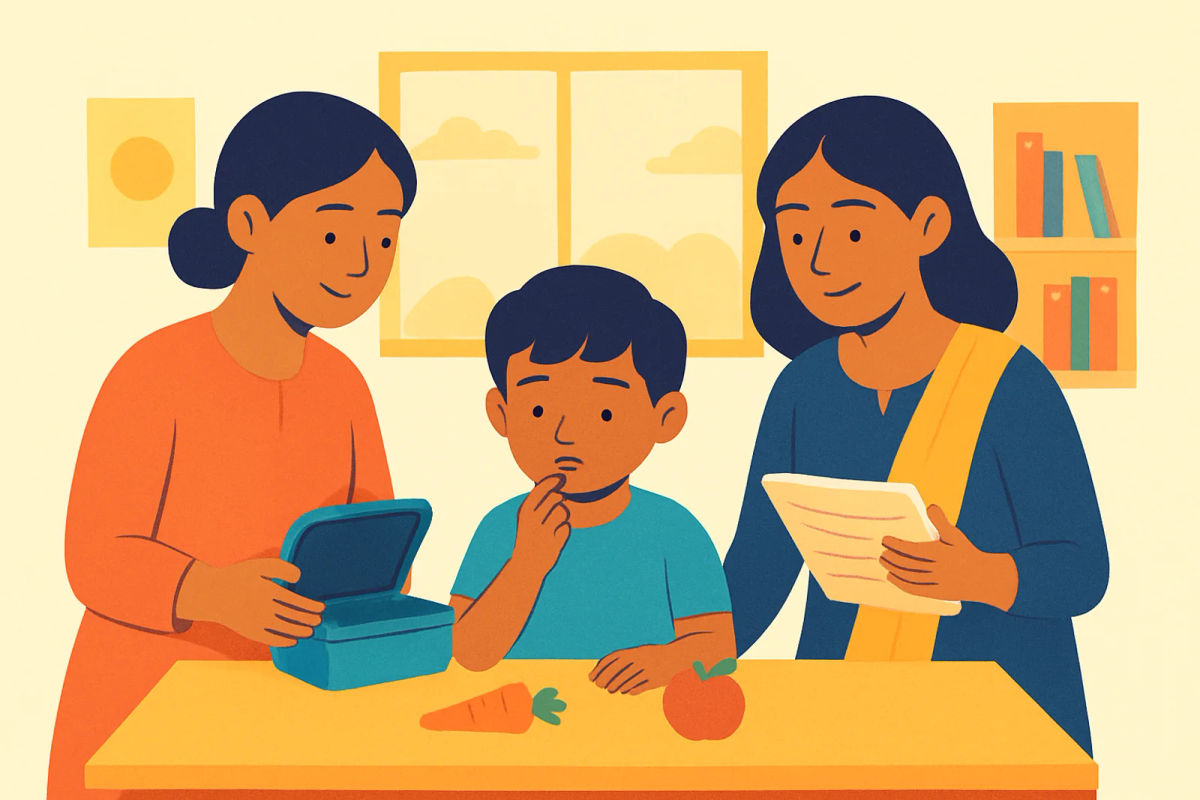
When your child not eating lunch at school becomes a pattern, a calm record can show what is happening without turning meals into a daily struggle. You will learn how to check portions, timing, food choices and school routines, and when to speak with the school or a doctor.
In short
- Track what your child eats and how they feel for one to two weeks without forcing or bargaining.
- Check whether the lunch portion, container, eating time or breakfast routine makes lunch difficult.
- Pack familiar foods with a very small new portion and give your child simple choices.
- Speak with the teacher about noise, teasing, supervision, time and worries at lunch.
- Ask a doctor for advice about weight loss, pain, vomiting, choking or a lasting change in eating.
Start by tracking the pattern without pressure
For one to two weeks, make a short note of what you pack, what your child eats, the time available and how they seem before and after lunch. You do not need to count every bite. Write down useful details such as "ate the idli, fruit came back" or "looked tired and wanted to play". This can show whether the pattern happens daily or only with certain foods, days, classmates, rooms or activities.
Ask gentle questions at a relaxed time, rather than questioning your child as soon as they come home. Try, "Was there anything you liked in your lunch today?" or "Was it easy to open your box?" Accept a short answer. Repeated questions, bargaining and asking your child to finish everything can make lunch feel like a test.
Keep your tone neutral when food returns home. Say, "I see some food is left," rather than, "You did not eat again." A simple record helps you and the teacher notice a pattern while your child remains free from blame.
Check the lunch-box size, timing and ease of eating
Compare the lunch portion with what your child usually eats at home. A large lunch box can seem difficult to finish, especially for a Nursery, LKG or UKG child. Start with a small amount that your child can manage and add more later if the school routine allows it. A half-filled box is not a sign that you have packed too little.
Look at the timing too. Breakfast served late, a snack close to lunch or a very early lunch can affect appetite. Ask how many minutes children have to eat and whether they must pack up quickly before play or the next lesson. Your child may be hungry but still unable to finish in a rushed setting.
Choose a container your child can open and close independently. Pack food that needs little cutting, mixing or cleaning. Practise with the box at home, especially if it has a tight lid or several sections. If your child needs help, ask the teacher what support is possible. You can also use Back to School Activities to talk through school routines before a new term or class change.
Offer familiar foods with small new portions
Pack one or two foods your child usually accepts, based on your family meals. This might be idli, roti, rice, dal, curd, fruit or a simple sandwich. Familiar food gives your child something manageable while they get used to eating in a busy classroom. The amount should match what they can normally eat, not what you hope they will eat.
Add a very small portion of one new food without asking your child to taste it. A spoonful or one small piece is enough. Change one food at a time so you can see what feels acceptable. Avoid removing every preferred food to make your child try something new. This can make the lunch box more worrying.
Give two choices, such as roti with curd or idli with fruit. Your child can help wash fruit, fill a roti, place food in the box or choose a napkin. For a simple food-related activity at home, you could use Simple Fruit Coloring Pages while talking about which fruit is easy to carry. Keep the conversation light and do not promise a reward for eating.

Lumi's tips
- Lumi's tip: Pack an amount your child can manage, then let the empty space in the box be acceptable.
- Lumi's tip: Practise opening the lunch box at home before sending it to school.
- Lumi's tip: Ask one gentle question after school, then give your child time to talk.
- Lumi's tip: Use the same simple words for lunch at home and school so the record stays easy to understand.
Find out what school feels like at lunchtime
Speak privately with the class teacher. Ask how long children have to eat, where they sit, how noisy the room is and whether they can ask for water or toilet help. Ask whether food is being shared or taken without permission, whether classmates are making comments and whether your child rushes to play. A teacher may notice details your child cannot explain at home.
For Class 1 to 5 children, ask about worries without assuming the reason. You might say, "Some children find lunch time easy and some find it hard. What is it like for you?" Younger children may show worry by pushing the box away, becoming quiet or saying they are not hungry. These signs need a calm conversation, not a public question in front of classmates.
Agree on one simple plan for a few school days. The teacher might offer a quieter place, remind the child about water, allow enough time or help with the box. Send a small familiar portion while the plan is being tried. Review what happened after several school days, rather than changing everything each morning.
Use a simple home and school record
A short lunch tracker can help a parent and teacher compare what happens at home and at school. Record the food packed, the amount eaten, the time available and your child's mood. Use neutral words such as "ate some", "ate most" or "did not eat". Do not label your child as good or bad because of the amount eaten.
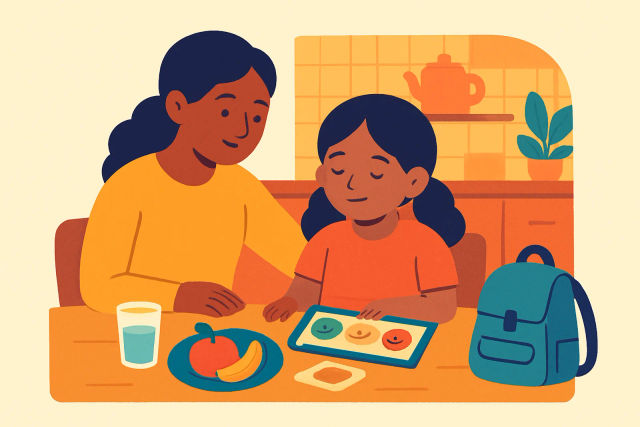
Keep the record brief and private. One line per day is usually enough. A parent can fill in the packed food, the teacher can add the time and the child can choose a simple word for how lunch felt. If writing is difficult, use small symbols agreed by everyone, such as a circle for some food and a tick for most food.
A notebook page or a free table on paper works just as well as a printable. The purpose is to spot patterns, such as food returning on days with sports, noisy seating or a late breakfast. You can look through the free printables library for simple paper activities to use alongside your home routine, but the lunch record itself does not need to be fancy.
Adjust the approach for your child's age
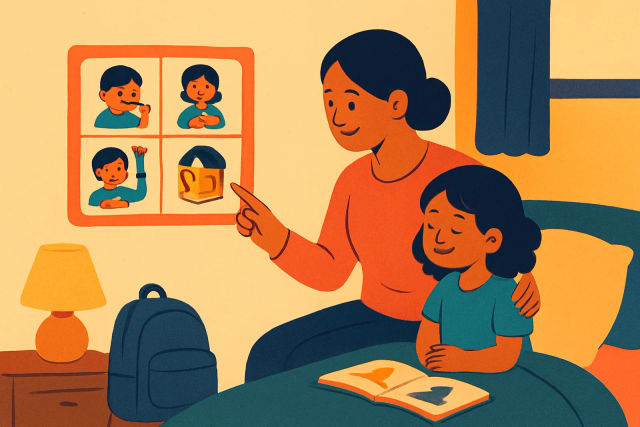
For Nursery, LKG and UKG children, use smaller portions, clear routines and containers they can open. Practise opening, eating and closing the box at home before sending a new one. Show your child how to ask an adult for help with a lid, spilled food or water. Keep the same basic routine on school days when possible.
For Class 1 and 2, offer two lunch choices and teach a short request such as, "Please help me open this." Keep the food familiar while school routines settle. You can ask the teacher to give a quiet reminder rather than drawing attention to the child in front of classmates.
For Class 3 to 5, include your child in planning the menu and the amount. Talk about food preferences, privacy and how to respond to comments such as, "Why are you eating that?" A child might say, "This is my lunch," or move closer to a trusted adult. Older children may share more when you talk while walking, packing or travelling, instead of holding a formal discussion.
Know when to speak with the school or a doctor
Speak with the school when lunch refusal continues or your child seems worried about attending school. Contact the teacher if food is taken or shared without permission, if the child has too little time, or if seating, noise and supervision are causing problems. Share your brief record and ask for a private conversation. The school can help check routines and classroom relationships.
Ask a doctor for advice if your child is losing weight, has ongoing stomach pain, vomiting, diarrhoea, choking or pain while eating, marked tiredness, or a sudden and lasting change in eating. A doctor can consider the full pattern, including what your child eats at home, growth concerns and physical symptoms. Seek prompt medical help for serious breathing trouble or choking.
Take your notes to the appointment and explain when the change began. Do not force meals or remove all preferred foods while waiting for advice. Keep offering calm, manageable meals and follow the guidance you receive. If your concern is mainly about school, continue speaking with the teacher as well as seeking medical advice when needed.
Questions parents ask
How long should I wait before worrying about my child not eating lunch at school?
Track the pattern for one to two weeks if your child is otherwise well, eating at other times and managing school normally. Speak with the teacher sooner if your child seems worried, is being teased, has too little eating time or is not allowed to keep food safely. Ask a doctor promptly if there are physical symptoms, weight loss or a sudden lasting change.
Should I pack my child's favourite food every day?
Pack one or two familiar foods your child usually accepts, but vary the rest gently over time. You can add a very small portion of one new food without expecting it to be eaten. Offer two choices at home and change only one food at a time so you can see what works.
What should I do if my child eats nothing at school but eats at home?
Check the lunch portion, breakfast timing, container and time available first. Then ask the teacher about noise, seating, toilet access, food sharing, teasing and rushing to play. If your child is comfortable, well at home and growing as expected, a calm school plan may help, but speak with a doctor if the pattern continues or other concerns appear.
How can I tell if lunch refusal is caused by anxiety, teasing or a school routine?
Look for patterns linked to particular days, places, classmates, teachers or activities. Your child may become quiet, push the box away, rush through lunch or say they are not hungry. Ask private, gentle questions and speak with the teacher, who can observe the lunch setting directly. Do not assume one cause from a single day.
When should a child who refuses food at school see a doctor?
Ask a doctor for advice if your child is losing weight, has ongoing stomach pain, vomiting, diarrhoea, choking, pain while eating, marked tiredness or a sudden and lasting change in eating. Share what your child eats at home and the school record. Serious breathing trouble after choking needs prompt medical help.