Diwali holiday homework ideas for primary students: a balanced one-week learning pack
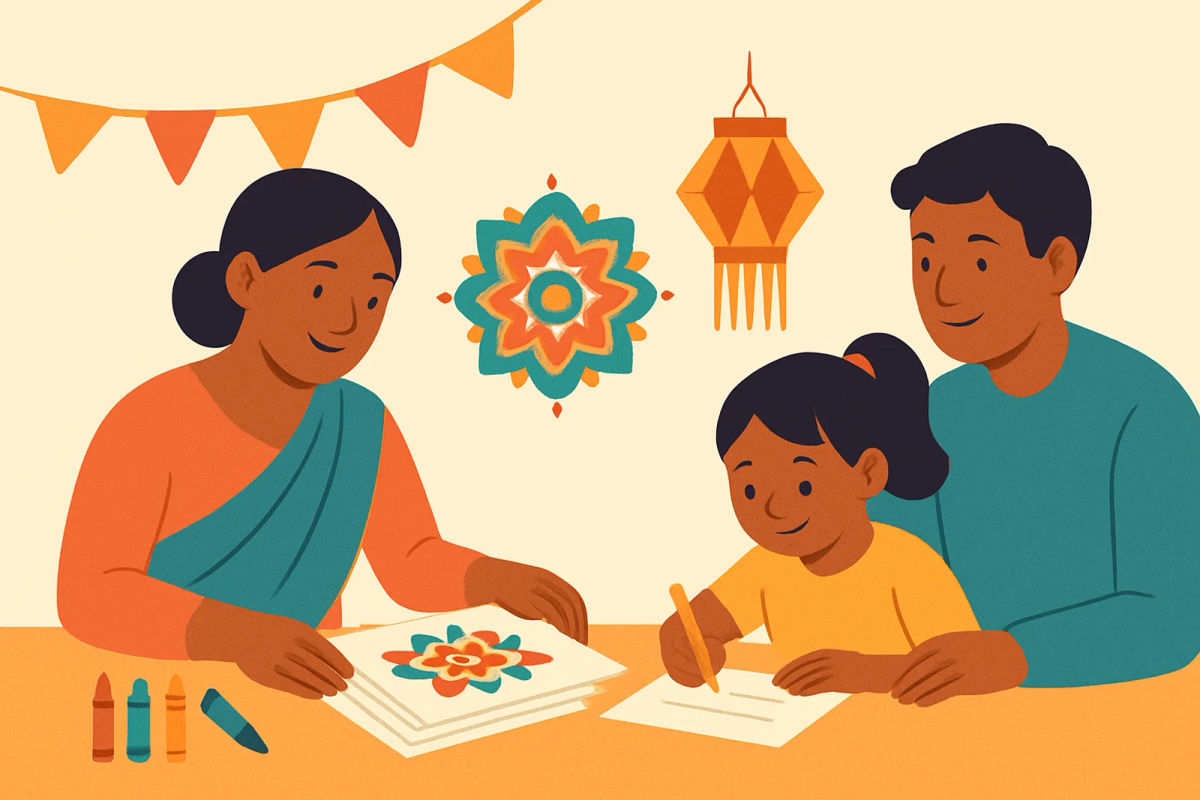
These Diwali holiday homework ideas for primary students help you prepare a calm one-week pack with reading, observation, maths, colouring and an optional craft. You will be able to adjust each task for Nursery to Class 5 and give families clear instructions for home use.
In short
- Five short activities can provide useful holiday practice without filling the whole break.
- The same theme can be adapted from picture talk for Nursery to multi-step maths for Class 5.
- Home observation tasks should be safe, affordable and possible with limited adult help.
- Colouring and craft work should allow personal choices rather than be judged by neatness or expense.
- A one-page family note can make the pack easier to understand and return.
What should a one-week Diwali learning pack include?
A useful one-week pack can have five short activities: one reading task, one family observation page, one maths puzzle, one colouring page and one optional craft. This gives children different ways to read, notice, solve, create and express themselves without turning the holiday into a full school day.
Suggest about 15 to 20 minutes for most days. Children do not need to finish every task in one sitting, and they may complete the activities in any order during the holiday. A family can do the reading on one day, take notes after a rangoli activity on another day and return to the maths page later.
Keep the instructions short and use materials that families are likely to have, such as a pencil, eraser, crayons, old newspaper and glue. Avoid tasks that need special purchases or constant adult teaching. The Diwali Activities for Kids collection can give you ideas for a simple theme while you prepare your own pack. Add a brief family note explaining the suggested time, safety points and return date.
How to plan the reading task
Choose a short Diwali passage, poem or simple story followed by three or four questions. The text can describe a family preparing a rangoli, visiting relatives, sharing a snack or choosing safe ways to celebrate. Keep the reading level suitable for the class, and leave enough space for answers.
For Nursery and LKG, replace written comprehension with picture talk or a read-aloud prompt. A child might name objects in a celebration picture, point to colours or tell an adult what happens first. UKG and Class 1 children can circle answers, match pictures or write one short sentence.
For Class 2 to 5, add a short passage with one or two useful vocabulary words, a sequencing question and a personal response such as, "What would you like to help prepare at home?" You can include the Diwali Worksheets as a starting point, then remove any page that feels too long. Offer one independent step, such as reading the questions aloud or matching words, so the child does not need an adult beside them throughout.
How to make a family observation page
Ask children to observe one safe Diwali preparation at home. They might watch someone clean a small space, make a rangoli pattern or prepare a traditional snack. The task is about noticing and recording, not asking the child to manage the preparation.
Give the page four clear spaces: what I saw, who helped, what materials were used and one new word I learnt. A younger child can draw the scene and tell the details to an adult. The adult may write the child's words, or the teacher can accept an oral account when writing is still developing.
Do not ask children to handle diyas, matches, fireworks or cleaning products. The observation can happen from a safe distance and should never require a family to buy decorations or food. For Class 2 to 5, add a small prompt about sequence, such as "What happened first and next?" For younger children, provide picture prompts and word choices. This page can help children connect classroom language with ordinary family activities while respecting different homes and traditions.

Lumi's tips
- I suggest adding one worked example before each page so your child can start with less help.
- Keep a pencil, crayons and scrap paper ready, then use the same small material list for the whole pack.
- If a page feels too long, stop after the core questions and leave the extra challenge for another day.
- Let me, Lumi, remind you that a drawing or spoken answer can show learning when writing is still developing.
How to add a short maths puzzle
Use familiar themes such as counting diyas, completing rangoli patterns, sorting shapes or solving simple shopping sums. A puzzle should practise a clear maths idea rather than add a Diwali picture to a long worksheet. Put one worked example before the questions so children can begin with less adult help.
For Nursery to Class 1, use pictures for counting, matching and repeating patterns. Children might count paper diyas, match groups to numerals or choose the shape that comes next in a rangoli border. For Class 2 to 3, use addition, subtraction, place value or simple word problems about sweets, cards or paper decorations.
For Class 4 to 5, include multi-step problems involving money, time, measurement or number patterns. For example, a child might calculate the cost of several packs of paper, work out how long a preparation takes or complete a growing number pattern. The Math Worksheet Generator can help you prepare practice pages, but check every question and adjust the numbers for your class. Keep the final puzzle short enough to solve in one sitting.
How to use a colouring page without making it extra work
Choose one uncluttered page showing a diya, rangoli, lantern or family celebration scene. A crowded page can take too long, especially for younger children. The Diwali Coloring Pages collection can provide a printable option for your pack.
Invite children to notice colour choices, symmetry or repeating patterns while they colour. Younger children can colour freely and name the objects they see. Older children can label a few objects or write two lines about their picture. You might ask a Class 3 child to colour a repeated border using a pattern, while a Class 5 child explains why they chose particular colours.
Make it clear to families that neat colouring is not the only measure of effort. Some children may use unusual colours, leave spaces or finish part of the page. Accepting personal choices keeps the activity calm and gives children a simple way to work independently. If your school collects the pack, assess participation and the child's short response rather than comparing decoration styles or colouring skill.
How to include an optional craft
Offer one simple craft using paper, old newspapers, crayons, glue and other safe household materials. A paper lantern, greeting card or rangoli collage gives children a choice without asking families to purchase a craft kit. The Diwali Crafts for Kids page can help you select an activity with a manageable number of steps.
Mark the craft as optional, not as compulsory homework. Include clear safety notes about adult help with scissors, glue and any small pieces. Young children can tear paper with an adult instead of cutting it. Ask families to work on a clear surface and store small materials safely after use.
When sending the actual item to school is not practical, allow a drawing or a photograph of the finished craft. A child can also show the craft during a short class sharing activity after the holiday. Avoid giving marks for expensive paper, large size or a highly decorated finish. The purpose is to give children a chance to make something, explain their choices and use materials responsibly.
How to prepare and share the pack
Put the activities in a simple order and add a one-page family note. The note can suggest 15 to 20 minutes for each task, explain which pages are written, and give the date for returning completed work. Tell families that the craft and any extra practice are optional. State exactly what must be returned, such as the reading page, observation page, maths puzzle and colouring page.
Use worksheets with enough writing space and place a clear example before each activity. Check that picture instructions are readable in black and white as well as colour. A free printable maker can help you prepare a quick observation sheet, pattern puzzle or response page without creating every layout by hand. You can also browse the free printables library for pages to adapt to your class needs.
If you use EarlyActivity printables, the files are PDFs sized for A4 and US Letter paper. Tell families to print at "Actual size", or 100 percent, so pictures and writing spaces keep their intended size. Remind them that the files are for home use or their own classroom and should not be shared or resold.
Mistakes to avoid when setting holiday work
Do not send a large bundle of worksheets that takes up most of the holiday. A short pack is easier for families to understand and gives children time for rest, family life and play. Avoid activities that depend on expensive supplies, internet access or an adult who can teach every step.
Do not give the same writing load to Nursery children and Class 5 children. A Nursery child may point, draw and speak, while a Class 5 child may write a paragraph or solve a multi-step problem. Mixed-ability pages can offer a core question and one optional challenge instead of making every child complete the same number of questions.
Avoid grading family spending, decoration choices or the quality of a child's home craft. These can vary for reasons unrelated to effort. Give one simple way to complete each task independently or with limited adult support, such as a picture choice, a worked maths example or a space for dictated words. Also check that every activity can be completed safely without diyas, matches, fireworks or cleaning products. A clear, modest pack usually works better than a very decorative one.
Questions parents ask
How much Diwali holiday work should primary students receive for one week?
A balanced pack can contain five short activities, with about 15 to 20 minutes for most days. Children do not need to complete every task in one sitting. Keep one reading task, one observation page, one maths puzzle and one colouring page as the core work, with craft as an optional choice.
What can I give instead of written homework to Nursery and LKG children?
Use picture talk, read-aloud prompts, object matching, counting pictures, drawing and simple observation. A child can tell an adult what they saw, and the adult can write the child's words. This keeps the activity purposeful without expecting extended handwriting.
How can I make Diwali holiday homework suitable for mixed abilities?
Keep one shared theme but change the response. Younger children can point, match or draw, while older children can write, sequence events or solve multi-step problems. Offer a core question for everyone and one optional challenge for children who are ready for more.
Should the craft be compulsory in a school holiday learning pack?
No. Make it optional because families have different materials, time and space at home. Accept a drawing or photograph when bringing the craft to school is difficult, and do not grade the cost or decoration of the finished item.
How can I prepare printable Diwali activities for home use on A4 paper?
Use clear examples, readable pictures and enough writing space, then export or download the pages as PDFs. EarlyActivity files are sized for A4 and US Letter paper. Tell families to choose "Actual size", or 100 percent, when printing, and explain which pages must be returned.