How to make Diwali reading and writing activities for Nursery to Class 2
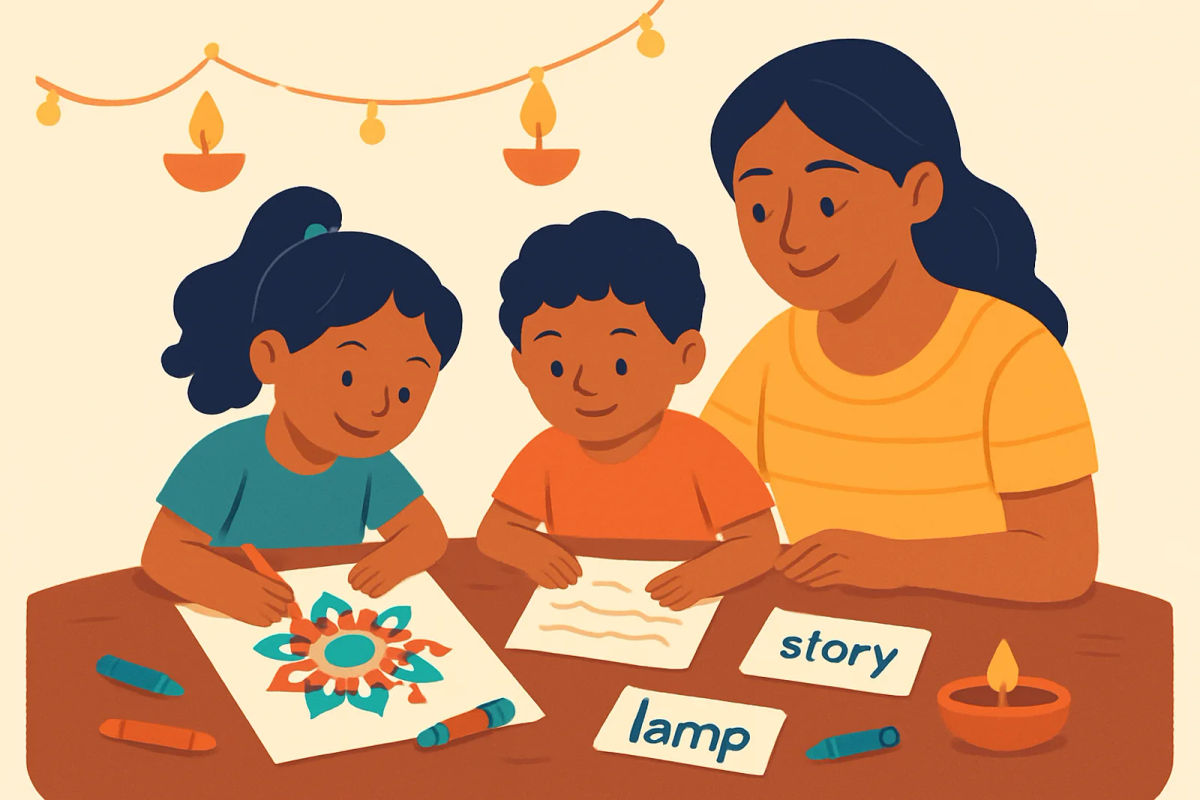
Plan Diwali reading and writing activities that suit children from Nursery to Class 2. You will learn how to prepare vocabulary pages, letter work, a short story, labels and a safe word puzzle for home or school.
In short
- Use familiar Diwali words with clear pictures and large print.
- Adjust the same activity for Nursery, LKG, UKG, Class 1 and Class 2.
- Offer colouring, tracing, copying, reading and writing so children can practise in different ways.
- Keep fireworks out of play tasks and discuss safety with a trusted adult.
- Print only a few pages at a time and use Actual size at 100%.
What to put in the Diwali pack
A useful Diwali pack can include one or two simple pages for each skill. Begin with picture vocabulary, then add letter matching, early writing, a short reading passage and a safe word puzzle. Familiar words make the pages easier to understand. Try diya, rangoli, lamp, light, sweets, home, family and festival.
Add a colouring page for a diya or rangoli, a tracing sheet for letters and words, and a word search for children who are ready to find printed words. You can use the Diwali activities for kids collection as a starting point, then choose only the pages that match your child's age.
Keep the festival theme calm. Use pictures of a diya, rangoli, flowers, sweets or a family room. Do not turn fireworks into a game, matching task or craft prop. Talk about staying with adults and following family and school safety rules. A small pack of five or six pages is easier for a child to complete than a thick bundle.
Diwali vocabulary for Nursery and LKG
For Nursery and LKG, show one clear picture beside each word. A page might have a diya, rangoli, lamp, flower, gift and sweets. Use large lower-case or simple printed words, with plenty of space around each picture. Say each word slowly and let your child repeat it.
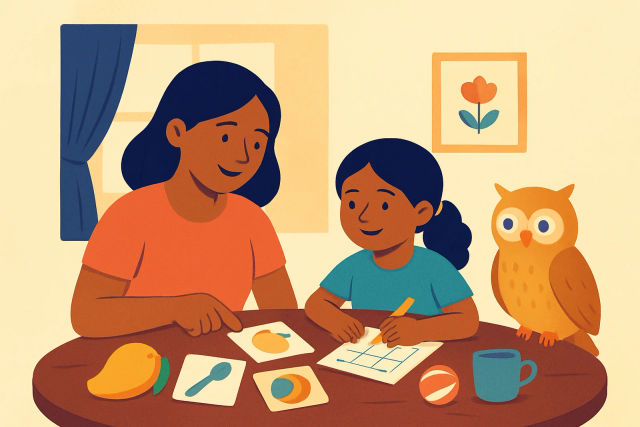
Ask your child to clap the word parts, such as di-ya and ran-go-li. Then ask the child to match a picture card to its printed word. You can make a few cards at home by writing one word under each picture. A free printable collection such as the free printables library may give you pages to combine with your own cards.
After matching, let your child colour the diya and rangoli pages. Talk about colour, shape and position with simple questions: "Which shape do you see?" or "Where is the lamp?" Keep the activity short, around 10 minutes. If the child is tired, practise only two words and repeat them during the day.
Letter matching for LKG and UKG
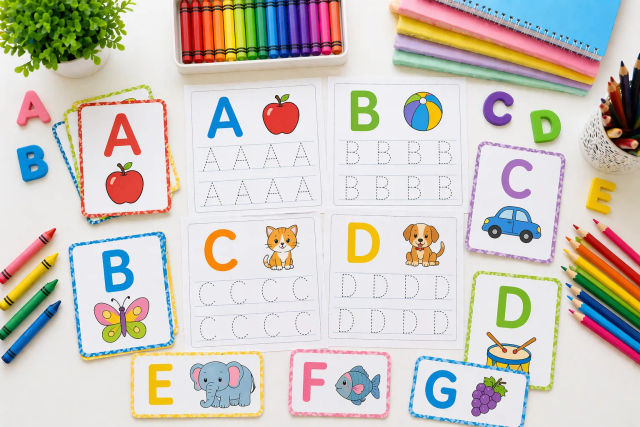
Letter matching works well when children can see both the capital and small forms. Start with two or three pairs, such as D and d in diya, or L and l in lamp. Place the cards face up and ask your child to find each pair. Add more pairs when the first ones feel familiar.
Next, try a letter hunt. Write or print words such as light, lamp and rangoli, then ask the child to circle every l or every a. Read the words aloud before the hunt so the letters have a purpose. You can include a Letter D Coloring Pages page for extra practice with D and d.
Tracing sheets should show a clear model, dotted letters and room for one or two independent attempts. Encourage a slow pencil movement rather than asking for a whole line of letters. If your child finds small print difficult, use fewer words, larger letters and a crayon or thick pencil. LKG and UKG children can finish this activity in about 10 to 15 minutes.

Lumi's tips
- Lumi suggests keeping the first page beside your child and reading every instruction aloud.
- Lumi's small-step plan is simple: say the word, point to the picture, trace it, then try it alone.
- Keep a few spare crayons ready for rangoli and diya pages, especially in a busy classroom.
- If a page feels too hard, cover some items and practise two words before returning to the rest.
Label writing for UKG and Class 1
Give your child a picture of a rangoli, a diya plate or a room prepared for the festival. Ask the child to add labels such as diya, flower, lamp, sweets and rangoli. Begin with copying. Point to one word in a word bank and let the child copy it beside the matching object.
After a few labels, cover one word and ask the child to write it from memory. A word bank is helpful because it lets children choose the correct spelling instead of guessing every letter. Keep the bank close to the picture and use large, familiar print.
Children who need more support can trace dotted words or write only the first letter. You can say the word slowly and point to the word bank without spelling every letter aloud. Children who are ready for more can write a short sentence such as "I see a diya." They can also label two objects and draw a line from each word to the picture. Praise careful effort and readable letters rather than the amount written.
A short Diwali story for Class 1 and Class 2
Use a short story with repeated words and clear actions. For example: "Mina helped Amma make a rangoli. Mina placed flowers beside the rangoli. In the evening, Amma lit a diya with Mina nearby. The family sat together and shared sweets. Mina looked at the bright lamp and smiled." Read the story aloud first, then let the child read it with you.
Ask three simple questions: What did Mina make? Who helped Mina? What did the family share? Class 1 children can answer by circling a choice, drawing a picture or writing one short phrase. Class 2 children can write a complete sentence for each answer.
For a sequencing task, prepare three or four pictures showing making the rangoli, placing flowers, lighting the diya with an adult and sharing sweets. Mix the pictures and ask the child to put them in order. Class 2 children can write one sentence under each picture. Remind children that a diya is lit with an adult nearby. The reading page can be followed by a colouring page to give young writers a quiet break.
A safe Diwali word puzzle
A picture word search is suitable when children already recognise a few festival words. Include diya, lamp, light, rangoli, sweets and family. Put a small picture beside each word so younger children have a clue. Read every word aloud before the puzzle and ask the child to point to it on the word list.
Use large letters and a small grid for Nursery, LKG and UKG. You can make a simple version with words placed across only. Class 1 and Class 2 children can try words placed across and down. The Word Search Maker can help you prepare a page, which you can then check carefully before printing. Remove any word that is too long or unfamiliar.
Do not turn fireworks into a game, race or search word. Instead, tell children that fireworks are not a play activity and that they must stay with adults and follow family and school safety rules. A diya, flower or rangoli picture keeps the puzzle connected to Diwali without encouraging unsafe play.
How to print and use the pack
Print only the pages your child can finish in one sitting. Nursery and LKG children may need one picture page and one tracing page. UKG and Class 1 children can try a letter or label page with a short reading task. Class 2 children may manage the story, questions and sequencing activity in two sittings.
EarlyActivity files are PDFs sized for A4 and US Letter paper. Select Actual size or 100% in the print settings so the letters and writing spaces keep their intended size. Keep pencils, crayons and an eraser ready. An adult can read instructions aloud, but allow the child to do the matching, colouring and writing.
Use the Diwali activities for kids pages for a festival starting point, and add your own labels or story page. The Word Search Maker is useful when you want a smaller grid for younger children. These pages can be used at home or in a Nursery, LKG, UKG or Class 1 to 2 classroom. Downloading EarlyActivity printables needs a free account, and free accounts can download up to 20 printables a day.
Questions parents ask
Which Diwali reading and writing activities are suitable for a Nursery child?
Use picture vocabulary, matching, colouring and short tracing tasks. Choose two or three words such as diya, lamp and sweets, and say each word aloud. A Nursery child does not need to read or write the whole word independently.
How can I teach Diwali vocabulary without making the worksheet too difficult?
Use one clear picture with one large printed word. Begin with two or three familiar words, ask your child to repeat and clap them, then match each picture to its word. Add more words only when the first set feels comfortable.
What should I include in a Diwali pack for Class 1 and Class 2?
Include a word bank, label-writing picture, short story, three reading questions and a sequencing task. Class 1 children can copy words and write short answers. Class 2 children can write sentences under story pictures and try a word search with words placed across and down.
How can I make a safe Diwali word search for children?
Use words such as diya, lamp, light, rangoli, sweets and family, with a small grid and large letters. Read the words aloud first and check that every word is easy to find. Keep fireworks out of the puzzle and explain that children should stay with adults and follow safety rules.
Should I use tracing sheets or ask my child to write Diwali words independently?
Use both, in that order. Tracing gives the child a model, while copying and independent attempts show what the child remembers. Provide dotted words or the first letter when support is needed, then remove the help gradually.