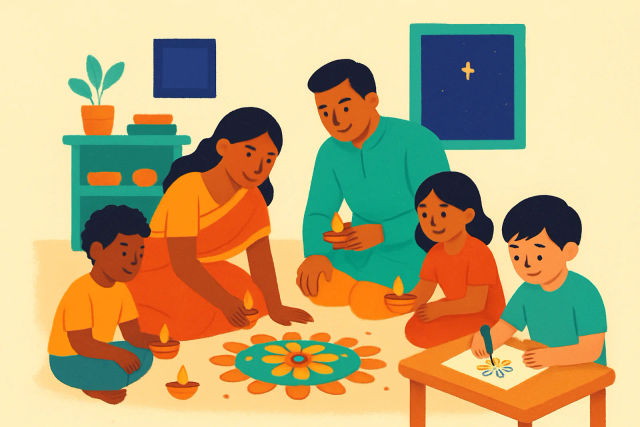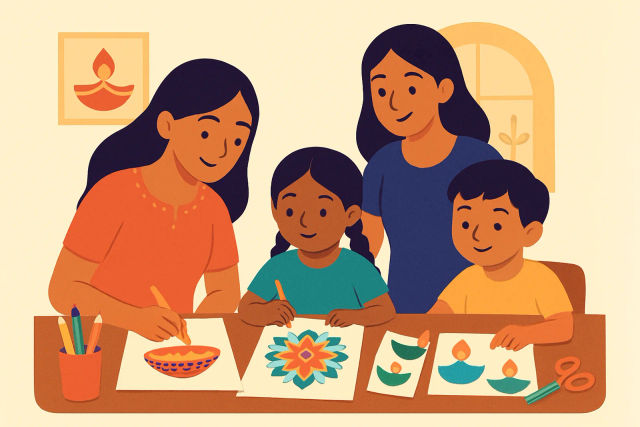
Indian festivals calendar for kids: A simple year-round guide for families and classrooms
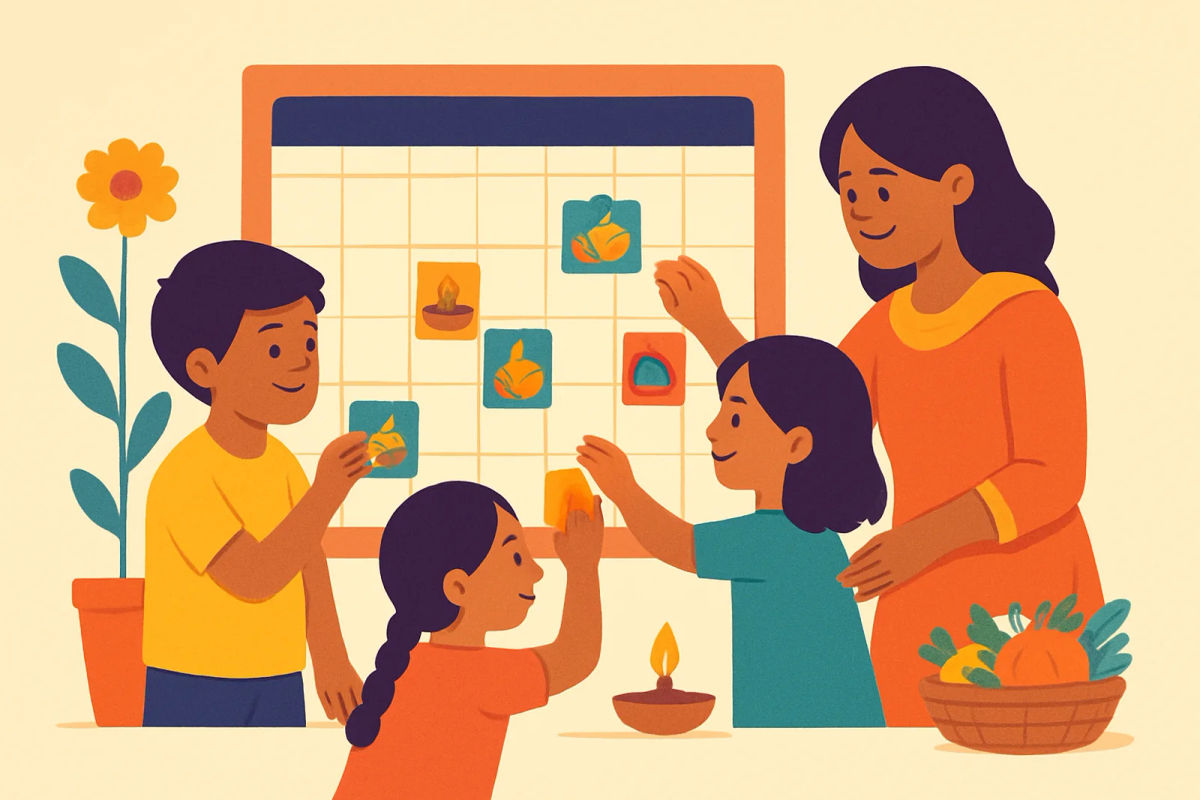
Use an Indian festivals calendar for kids to connect months with dates, seasons, food, clothing and family traditions. This guide shows you how to make a flexible chart, use matching cards and plan age-appropriate conversations and drawing activities.
In short
- A monthly festival chart helps children connect time, weather, community life and family traditions.
- Festival dates, foods, clothes and customs can differ between regions and families, so check details each year.
- Blank spaces let children add their own celebrations, local events, days of rest and family experiences.
- The best activities invite curiosity and respect rather than asking children to memorise or copy one tradition.
Why use a year-round festival calendar?
A monthly chart gives children a clear way to notice how the year changes. They can see when a festival takes place, what the weather may be like, which foods families may prepare and what people may wear or make. You can also add school events, local fairs, family birthdays and days of rest. This makes the calendar a record of community life, rather than a list of holidays to memorise.
For Nursery and LKG, point to one month and talk about one object, such as a diya, flower or harvest basket. In UKG and Class 1, children can copy a festival name, count days or draw a family activity. Children in Class 2 to 5 can compare two festivals, ask why dates change or write about a local tradition. A simple free printables library can provide extra pages for these activities.
Families celebrate different festivals, and some families may not celebrate a festival shown on your chart. Use the calendar to build curiosity and respect. Do not rank festivals or teach one version as if it belongs to everyone.
How to make an Indian festivals calendar for kids
Choose a wall calendar, a notebook chart or a printable A4 sheet with one box for each month. A large chart works well on a classroom wall, while a notebook gives your child room to write and draw. Before adding dates, write the year at the top. Many festival dates change each year because they are worked out using lunar calendars or other traditional calendars.
In each box, write the festival name and date after checking a reliable family, school or community source. Add the season and one detail a child can understand, such as a food, object, visit, song or type of clothing. Keep the wording short. For example, you might write, "Diwali, autumn, diyas and rangoli" or "Pongal, harvest time, family meal".
Leave blank space for your family's celebrations, local fairs, school events and days of rest. A calendar should be easy to change. If you print a sheet, use Actual size or 100% so the boxes remain clear on A4 paper. Children can decorate the edges after the information has been checked.
What to include in each monthly festival box
Use one or two prompts in each box: What do people eat, wear, make, sing, clean or visit for this festival? These questions help children observe traditions without expecting one answer. You could mention diyas and rangoli for Diwali, sevaiyan or a family meal for Eid, a pandal visit for Durga Puja, or a harvest food tradition for Pongal or Baisakhi.
Connect the festival with the time of year, while making room for regional differences. A summer festival may lead to a talk about heat and drinking water. A monsoon event may bring up raincoats and wet roads. Winter mornings may mean warm clothes, while harvest celebrations can lead to a conversation about crops and farmers. Weather is not the same in every part of India, so use phrases such as "in some places" and "in our area".
Food, clothing, prayers and customs may differ between families, regions and communities. Ask children what they have seen at home or in their neighbourhood. A family meal may be more familiar to one child, while another may know a community visit, craft or song. All these answers can be treated with care.
Lumi's tips
- Lumi suggests keeping one blank month box for a local event, family day or quiet day.
- Print the chart after checking the year, dates and spellings, then let your child add colour.
- If a child is unsure about a custom, write "ask at home" instead of guessing.
- Offer drawing, talking and matching choices so every child can take part comfortably.
A simple activity for each age group
Keep the task short and let children answer through talking, drawing, pointing or writing. The same month can support different activities in one mixed-age group.
- Ages 2 to 4: Match a picture card to a month. Name colours and talk about one object, such as a diya, flower or harvest basket. Let your child point if they are not ready to name it.
- Ages 4 to 6: Practise writing a festival name, circle the season and draw one family tradition. You can support letter practice with free printable English worksheets.
- Class 1 to 3: Compare two festivals in a simple table with headings for food, clothing, weather and community activities. Children may add "not sure" when they need to ask someone at home.
- Class 4 to 5: Research why some dates change, mark regional festivals and write a short note about respectful participation. Ask them to name the source of each date and to separate facts from their own family experience.
Do not require a child to share private religious details. A drawing of a public decoration or a seasonal food is enough.
Printable calendar, matching cards and drawing prompts
A printable monthly calendar can have the month name, a blank space for dates, and lines for local events and family notes. Print one copy for home and one for a classroom folder if needed. Children can fill in details with a pencil after you check the dates. For younger children, use large writing and a few clear pictures rather than crowded boxes.
Make matching cards with festival names, months, objects, foods, clothing and weather clues. Ask children to pair them, then discuss why more than one answer may be possible. A flower might match several festivals, and a warm meal may be part of many family gatherings. This prevents the cards from suggesting that each object belongs to only one community.
Try drawing prompts such as "Draw what your family does before a festival", "Draw festival clothing for a rainy day" or "Draw a food shared at home". A free maker can help an adult prepare a blank chart, labels or cards, but check spellings, dates and cultural details before printing. You can also use Diwali Cards, Eid Cards or Rakhi Cards when a child wants to make a greeting for someone they know.
How to talk about festivals with care
Use careful phrases such as "Some families", "In this region" and "In our home". These words show children that a custom may be meaningful without being universal. Ask what they have seen, then make space for children who celebrate differently or do not celebrate the festival. A child may prefer to talk about a school event, a local fair, a holiday at home or an ordinary day.
Avoid asking a child to bring special food, clothing or religious items if the activity could make a family uncomfortable. Instead, offer choices such as drawing, describing a season, matching a month or making a general greeting card. This also helps children who do not have access to a celebration at home.
Teach respectful behaviour at homes, places of worship, processions and school events. Children should ask before touching objects, entering a space or photographing people and decorations. They can keep voices gentle, follow the adult in charge and avoid making fun of unfamiliar clothing, food, names or practices. These simple rules apply to celebrations across communities.
Common mistakes to avoid
A calendar becomes less useful when it contains so many festivals that children cannot talk about any of them. Choose a manageable set, then leave space for local events and family additions. Treating the calendar as a list of holidays can also hide the food, work, weather, music and relationships connected with each occasion.
Do not assume that a date, food, item of clothing or meaning is the same across India. A festival may be observed differently in two states, two neighbourhoods or two homes. Some children may not have access to a celebration at home, so avoid activities that require them to bring special materials or personal information.
Check dates each year. Use reliable family, school or community sources for festivals whose dates change, and correct the chart if new information comes in. Keep colouring and craft choices open. One child might draw a home meal, another might draw a public decoration, and another might choose a weather picture instead. If you use a greeting card activity, pages such as Thank You Cards can support a general message without requiring a religious theme.
Questions parents ask
How can I explain Indian festivals to a young child without teaching too many religious details?
Start with simple ideas children can see, such as a family meal, special clothing, lights, flowers, music, cleaning or a community visit. Use "Some families" and "In our home" rather than presenting one custom as universal. You can answer questions briefly and add more detail when your child asks.
Which festivals should I include in a school calendar when children come from different communities?
Choose a balanced selection of festivals observed in your school community and region, along with seasonal and local events. Ask families or school staff for suggestions, and include blank spaces for celebrations that are important to particular children. Do not make a child explain or represent a whole religion or community.
Why do some Indian festival dates change every year?
Many festival dates are worked out using lunar calendars or other traditional calendars, so they do not fall on the same date in the Gregorian calendar each year. Some observances may also vary by region or tradition. Check the date for the specific year before printing your chart.
How can I use a printable festival calendar with children who do not celebrate these festivals at home?
Use the calendar as a way to learn about months, seasons, local life and respectful behaviour, not as a record of what every child must do. Offer neutral tasks such as matching a month, discussing weather, drawing a community event or adding a family tradition of their own. A child may also choose not to share personal details.
What are suitable festival activities for Nursery, LKG, UKG and primary school children?
Nursery and LKG children can match pictures, name colours and talk about one object. UKG and Class 1 children can copy names, circle seasons and draw a family activity. Class 1 to 3 children can compare two festivals in a table, while Class 4 to 5 children can check changing dates, mark regional events and write about respectful participation.