Why do we celebrate Diwali for kids? A simple explanation beyond fireworks
This simple guide explains why do we celebrate Diwali for kids in a warm, inclusive way. You will also find a draw-and-write activity that makes space for each family's traditions, including quiet celebrations or no celebration at all.
In short
- Diwali is a festival of lights celebrated by many families in India and around the world.
- Light can remind children of hope, goodness, learning and kindness.
- Families celebrate Diwali in different ways, and some families do not celebrate it.
- A draw-and-write page can help every child share, listen and learn respectfully.
A short explanation children can understand
Diwali is a festival of lights celebrated by many families in India and around the world. Families may celebrate it over several days, and their customs can be different.
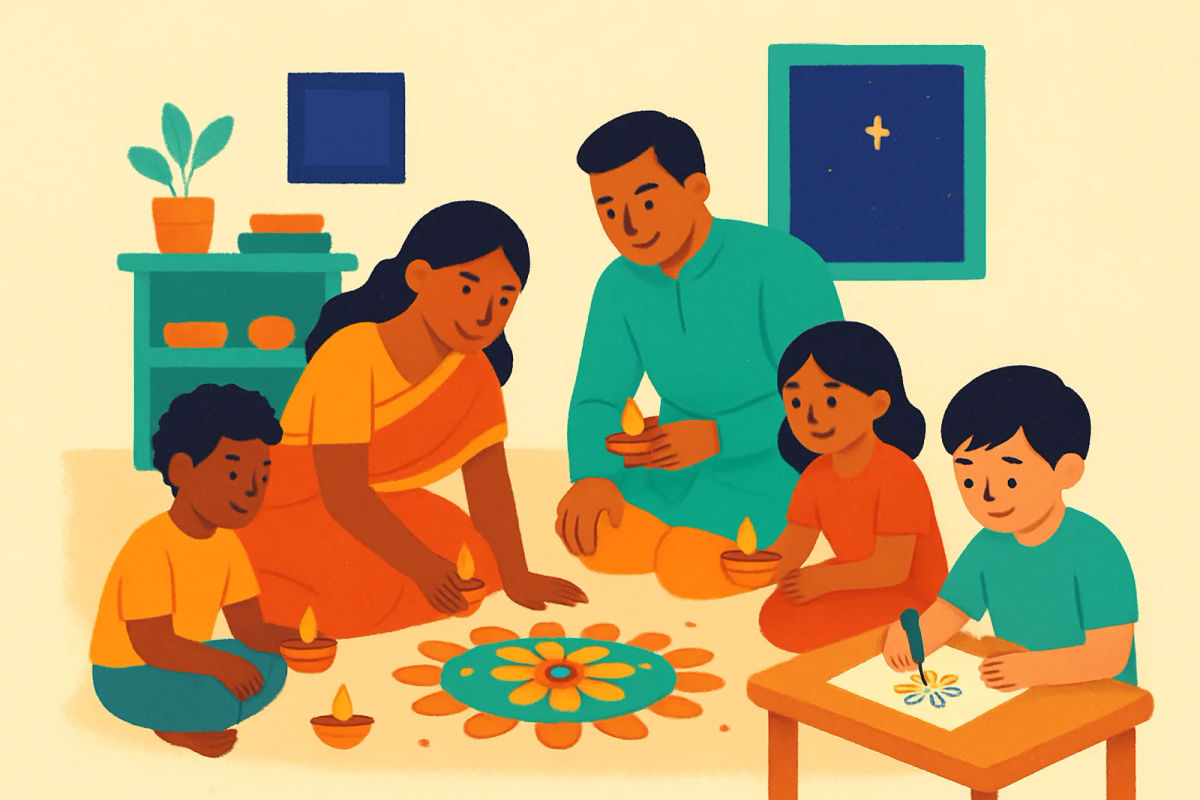
The light of a diya or lamp can remind us of hope, goodness, learning and kindness. During Diwali, families may clean and decorate their homes, spend time together, share special food, pray or visit people they love. Some families wear new clothes, make rangoli or greet neighbours and relatives.
Diwali stories and traditions are different in different families and communities. A child may hear one story at home and learn that another family follows a different custom. You can explain that festivals bring people together, but there is no single way that every family must celebrate. The focus for young children can stay on welcoming others, helping at home, being thankful and showing kindness.
How to explain Diwali by age
For Nursery and LKG children, use just a few clear sentences: Diwali is a festival of lights. Families may light lamps, make the home welcoming and spend time together. We can show kindness and help others. A child can draw a lamp, a family meal or a clean, decorated room.
For UKG and Class 1, add familiar examples such as rangoli, diyas, sweets, new clothes and greeting relatives. Ask your child what they notice, rather than asking them to remember a long story.
For Classes 2 to 5, explain that different parts of India and different communities may connect Diwali with different stories, customs and prayers. Some families may visit a place of worship, meet relatives or enjoy a quiet evening at home. Invite children to share what their own family does, while making it clear that nobody has to share private beliefs. You can connect the activity with Diwali Activities for Kids when you want more age-appropriate ideas.
A gentle script parents and teachers can use
You can read this aloud at home or in class:
"Diwali is a festival of lights. For many families, light reminds them of hope, goodness, learning and kindness. People may clean and decorate their homes, light diyas, share food, pray, visit loved ones or help someone. Some families use fireworks, while others do not. Every family may have its own way of marking Diwali, and we can listen to each other with respect."
Keep the focus on people, homes, helpful actions and traditions rather than noise or buying things. After reading, ask one or two open questions: What makes your home feel happy during Diwali? Who might you help? What light or decoration do you notice? What is one kind thing you can do?
If children mention fireworks, acknowledge their experience without making it the centre of the lesson. Talk about staying close to trusted adults and following family and local safety rules. A child who has a quiet celebration, or no celebration, should feel equally welcome in the discussion.

Lumi's tips
- Lumi suggests letting your child talk about the picture before asking for written sentences.
- Keep a quiet option ready for children who do not use fireworks or do not celebrate Diwali.
- Use words such as some families and many families when describing traditions.
- Ask permission before displaying a child's festival work.
How to talk about different Diwali traditions
Some families light diyas, make rangoli, visit a place of worship, prepare special food or meet relatives. Others may spend time at home, make a donation, pray in a particular way or keep the day simple. These choices can be shaped by region, religion, family history and personal preference.
You can say, "This is one way some families celebrate. What other ways might families mark a special day?" This wording helps children learn without treating one custom as a rule for everyone. Some families celebrate Diwali for different religious or regional reasons, and some families do not celebrate Diwali.
In an Indian classroom, a child may talk about a visit to grandparents, a meal with relatives or a rangoli near the entrance. Another child may listen quietly because their family has different practices. Nobody needs to reveal private beliefs or family details. Invite children to speak generally, allow them to pass and praise respectful listening. Learning about festivals includes learning how to ask thoughtful questions and accept that people may choose differently.
The draw-and-write Diwali page
Plan a page with a large drawing space at the top and the prompt, My family celebrates Diwali by. Under the picture, add writing lines with sentence starters such as I see, I help, I share and I feel. These starters give children a way to write about an action, object or feeling without needing to copy a long paragraph.
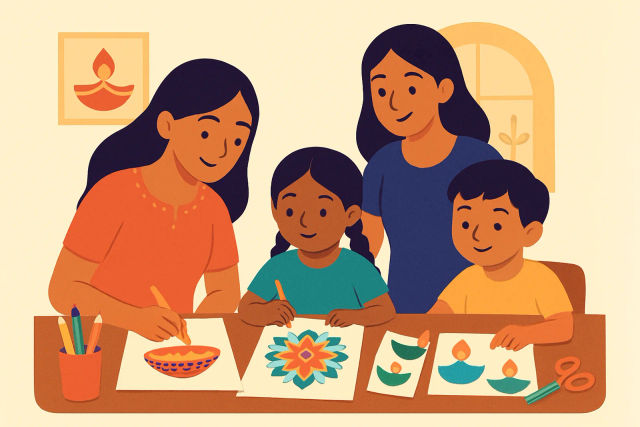
Children might draw a diya, rangoli, family meal, visit, prayer, decoration, quiet evening or another meaningful tradition. They can draw people helping to clean, sharing food or greeting relatives. Leave the choice open so a child does not feel that fireworks or shopping are expected.
Add an alternative prompt for children who do not celebrate Diwali: My family does not celebrate Diwali, and I can learn by. They might complete it with listening respectfully, asking a polite question, reading about a tradition or learning from a classmate. The page should value drawing, speaking and writing equally. A child can dictate an idea first and write only a word or short sentence, depending on age and confidence.
Ways to use the page at home or in class
Ask your child to draw first, then tell you about the picture before writing one or two sentences. Their spoken explanation may include details that do not fit in the drawing. You can write down their words as a model, then invite them to copy one part or add their own labels.
In a Nursery or LKG class, let children dictate a sentence while an adult writes it underneath. You can ask, "What do you see?" and "What are you doing?" Accept a single word, a name of a colour or a short phrase as a valid beginning.
For Classes 1 to 5, ask children to write three details and one kind action they can take during the festival. For example, a child might write about a diya, a family visit, a sweet and helping to tidy a room. Avoid correcting every spelling mistake during the first telling of an idea. Display work only with the child's permission, especially when families have different practices. A private notebook or a folder can be a better choice for some children.
Printable and free maker ideas
Print the draw-and-write page on A4 or US Letter paper at Actual size (100%). Choose a page with a large drawing area for younger children and more writing lines for older children. Check that the prompt leaves room for children who celebrate differently or do not celebrate Diwali.
An EarlyActivity printable can give your child a clear starting point when you need a ready page for home or your own classroom. A free maker can help a parent or teacher create a page with a preferred prompt, larger letters or extra writing space. You could make one version with four sentence starters for UKG and another with three details plus one kind action for Class 2 to 5.
For related hands-on ideas, see Diwali Crafts for Kids. You can also browse the free printables library for another simple writing or drawing activity. Keep the activity for use at home or in your own classroom. Do not present one family's tradition as a rule for everyone, and do not share or resell printable files.
Questions parents ask
How do I explain Diwali to a preschool child in simple words?
Say that Diwali is a festival of lights. Families may light lamps, clean and decorate their homes, share food and spend time together. Add that kindness and helping others are important parts of the conversation.
How can I talk about Diwali without making fireworks the main focus?
Talk first about diyas, family, food, decorating, prayer, visits and helpful actions. You can mention that some families use fireworks while others do not. This keeps the lesson focused on people and traditions rather than noise or buying things.
What if my family celebrates Diwali differently from the rest of the class?
Tell your child that families can have different stories, foods, prayers and customs. They may share only what feels comfortable, or simply listen to classmates. A teacher can use phrases such as some families and invite children to pass on personal questions.
Can children who do not celebrate Diwali complete the draw-and-write activity?
Yes. Give them the alternative prompt, My family does not celebrate Diwali, and I can learn by. They can draw listening, reading, asking a respectful question or learning about a classmate's tradition.
What can children draw and write about for a Diwali activity?
They can draw a diya, rangoli, family meal, visit, prayer, decoration, quiet evening or a helpful action. Writing starters such as I see, I help, I share and I feel make it easier to add one or two sentences.