how to prepare students for exams in primary school: a calm December practice corner for Class 1 to 5
This guide shows you how to prepare students for exams in primary school through short, calm practice blocks, error review folders and quiet choice tasks. You will be able to organise maths, English and EVS revision without giving a full test paper every day.
In short
- Use a small, tidy practice corner for short individual or pair activities.
- Plan different practice lengths for Class 1 and 2 and Class 3 to 5.
- Use maths, English and EVS checklists to track skills without daily full test papers.
- Review just two or three mistakes at a time in each child's error folder.
- Keep quiet choice tasks ready for children who finish early or need an independent activity.
Set up a calm December practice corner
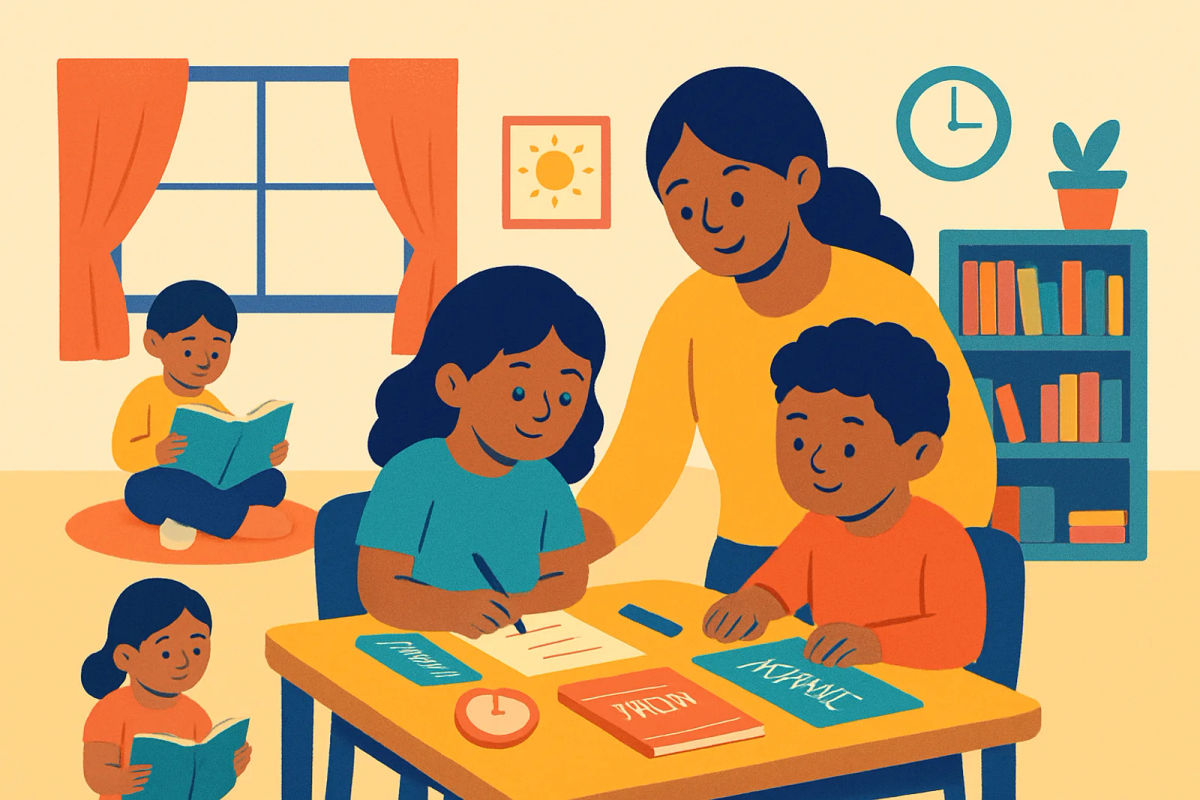
Choose a quiet part of the classroom for a small table and two or three chairs. Keep pencils, erasers, crayons and a visible timer within easy reach. Place one folder or tray each for maths, English and EVS so children can find the right work without disturbing others. A tidy space helps you begin quickly during a busy December school day.
Put up a simple routine with words or pictures. It can show four steps: sit down, take one sheet, practise, and place finished work in the tray. Read the routine aloud to Class 1 and 2 children and practise it once before using the corner. Older children can follow the written version and help a partner remember the steps.
Keep the corner for short individual or pair practice, rather than long periods of silent testing. You might send two children there for ten minutes while you read with a small group. Change the subject trays during the week so every child gets time with maths, English and EVS. A small Lumi at School Coloring Pages sheet can add a familiar classroom picture if you need a simple display, but leave most of the wall space clear.
Plan short practice blocks for Class 1 to 5
Match the length of the task to the child's class and the skill being practised. For Class 1 and 2, use 10 to 15 minutes for one clear task, such as number bonds, reading words or naming the parts of a plant. Start with oral practice when a child needs help, then ask for a few written answers.
For Class 3 to 5, use 15 to 25 minutes. A block may include five minutes of mental maths, a short written activity and one EVS response in a complete sentence. Keep each block focused. A child does not need a whole paper to show that place value or punctuation needs more practice.
Make a weekly timetable with the three subjects. For example, Monday can include maths and English, Tuesday English and EVS, and Wednesday maths and EVS. Repeat the pattern with new skills later in the week. Give children a short movement, water or reading break between blocks. If you need fresh number practice, the Math Worksheet Generator and Multiplication Table Generator can help you prepare a few questions that match lessons already taught.
Use checklists instead of daily full test papers
Prepare one simple checklist for each subject. A maths checklist might include place value, addition, subtraction, multiplication tables, shapes and simple word problems. An English checklist can cover reading aloud, spelling, punctuation, grammar, handwriting and writing a short answer. For EVS, include the topics taught in class, key words, diagrams, sorting activities and answers in complete sentences.
Give children a small task beside each skill. After practising, they can mark one of three boxes: more practice, ready to review or done with care. Younger children may use a circle, tick or coloured dot instead of writing a comment. Ask them to explain one choice to you or a partner so the checklist reflects real understanding.
Print the checklist with enough space for a date and a short teacher note. Keep the language familiar and use the same skill names in your classroom lessons. For a child who is still learning English, add a picture or read the instruction aloud. A free printables library can provide starting points for classroom practice, but select only activities that match the topics your class has covered. The checklist is a guide for the next step, not a score sheet.

Lumi's tips
- Lumi suggests using one timer for the whole corner so children can see when it is time to stop and tidy.
- Keep the next task ready before a child arrives, so the practice block begins without a long wait.
- Let children choose a quiet task by subject or type, rather than by how quickly they finished.
- Use a small star or tick beside a careful correction, and write one useful next step.
Create an error review folder
Give each child a folder with three sections: I made a mistake, I corrected it and I can try it again. Explain that the folder is a work tool, not a record of failure. You can model this with a friendly example on the board, such as an addition answer where the carrying was missed.
Do not ask children to correct every page at once. Choose one maths error, one English answer or one EVS diagram for careful review. A child can copy the maths question, rewrite the English sentence or redraw the diagram neatly. Write a short note beside it, such as read the question again, check the carrying or use a full stop. Keep the note specific so the child knows what to try next.
Look through the folders once or twice a week. Choose two or three errors for the next practice block, rather than filling the child's desk with corrections. Ask the child to cover the old answer and try the question again after a short break. Praise careful checking and clear corrections. If the same difficulty appears often, speak with the child privately and plan a smaller step, oral explanation or extra example before asking for more written work.
Offer quiet choice tasks after practice
Keep a tray of quiet activities for children who finish their short practice or need an independent task while you support a small group. Suitable choices include word searches, number puzzles, reading cards, colouring a science diagram and sorting word cards. Present these as useful classroom work, not as prizes for finishing quickly.
For Class 1 and 2, offer picture matching, tracing, counting and simple reading choices. A child might match animals to homes, trace a few words or count groups of objects. For Class 3 to 5, use crossword clues, mental maths cards, short library reading or a self-checking grammar task. Put only a few choices in the tray so children can choose without spending several minutes deciding.
You can make a subject word search with the Word Search Maker using words from a current EVS or English unit. A short maze or number puzzle can suit a child who needs a quiet change after writing. Keep reading books, cards and pencils together, and show children how to return each item. Check that every choice can be completed independently or with the instruction card beside it.
Adjust the corner for different age groups
Class 1 and 2 children usually need large print, fewer questions, picture clues and oral practice before written work. Use one skill on a page where possible. Ask a child to say the answer, point to a picture or build a word with cards before expecting a written response. This gives you useful information without making the corner feel like another test.
For Class 3 and 4, add short written explanations, tables practice, paragraph reading and EVS labelling. A maths task could ask children to show one step of their method. An English task could ask them to underline the subject and verb in two sentences. An EVS task could ask them to label a diagram and write two facts.
For Class 5, include multi-step maths questions, short summaries, grammar editing and answers using subject vocabulary. Offer an easier and a harder version of the same checklist. The skill can stay the same while the number of questions, reading load or amount of writing changes. Keep the choices discreet so children do not feel ranked. Discuss the version with each child as a support for practice, not as a label about ability.
Prepare, print and manage the materials
Print one checklist for each child and keep a few extra copies for new targets or lost sheets. Use a free printable maker to prepare simple word lists, number facts, matching cards or subject checklists that fit the topics already taught. Before printing a class set, check the wording, answer space and level with one child or a teaching partner.
EarlyActivity files are PDFs sized for A4 and US Letter paper. Print at Actual size, 100%, and check one page before making more copies. Give children only the page needed for that day's short practice. Avoid a large packet that children must finish, since a full stack can make a small task feel like an exam.
Keep completed sheets in the child's folder so families can see the skill practised. A folder might go home once a week, or you might show it during a parent meeting. Remind families that the sheets show practice and next steps, not a daily test result. Store blank copies in clearly named trays and keep pencils, erasers and crayons in the same place. This routine saves time when you begin the next block and helps children take responsibility for returning materials.
Questions parents ask
How long should a primary school exam practice block be for Class 1 to 5?
For Class 1 and 2, plan 10 to 15 minutes for one focused task. For Class 3 to 5, use 15 to 25 minutes, with a mix of written work, reading or mental maths. Give children a brief movement, water or reading break between blocks.
How can I help children review mistakes without making them feel worried about exams?
Treat an error as a question to solve, not a mark against the child. Ask each child to review one or two examples, write a short next step and try the question again later. Keep the folder private and praise careful checking rather than the number of corrections.
What can I give early finishers instead of another test paper?
Offer quiet choices such as reading cards, word searches, number puzzles, picture matching, sorting cards or a science diagram to colour. Choose tasks children can begin independently, and explain that they are useful practice activities rather than rewards for speed.
How do I make maths, English and EVS checklists for different learning levels?
Keep the skill name the same, then change the number of questions, picture support, reading load or amount of writing. Class 1 and 2 children may need oral practice and large print, while Class 5 children may handle multi-step questions and short summaries. Check that each version matches work already taught in your class.
Should children take their error review folders home before the December exams?
You can send them home once a week if the folder contains a small number of clear next steps. Explain to families that the folder is for calm review, not for completing a large packet or comparing marks. Keep sensitive teacher notes in school and share them privately when needed.