How to make a homework planner for kids in Class 1 to 5
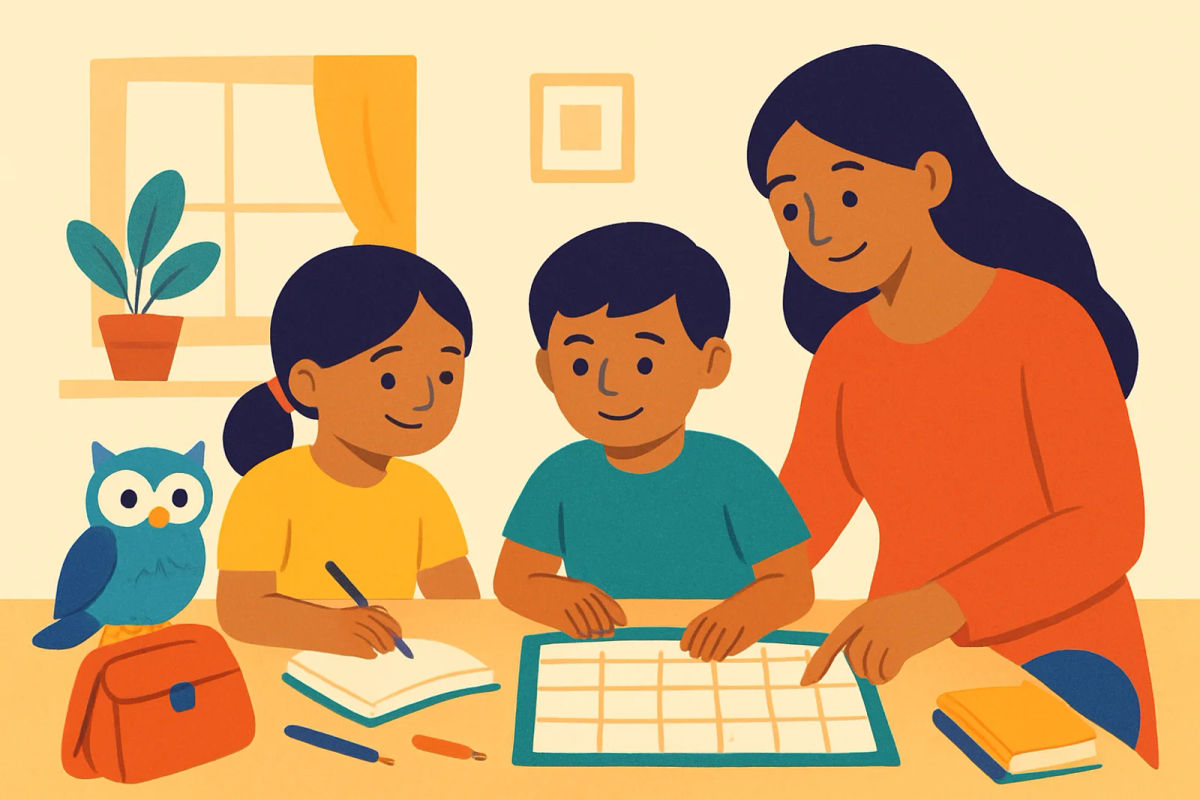
A simple homework planner for kids helps your child see tasks, due dates, packing needs and questions in one place. This guide shows you how to divide homework into manageable steps and use a weekly page at home or in class.
In short
- Write each homework task as a short action your child can understand.
- Record both the day homework is given and the date it is due.
- Use the finished column only after your child checks the work.
- Leave daily space for packing needs and questions for the teacher.
- Keep the planner flexible so it supports work without filling every minute.
What should a homework planner include?
A weekly planner gives your child one place to see what needs doing, when it is due and what must go into the school bag. This is useful when English work is due on Tuesday, a maths test is on Thursday and a worksheet needs to go back on Friday. Your child can look at the page after school instead of trying to remember several instructions.
Keep the layout clear and easy to read. Each day can have the day and date, a box for each subject, small spaces for separate tasks, a due date, a place for questions and a finished column. Add a packing space at the bottom of each day.
A young child may need one short instruction in each box, such as Read page 12 or Write 3 sums. A Class 4 or 5 child can write more detail independently. Use familiar words, large writing spaces and a little help from an adult or teacher until your child knows how to use the page.
How can you divide homework into small tasks?
A large instruction can feel confusing when it is written as one line. Turn it into actions that your child can read, do and check. For example, Read the English lesson and answer five questions can become:
- Read the lesson.
- Write answers to Questions 1 to 5.
- Check capital letters and full stops.
For maths, write Read the example, solve Questions 1 to 6 and circle any sum to ask about. For Hindi, your steps might be Read the poem, write five word meanings and practise two lines. For EVS, use Read the chapter, draw and label a plant and revise three new words. A project could say choose a topic, collect pictures, write headings and pack the completed chart.
For Class 1 and 2, use one task per box and let an adult read the instruction when needed. Children in Class 3 to 5 can usually manage two or three smaller tasks in one subject box, with each task on its own line. The free printable English worksheets can provide a clear example of how a worksheet task may be recorded.
How should you mark due dates and plan the week?
Write the day the homework was given and the date it must be submitted. These are different details. A note made on Monday might say, Given: Monday, 8 July. Due: Friday, 12 July. If the teacher has written a due date in the notebook or sent it in a school message, copy that date carefully.
Longer work should appear on more than one day. This leaves time for missing materials, corrections or a child who works slowly. Use the due date beside the task and place a small step in each earlier day.
For a Friday EVS project, a weekly plan could say:
- Monday: choose the topic and write three facts to find.
- Tuesday: collect pictures or draw pictures.
- Wednesday: write the heading and facts.
- Thursday: colour, check the name and pack the project.
This plan works for many CBSE and state board routines, but the actual homework and dates will come from your child's school. Check the notebook before copying anything into the planner.

Lumi's tips
- Lumi suggests writing one clear action at a time, especially for a young child.
- Keep two pencils in the planner area so your child can mark regular work and special items in different colours.
- Lumi says to leave one small blank space each day for a task that takes longer than expected.
- Ask your child to read the packing list aloud before the school bag is closed.
How do subject boxes and the finished column work?
Give each subject its own box so your child can see the work without reading a long paragraph. A box might say Maths, Page 46, Questions 2 to 8. Under it, add materials such as maths notebook, ruler or coloured pencils, followed by the due date if it is different from that day's date.
The finished column is for checking, not for rushing. After the work is done, your child can tick the box, colour a small square or write Done. Before marking it, ask the child to look at the page, count the questions, check the date and place the work in the correct notebook. If help was needed, the child can write Done with help or Help needed beside the task.
A simple colour system can make the page easier to scan. Use one colour for regular homework and another for tests, projects or things to bring. For example, blue can mean written work and orange can mean a test or special item. Keep the same colours each week so your child does not have to learn a new system.
Leave space for packing and questions
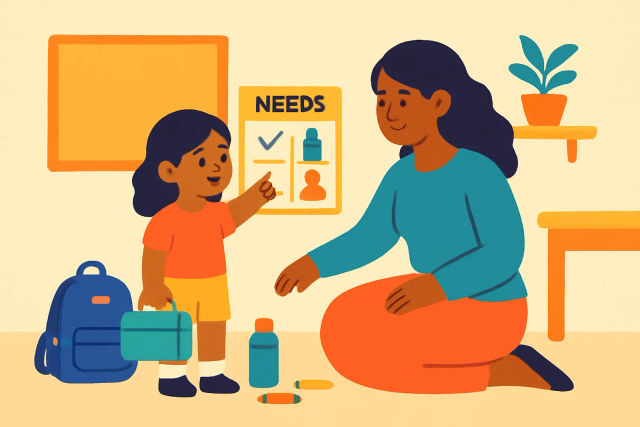
Add a packing space for every school day. It can include notebooks, textbooks, worksheets, a pencil case, a water bottle and any special item such as a library book, art file or project. Your child can check the list after finishing homework, then look in the bag before bedtime.
A questions area gives a safe place for doubts. Write short notes such as Ask teacher about Question 4, Check spelling of this word or Take Hindi notebook on Monday. A child may also write I need a ruler or I did not understand the last sum. This keeps the doubt visible instead of relying on memory the next morning.
Parents can spend a few minutes checking this part before bedtime. Ask your child to read the list and pack the items. You can point to a missing book or read a question aloud, but your child should do the work of finding, checking and packing. In a classroom, the teacher can allow two minutes at the end of the day for children to copy questions and check their bags.
How can the planner change from Class 1 to 5?
For Class 1 and 2, use large writing spaces, short instructions and fewer boxes. An adult may read the homework, draw a small book symbol for packing and help the child tick a finished task. A home routine could be to fill the page after the school bag is opened, then check packing with the child before bedtime.
For Class 3 to 5, add space for project stages, revision, test dates and independent checking. A child can copy the homework from each notebook, choose a time for a short revision task and write a question without waiting for an adult. If the work is long, include separate boxes for research, writing, checking and packing.
In a Class 4 classroom, a teacher might keep one weekly planner near the notice area and allow children to copy dates from the board. At home, a parent may use a separate page for each child. This can work in a CBSE or state board setting, but schools differ in homework routines, so follow the instructions in your child's notebooks and school messages.
How do you use a printable weekly planner?
Print the weekly planner on A4 or US Letter paper. Select Actual size, or 100 percent, in the print settings so the writing spaces keep their intended size. Before printing several copies, print one page and check that the headings and boxes are easy for your child to read.
Place the page near the study table, school bag or classroom notice area. Fill it in at the same time each day, such as after the child opens the school bag. A free printable can save preparation time when it already has weekly rows, subject boxes, a finished column, packing space and a questions area. You can also use the free printables library to find other pages for home or classroom routines.
Keep a pencil, two coloured pencils and a small ruler nearby. Use a fresh page each week and keep the previous page for a short time if you need to check unfinished work. EarlyActivity files are for use at home or in your own classroom. Please do not share or resell the files.
What homework planner mistakes should you avoid?
Avoid vague entries such as Do maths or Study English. Write the page, exercise, question numbers or exact lesson instead. Your child should be able to tell what finished means without opening every notebook. A maths entry might say Page 38, Questions 1 to 6, rather than Do maths. If extra practice is needed, the Math Worksheet Generator can help you prepare a separate page, but record only the work the child actually needs to do.
Do not fill every minute of the afternoon. Leave some free time for rest, meals, play, reading or a task that takes longer than expected. A planner with too many entries can become hard to follow, especially for younger children.
Before finalising the page, check school messages, notebooks and the child's bag. A teacher may have changed a date, added a material or asked for a signature. Ask your child to show you where each entry came from. This keeps the planner linked to the teacher's instructions instead of becoming a second, different set of instructions.
Questions parents ask
How do I make a homework planner for a Class 1 child who cannot read all the instructions yet?
Write short words and one task in each box. Read the instruction with your child, draw simple reminders such as a book or pencil, and let the child tick the box after checking the work. An adult can help with reading while the child still takes part in doing and packing.
Should homework be planned by subject, by day or by due date?
Use all three in a simple way. Organise the page by day, give each subject its own box and write the due date beside work that is submitted later. For a project or revision task, place smaller steps on earlier days rather than leaving everything for the due date.
What should I write in the finished column if my child needs help with the work?
Write Done with help, Help needed or a short note such as Ask teacher. This shows that the child checked the task without pretending it was completed independently. The note can guide the next conversation with the teacher or parent.
How can I use a printable homework planner without making my child feel pressured?
Use it as a reminder, not a scorecard. Keep the list short, leave free time and allow your child to mark a task after making a genuine effort. Praise careful checking and asking questions, rather than filling every box quickly.
Can I make one weekly homework planner for two children in different classes?
You can use one page with a separate row or colour for each child if the writing stays clear. A separate page is usually easier when their subjects, school timings or due dates are very different. Let each child check their own tasks and packing list.