How to make a winter scavenger hunt for kids with printable clues
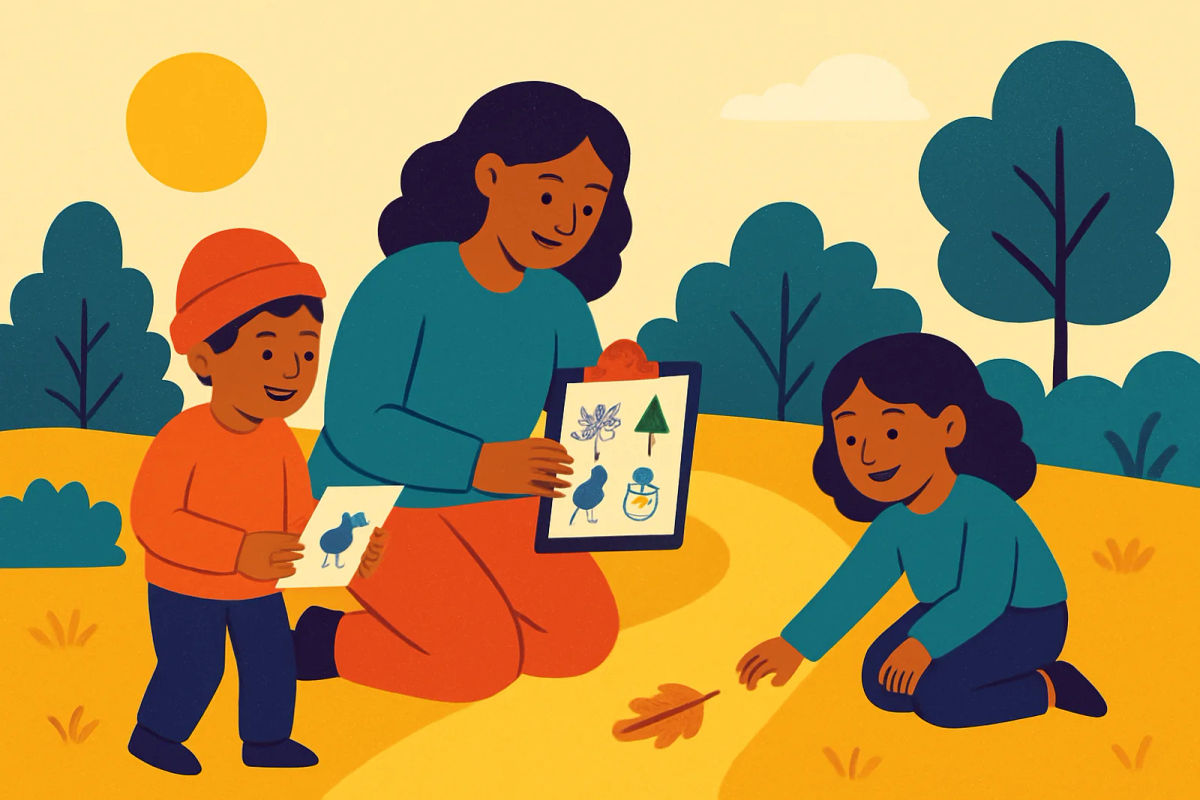
Create a safe winter scavenger hunt for kids with picture clues for preschoolers and simple writing prompts for Class 1 to 3. You will learn how to plan the walk, make a printable sheet and use it for speaking, drawing and writing afterwards.
In short
- Build the hunt around safe observations such as leaves, shadows, clothing, sunlight and sounds.
- Use large picture clues for Nursery, LKG and UKG children who are still learning to read.
- Give Class 1 to 3 children short prompts, word banks and room for sketches and sentences.
- Choose a familiar outdoor place, check the weather and set clear safety rules before the walk.
- Keep the sheet short, easy to mark and suitable for both colour and black-and-white printing.
What children can observe on a winter nature walk
A winter nature walk can be a simple lesson in noticing. Build the hunt around things children can see, hear and describe without picking or disturbing anything. A child might find a dry leaf, notice a long shadow, spot a woollen cap or hear a bird call. A patch of sunlight on the ground can become a clue too.
Use observations that suit your local area. In some parts of India, trees may have bare branches or fewer leaves in winter. In warmer places, trees may still have many green leaves. Both are useful observations. You can ask, "What colour is the leaf?" or "Is the shadow long or short?" rather than expecting one correct answer.
Keep the focus on looking and describing. Children can point to an object, tick a box, draw what they see or say a describing word. They do not need to collect leaves, touch bark or go near animals. For more seasonal ideas to use before or after the walk, see Winter Activities for Kids.
How to plan a safe outdoor hunt
Choose a place that you know well, such as a home garden, school courtyard, nearby park or quiet lane. An adult should stay close enough to see and guide the children. Walk the route first if you can, and remove clues that lead children towards a road, drain, pond, construction area or thick vegetation.
Check the weather and daylight before you go. Cold or foggy mornings may call for a later start. Children need comfortable footwear and clothing suited to the day, such as a jumper, socks, a woollen cap or a light jacket. Take drinking water if the walk is long, and cancel or shorten the activity if the weather becomes uncomfortable.
Set the rules before leaving:
- Stay with the group and listen when the adult calls.
- Do not taste plants, berries or anything found outdoors.
- Do not touch insects, animals, unknown plants or broken objects.
- Do not climb, cross unsafe areas or enter places marked out of bounds.
- Leave natural objects where they are and wash hands after the walk.
Explain that careful looking is the main job. This helps children take part without turning the hunt into a race.
How to make the printable scavenger hunt
Choose 8 to 12 observations so the walk takes about 20 to 30 minutes for young children. Include a simple box beside each clue. The box can be used for a tick, a small drawing or a short note. Leave enough space for a child's hand to make a mark without covering the picture.
For Nursery, LKG and UKG, use large pictures and short phrases such as "Find a small leaf" and "Hear a bird". Add picture clues for a shadow, a tree, warm clothing and a patch of sunlight. For older children, add prompts that ask them to describe colour, size, texture or sound.
Keep the route and worksheet connected. If there is no snow where your group lives, do not make snow a required clue. A winter sheet can work in an Indian school courtyard with green leaves, sunlight and warm clothing.
Create the page on A4 or US Letter paper. Print it at Actual size, 100%, so the boxes and pictures keep their intended size. You can browse the free printables library for related activities, then make a matching sheet for your own home or classroom. Use a clear font, strong outlines and enough white space for children to work.

Lumi's tips
- Lumi suggests carrying pencils on a clipboard so small hands can mark the sheet without leaning on a wall.
- Keep one spare blank sheet for a child who wants to draw a leaf, shadow or bird instead of completing every clue.
- Lumi recommends giving the listening pause a clear start and end, such as one quiet finger held up.
- Use a familiar route and remove any clue that makes children move away from the adult.
- Print one copy in black and white before the group walk to check that every picture is clear.
Picture version for preschool children
A preschool sheet should let children take part even when they cannot read the words. Use clear pictures of a leaf, a shadow, warm clothing, a tree, a bird and a quiet listening moment. Place one picture in each large box, with a short phrase for the adult to read.
During the walk, read one item aloud and pause. Ask the child to point, match, circle or tick when they find something similar. You might say, "Can you find any leaf?" instead of asking for a particular size or colour. This gives children an easier starting point, especially in a busy garden or school courtyard.
Let children look carefully rather than hurrying from one clue to the next. If a child cannot hear a bird, you can still talk about listening quietly and try again later. When you return, offer crayons and ask the child to draw one thing seen on the walk.
For a very young child, use four to six clues instead of the full sheet. An adult can hold the page and mark the boxes while the child points. The aim is shared observation, not independent reading or neat writing.
Writing version for Class 1 to 3
For Class 1 to 3, replace some picture clues with short writing prompts. Useful starters include "I saw...", "The shadow was..." and "I heard...". Ask children to write one describing word, compare two shadows or record three sounds they noticed.
Leave a small space for a sketch and a final sentence about the observation they liked best. A child might write, "I saw a dry brown leaf," or "The tree shadow was longer than my shoe." These prompts connect the walk with describing words, comparison and simple sentence writing.
Adjust the writing load by class. For Class 1, add a word bank with words such as rough, smooth, dry, bright, quiet, long and short. Children can complete a sentence or label a drawing. For Classes 2 and 3, ask for fuller sentences, two comparisons or a short paragraph of three to five sentences.
You can use Free Printable English Worksheets for extra sentence practice before the walk. Keep the outdoor sheet manageable. Children should have time to observe, talk and sketch instead of spending the whole walk writing.
How to use the hunt at home or in class
Before the walk, introduce a few words with real objects or gestures. Show something rough and smooth, point to a bright patch of sunlight and compare a long shadow with a short one. Ask children to say the words with you and use them in a short sentence.
During the walk, pause for a one-minute listening moment. Everyone can stand or sit quietly and remember the sounds they hear. In a sunny area, compare two shadows, such as a child's shadow and a tree shadow. Ask whether each one is long or short, dark or light, and still or moving.
Afterwards, sort the observations into three groups: things children saw, heard and felt. "Felt" can include warmth from sunlight or cool air, but children should not taste anything found outdoors. Let children share one answer with a partner or the whole class.
Use the completed sheet for a short speaking activity, nature drawing or a Class 1 to 3 writing task. A Nursery child may point and name a leaf. A Class 3 child may write four sentences comparing the morning weather with the sunny part of the walk.
Common mistakes and how a printable maker helps
A clue should never require children to pick flowers, touch unknown plants or approach an animal. Avoid instructions such as "catch an insect" or "collect three leaves". Children can observe a leaf on the ground, describe its colour or draw it instead. This keeps the activity gentle and easier to supervise.
Do not add too many items. Tiny pictures, crowded text and clues that depend on snow can make the page difficult to use in India. Before printing, check that the words are large enough, every box has room for a tick or mark and the pictures still make sense in black and white.
A free activity maker can help you arrange picture clues, tick boxes and writing lines. You still need to read every clue and check it against your local route. A clue that is safe in a private garden may not be safe beside a busy road or open drain.
Print one test copy and use a pencil to mark it. Check whether the sheet folds easily, whether children can hold it outdoors and whether the adult can read each prompt quickly. If your group needs more writing practice later, Free Printable Sight Words Worksheets can support simple sentence work.
Questions parents ask
How long should a winter scavenger hunt for kids take?
For young children, plan about 20 to 30 minutes with 8 to 12 observations. Preschoolers may need a shorter walk with four to six clues. Add time for getting ready, returning to the classroom and sharing what children noticed.
What should children wear for a winter nature walk in India?
Choose clothing for the local weather, such as a jumper, light jacket, socks or a woollen cap on a cold day. Comfortable closed footwear is useful on garden paths and uneven ground. On foggy mornings or very cool days, wait for better daylight and check that children are warm before starting.
How can I make a scavenger hunt suitable for preschoolers who cannot read?
Use large, clear pictures with short phrases that an adult can read aloud. Ask children to point, match, circle or tick when they see an item. Use easy choices such as finding any leaf, and let children draw one observation when they return.
What can Class 1 to 3 children write on a nature walk worksheet?
They can complete prompts such as "I saw...", "The shadow was..." and "I heard...". Class 1 children can use a word bank and write one describing word or sentence. Classes 2 and 3 can compare two observations, record three sounds and write a few sentences about their favourite observation.
Is it safe for children to collect leaves and other items during the hunt?
It is safer to leave natural objects where they are, especially unknown plants, flowers and anything near insects or animals. Children can observe, draw or photograph an item with adult help instead. Always ask children to wash their hands after the walk.