Children's Day class activity ideas: Make a class book with one page from every child
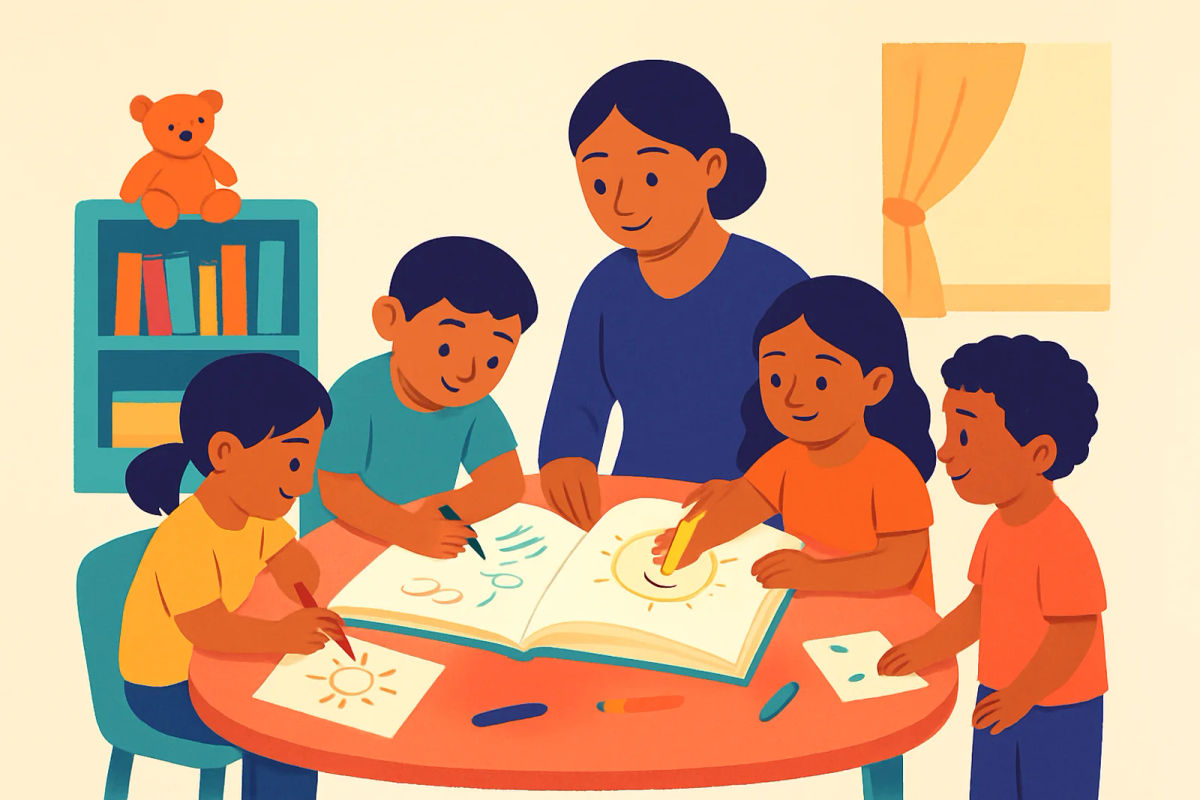
These Children's Day class activity ideas help you make a shared book with one page from every child. You will find simple prompts, age-wise page formats, printing guidance and easy ways to bind and share the finished book.
In short
- Each child contributes one page with a drawing, words or a short paragraph.
- A short oral discussion helps children gather ideas before they write.
- Use different page formats for Nursery, LKG, UKG and Classes 1 to 5.
- A folder, ribbon, staples or local spiral binding can turn the pages into a book.
- Check that every child is included and protect names when displaying the book outside class.
What makes this a good Children's Day class activity
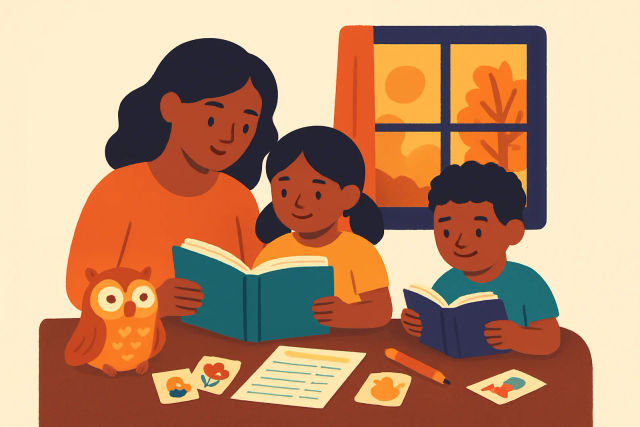
A class book gives every child a real place in a shared classroom project. Each pupil completes one page with a drawing, spoken sentence, sentence starter or short piece of writing. When the pages are put together, the class has a book for its reading corner rather than a collection of separate worksheets.
The activity brings together several useful classroom tasks. Children listen to a prompt, talk about an idea, draw or write, and then see their work become part of a book. You can read a few pages aloud on Children's Day, or let the book go home with one child at a time for a short visit.
Keep the prompts warm and inclusive. Choose ideas that work for children from different family backgrounds and for pupils who communicate through drawing, speech or supported writing. Avoid making one kind of answer seem better than another. A child's page may show a friend, a classroom routine, a favourite book, a kind action or a simple memory. The finished book can sit in the reading corner where children revisit one another's ideas.
Choose a simple prompt for your class
Choose one prompt for the whole class, or offer two or three choices. Ready-to-use prompts include:
- My favourite thing about school
- A kind thing I can do
- My favourite school memory
- Our class is special because
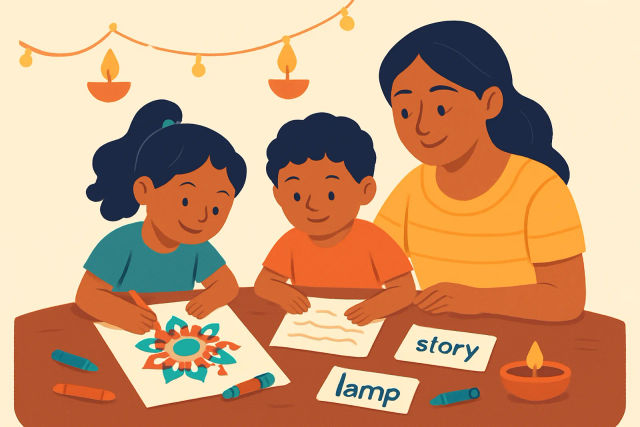
Before children begin, spend five to ten minutes talking about the prompt. Ask for examples and write useful words on the board. For "A kind thing I can do", children might suggest sharing crayons, helping a friend, greeting someone or keeping the classroom tidy. This oral discussion gives younger pupils ideas and helps older pupils choose precise words.
Do not use prompts that ask children to compare marks, possessions, family income or appearance. Such questions can leave some pupils uncomfortable or make one type of answer seem more valuable. If children choose from several prompts, explain that all choices are equally welcome. You can also accept a drawing with a spoken explanation when a child has an idea but is not ready to write it independently.
Adapt the class book page for each age group
Use one overall page style so the finished book feels connected, while changing the writing space to suit the class. A consistent heading, border or small book symbol is enough. The child's own handwriting, drawing and choice of words should still remain visible.
- Nursery and LKG: Give a large drawing space, a name line and one sentence line for an adult to write from the child's words.
- UKG and Class 1: Add a sentence starter such as "I like school because" or "I can be kind by". Leave a generous space below for a drawing.
- Classes 2 and 3: Provide three to five writing lines and a small illustration box. Children can write a few connected sentences.
- Classes 4 and 5: Ask for a short paragraph, one personal example and a small border or illustration.
For younger children, an adult can ask, "What would you like your page to say?" Write the child's sentence without replacing the child's meaning with adult language. Older pupils can plan two or three ideas before writing. These levels also work well for mixed-ability groups because children can show their thinking through words, pictures or dictated sentences.

Lumi's tips
- Lumi suggests keeping one sample page on the board so children can see where their name, words and drawing belong.
- Let younger children talk before they draw. Their spoken ideas can guide the sentence an adult writes.
- Use a finished-pages tray, and add each child's name to a checklist as the page is collected.
- Keep a few spare templates ready for absent children, late joiners and pupils who need more time.
Prepare and print the page templates
Each page template should have the class name, a Children's Day heading, the child's name, the chosen prompt, writing lines and a drawing area. You can prepare three versions: one for Nursery to Class 1, one for Classes 2 and 3, and one for Classes 4 and 5. This keeps preparation manageable while giving each age group suitable space.
A free editable template or maker can help you add the school name, section and date before printing. You can also browse the free printables library for pages to adapt to your classroom theme. If children are practising their names, a name tracing worksheet maker may help you prepare a separate name strip for younger pupils.
Print the PDF at Actual size, or 100%, on A4 or US Letter paper. Print one test page first and check that the heading, lines and drawing box are clear. Regular paper is fine for a book that stays in the reading corner. Choose thicker paper if children will handle the pages often. Print a few spare blank templates before the activity starts, especially if you have late joiners or pupils who need another attempt.
Complete one page from every child
Keep the classroom sequence simple so children know what happens next.
- Introduce the prompt and show the page format.
- Collect ideas through a short discussion and make a word bank.
- Let children draw first, write first or move between the two.
- Check that each page has a name and the child's chosen prompt.
- Place completed pages in roll-number order in a safe tray.
A word bank may include school, friend, read, share, help, play, learn and kind. Nursery, LKG and UKG children can tell an adult their sentence. The adult may write it down clearly, but should keep the child's meaning and special words. A child who needs a scribe can dictate, point to choices or explain a drawing.
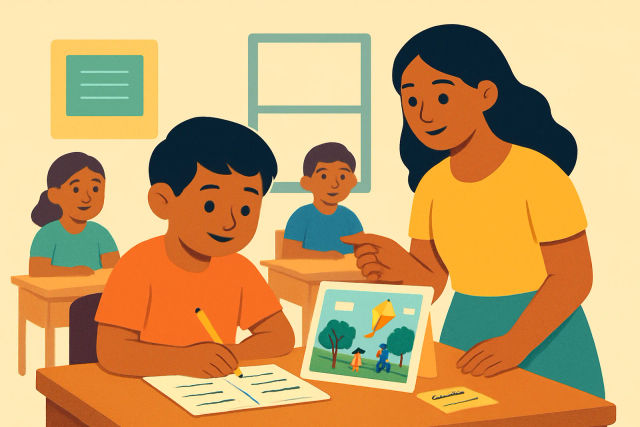
For Classes 2 to 5, pair children for a quick check of capital letters, full stops, spelling and clear handwriting. Do not turn this into a long correction exercise. Keep one spare page for an absent child and offer a simple extension, such as adding a small illustration or writing a second sentence, to early finishers. Add one teacher page with a welcome note, the class name and the date.
Bind and share the finished class book
Once the pages are checked, make a cover with the class name, school year and a title such as Our Children's Day Book. Put the pages in roll-number order, or use alphabetical order if that suits your class routine. Keep the teacher page at the front so families can see how the book was made.
You do not need a binding machine. Punch two holes and tie the pages with ribbon, place them in a folder with plastic sleeves, or staple a small set of pages along one side. For a larger class book, a local print shop may provide spiral binding. Leave enough room near the edge when children decorate their pages.
Read a few pages aloud on Children's Day and place the book in the reading corner. Families can view it at pick-up time, or the book can go home with one child for a short period. Use first names or initials if it will be displayed outside the classroom, and ask the school about its usual privacy rules. Printables from EarlyActivity are for use at home or in your own classroom. Do not share or resell the files.
Common mistakes to avoid
A shared book works best when the task stays small and welcoming. Young children do not need to fill a whole page with writing, and older pupils may lose interest if the response becomes a long composition. Give enough time for thinking, drawing and writing, but do not correct every small error while children are still forming their ideas.
The pages do not have to look identical. Different drawings, handwriting and sentence lengths show that real children made the book. Keep the heading and page order consistent, while allowing each child to make personal choices about colour and illustration.
Use a class checklist before binding. Check for children who joined late, were absent, need a scribe or finished their work in a different format. Keep cutting, sorting and binding away from the last few minutes of the school day. A tray labelled "finished pages" can prevent lost work.
Keep a spare blank template and a simple extension task ready. Early finishers could add a border, draw a small picture for the cover or write one more sentence. If a page is missing, give the child another chance rather than leaving an empty space in the book.
Questions parents ask
Can Nursery children take part in a Children's Day class book if they cannot write yet?
Yes. Give each child a large drawing space and ask them to explain the picture. An adult can write one sentence from the child's words, keeping the child's meaning. The child can add colour, stickers or simple marks if appropriate for the class.
What is a suitable Children's Day class activity idea for a mixed-age class?
Use one prompt, such as "A kind thing I can do", with different page formats. Younger children can draw and dictate a sentence, while older children write a paragraph and add an example. Put all the pages together under the same cover.
How many lines should the page template have for Class 1 to Class 5?
For Class 1, one or two lines with a sentence starter usually leaves useful drawing space. Classes 2 and 3 can use three to five lines. Classes 4 and 5 can use a short paragraph space, usually around six to eight lines, depending on handwriting size.
Can I make the class book without a binding machine?
Yes. You can tie pages through two punched holes with ribbon, place them in plastic sleeves in a folder, or staple a small book. A local print shop can spiral-bind a larger set if you want a sturdier classroom copy.
How should I display or send home a class book while protecting children's privacy?
Keep the book inside the classroom or show it to families at pick-up time. Use first names or initials when it will be seen outside the classroom, and follow your school's privacy guidance. For home visits, send the book for a short period and keep a simple record of who has it.