Reading activities for school holidays: a simple November book log for children
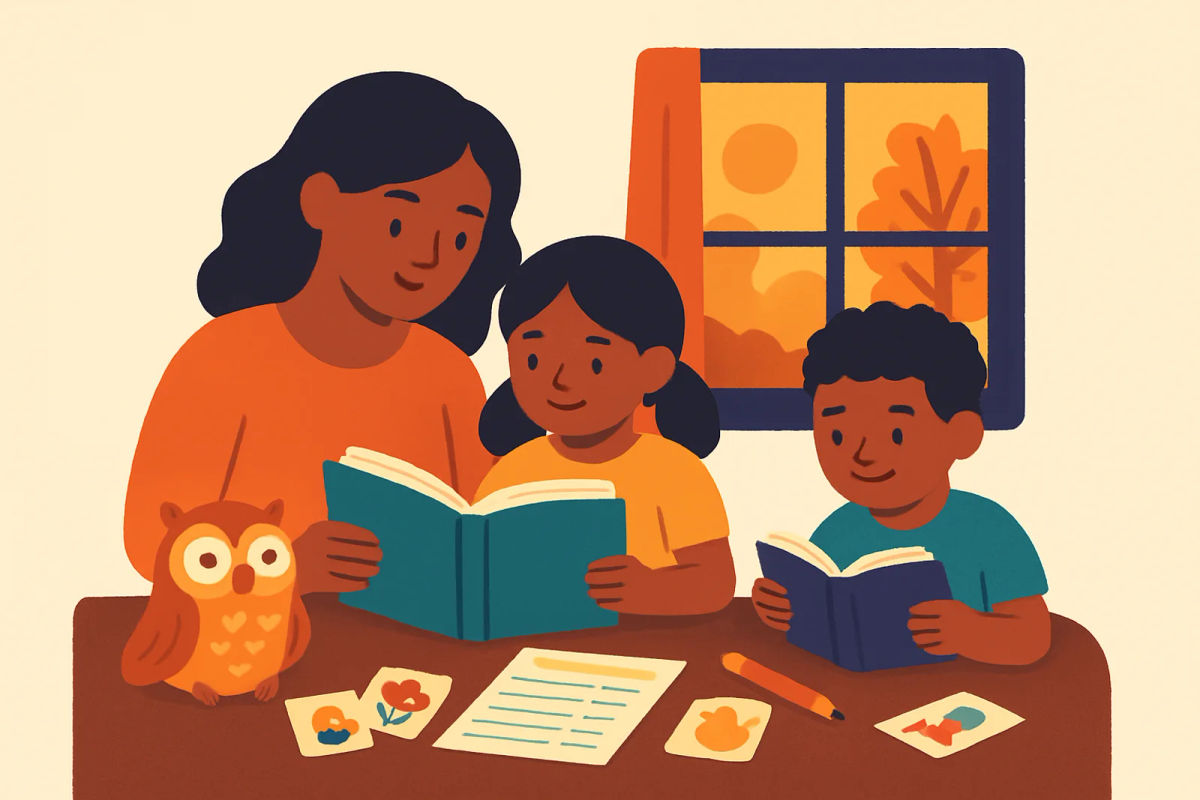
These reading activities for school holidays help you keep books part of the November break without making every day feel like a school day. You will find a flexible routine, simple book log ideas, picture-walk steps, a book review plan and story sequencing activities for home or class.
In short
- Choose one short reading time and allow the type of reading to change each day.
- Children can record listening, picture walks and family-language stories, not just books they read alone.
- Keep the daily response small, such as a drawing, spoken retelling, label or one sentence.
- Use three sequencing cards for younger children and add cards or writing for older children.
- Missed days are a normal part of a holiday, so return to the plan without comparison or pressure.
Why a small reading plan works during the November break
A short reading routine helps your child stay connected with books while leaving plenty of space for rest, visits, travel and festivals. The aim is not to recreate the school timetable. One story, a few pages or ten minutes of looking at pictures can be enough for a day.
Choose a time that fits your home. You might read after breakfast, before lunch, during an afternoon rest or at bedtime. A regular time gives children a gentle reminder, but it need not be fixed to the minute. If grandparents visit or your family is travelling, listen to a story in the car or carry one small book in a bag.
Parents can use the plan as a menu rather than a rule. Teachers can share it with families as an optional holiday idea, then allow children to talk about books when school begins again. On a busy day, a child may listen for five minutes. On a quiet day, the same child may read longer or complete a small drawing. Both days count.
How to make a flexible holiday reading plan
Start with one simple choice for each day. Write the choices on a paper calendar or let your child select one from this list:
- Listen while an adult reads aloud.
- Look through a picture book and talk about it.
- Read a library book or a book from home.
- Listen to a story told by a family member.
Offer books in English, Hindi or another family language. Children can enjoy the same story in different languages, and a grandparent may tell a familiar tale in the language used at home. Let your child choose the topic, format and place. A sofa, balcony, floor mat or classroom reading corner can all become a reading place.
Nursery and LKG children can join by listening, pointing, naming objects and answering simple questions. UKG children may recognise some words while an adult reads the rest. Children in Class 1 to 5 can read by themselves for part of the time, then share a favourite detail. If you need extra word practice after the break, you can use these free printable English worksheets in small amounts, rather than turning every holiday reading session into written work.
What to put in a simple printable book log
A useful book log should take less time to complete than the reading itself. Give each day a space for the date, book title, language, pages or minutes, and one small response. The response can be chosen from a few easy options:
- Draw a favourite part.
- Name a character or place.
- Write one new word.
- Share one question.
- Tell what happened first.
For a young child, you can write the title and record the minutes while your child draws. If your Nursery or LKG child says, "The rabbit was hiding," write those words down and read them back. This shows that spoken ideas belong in a reading record too. The child does not need to copy a long sentence.
Older children may write a sentence, list two interesting words or note the page where they stopped. Listening to an adult read, shared reading and independent reading can all be recorded. Print the log on A4 or US Letter paper at Actual size, which is 100 percent. You can find more ready-to-use pages in the free printables library, then keep the log on the fridge or inside the child's favourite book.

Lumi's tips
- I am Lumi, and I suggest keeping the book log where your child can reach it without asking each time.
- Let your child choose between two books when a whole shelf feels overwhelming.
- I would accept a drawing or spoken answer before asking for more writing.
- Keep sequencing cards in an envelope beside the books so they are ready after a story.
- Stop while your child is still comfortable, then return to the story on another day.
How to use reading aloud and picture walks
A picture walk lets a child meet a book before trying to read all its words. Use these steps:
- Look at the cover and name what you notice.
- Turn through the pages without reading every word.
- Talk about people, animals, places and objects in the pictures.
- Ask what might happen and why.
- Read the words together, checking whether the guess changed.
Reading aloud gives children a way to enjoy stories while they are still learning letter sounds. This is useful for children in Nursery, LKG and UKG, who may follow the meaning even when they cannot read the sentence alone. Pause to ask about feelings, setting, order and cause. For example, ask, "How does she feel?" or "What happened after the rain?" You do not need to test every word.
At home, an adult might read a Hindi storybook, share an English picture book or invite a grandparent to tell a family story from memory. The child can draw one scene or retell part of it afterwards. If the story is told rather than printed, record the storyteller's name in the book log.
One small reading response for each day
Keep the daily response short enough that your child still wants to talk about the story. After a read-aloud, a child might draw the setting. After an independent book, the child might write one sentence. Other choices include matching a word to a picture, labelling an animal, putting two events in order or retelling the ending aloud.
For Class 1 and 2, oral retelling, drawing and labels may be enough. A child in Class 3 can write two or three sentences about a character or event. By Class 4 or 5, the child may give a short opinion with one reason, such as, "I liked the ending because the friends solved the problem together." Accept a spoken answer when writing is tiring, then write it down if you need a record.
At the end of the break, use the printable book review page for one longer response. The child can name the book, describe a favourite part, share an opinion and draw a scene. Avoid asking for a full worksheet after every book. During a holiday read, conversation matters more than correcting every spelling. You can gently model the correct spelling later without interrupting the story.
How to use story sequencing cards at home or in class
Story sequencing cards show the main events of a story in pictures. Mix the cards, then ask your child to arrange them in the order the events happen. Invite the child to retell the story using first, next, then and finally. The child can point to each card while speaking.
Make the activity easier with three clear cards and prompts such as, "What happened first?" or "Which picture comes after the rain?" For a harder task, use more cards, include a less obvious event or ask the child to write one sentence for each card. Older children can add a missing event or explain why one event caused the next.
At home, use the cards after a bedtime story or picture walk. In a classroom, place children in small groups and give each group a turn to arrange, retell and check the order together. One child can be the speaker, while another points to the cards. Print the cards, cut them out and store them in an envelope. They can be used again with a new retelling, a partner or a younger sibling.
How to keep the plan friendly and manageable
A seven-day pattern can give your family ideas without making the week rigid:
- Day 1: adult read-aloud and a drawing.
- Day 2: independent reading or shared reading for a few minutes.
- Day 3: library book and one new word.
- Day 4: story in Hindi or another family language, followed by oral retelling.
- Day 5: picture walk and a guess about what will happen.
- Day 6: story sequencing cards and a short sentence.
- Day 7: book review page for one book from the week.
Write down listening, shared reading and independent reading in the same log. A child should not be left out because they cannot yet read alone. If your child is tired, stop after the story or skip the response. On a travel day, record the listening time later, if you remember.
Praise effort, careful looking and thoughtful conversation rather than counting pages. Avoid comparing siblings or classmates, since children may choose different books and need different amounts of support. If a day is missed, simply begin again the next day. A holiday reading plan should make books easier to reach, not make your child feel they have failed.
Questions parents ask
How much should my child read during the November school break?
There is no single amount that suits every child or family. Choose a short, regular time, such as five to fifteen minutes, and include listening, shared reading or picture walks. A longer session is welcome when your child is interested, but missed days do not need to be made up.
Can a child record a story that an adult read aloud or told in a family language?
Yes. Record the story title, language and whether it was read or told by an adult. Your child can draw a scene, name a character or retell one event, even if the story was not read independently.
What can I write in a reading log if my child cannot write yet?
Write the date, title and minutes yourself, then record the child's spoken answer. You can also let your child draw, point to a picture, circle a choice or dictate one sentence for you to write.
How can I encourage a child who says they do not like reading?
Start with the child's interests and offer picture books, fact books, comics without brand characters, poems or family stories. Read aloud without requiring a written task, let the child choose the place and stop after a manageable amount of time. A positive conversation about one picture or idea is a useful beginning.
Can I use the book review page and story sequencing cards with a mixed-age class?
Yes. Give younger children three cards, drawing tasks and oral retelling, while older children arrange more cards and write sentences or an opinion. In a small group, children can take different roles such as arranger, speaker and question asker.