How to teach your child to ask for help at school before preschool starts
Learning how to teach child to ask for help at school can make daily preschool routines less confusing. This article gives you short sentences, five-minute role-play ideas and a classroom needs picture chart to practise at home.
In short
- Teach a few short phrases for help, toilet, hurt, lost items and taking a turn.
- Use real school objects during five-minute role-play instead of relying on repeated questions.
- A picture chart can support children who are still gaining speech confidence.
- Practise waiting nearby and trying again when the teacher is helping someone else.
- Speak with the teacher and seek professional advice if basic communication is often very difficult.
Why asking for help is a school readiness skill
At preschool, your child will often need to tell a trusted adult when something is difficult. They may be unable to open a lunch box, find a bag, reach a shelf, sharpen a pencil or understand what to do next. A child in Nursery may need help joining a block activity. An LKG child may need to find a water bottle, while a UKG child may need to explain that a worksheet instruction is confusing.
The first goal is simple: your child should learn that asking a trusted adult for help is safe and useful. They do not need long explanations or perfect grammar. They need a way to show the problem and get an adult's attention.
Children gain speech confidence at different speeds. Clear pointing, showing an object or taking the teacher to the problem can be a helpful first step. You can practise these actions alongside words. For more ideas for talking about school routines, see Back to School Activities.
Teach a few useful help sentences
Start with a small group of phrases that match your child's real school needs. Practise them during calm moments, then use them in short pretend situations.
- "Please help me open this."
- "I need to use the toilet."
- "I do not understand."
- "I am hurt."
- "I cannot find my water bottle."
- "Can I have a turn?"
Keep the wording close to what your child can say now. A younger child might say "Help open" before using the longer sentence. Accept that attempt, then model the fuller phrase without demanding an immediate repeat.
Show your child how to say the teacher's name, stand nearby and listen to the reply. You can model this with, "Ma'am, please help me," or the title and name used at your child's school. Practise looking towards the adult, using a clear voice and waiting for an answer. These small steps matter more than sounding polished.
Practise through simple role-play at home
Set aside about five minutes at a time for role-play. Take turns being the child and the teacher so your child can hear both sides of the conversation. Use familiar objects such as a lunch box, water bottle, pencil case, shoes and school bag.
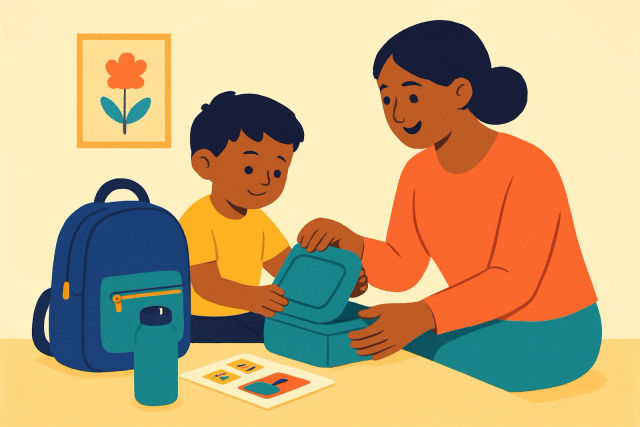
Act out one problem, then pause. For example, give your child a tightly closed lunch box and wait. Your child may say, "Please help me open this," point to a help picture or bring the box to you. Respond as the teacher, help with the object and thank your child for showing you the problem.
Try one situation at a time. You might pretend that a shoe strap is difficult, a bag is missing or another child is using the crayons. Praise the attempt to communicate rather than perfect grammar, eye contact or a loud voice. If your child freezes, give two choices: "Will you say help or show me the lunch box?" Then try the same situation another day.
You can add a quick school-themed quiet activity after practice, such as Preschool Coloring Pages.

Lumi's tips
- Keep a small help card near the lunch box, so your child can practise during a real routine.
- Lumi suggests acting out one problem at a time and giving your child plenty of thinking time.
- Use the words your child's teacher uses, especially for toilet breaks, turns and finished work.
- Celebrate a point, gesture or partial phrase as a useful first step towards speaking.
Use a classroom needs picture chart
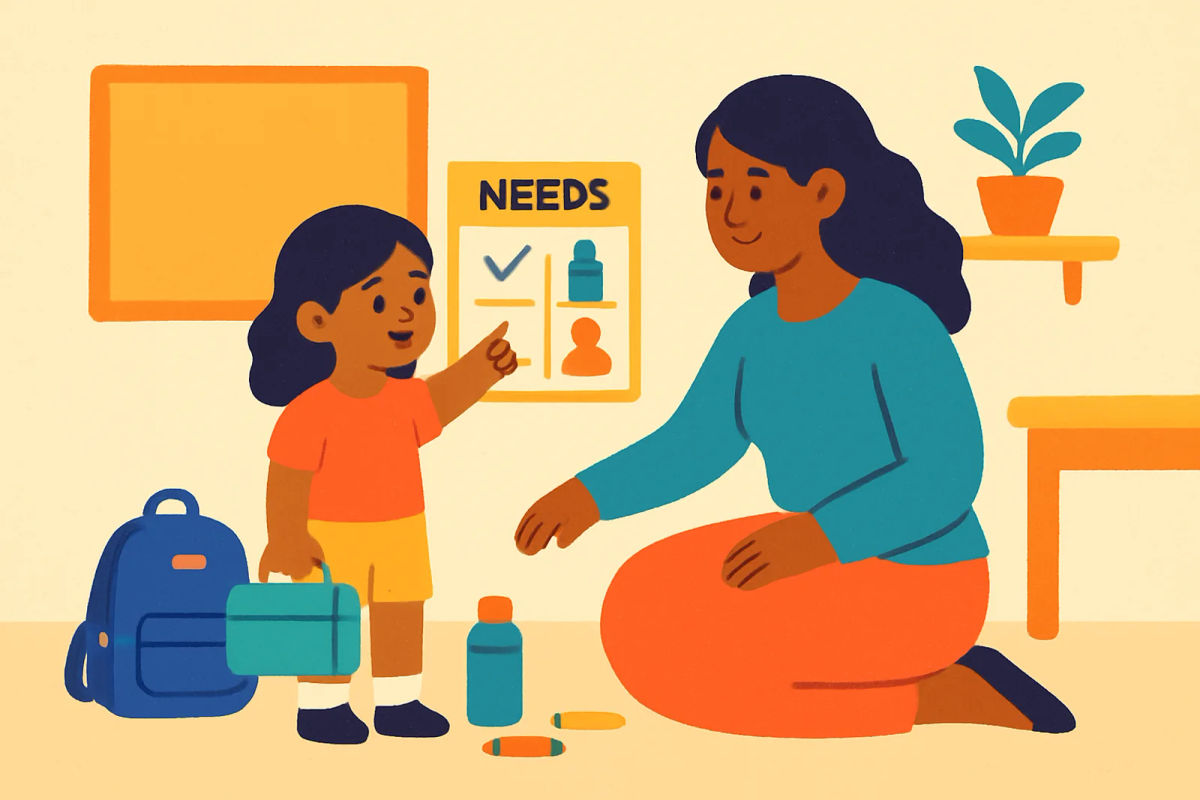
A small picture chart gives your child another way to communicate while speech confidence is growing. Make or print a simple chart with one clear picture and one word for each need:
- toilet
- water
- food
- help
- hurt
- lost item
- finished
- turn
Choose uncluttered pictures that your child recognises. Point to one picture, say the word and model the matching sentence, such as "Help, please" or "I need water." Then let your child point, speak or do both. Keep a copy at home for daily practise and ask the teacher whether another copy can stay in the classroom or school bag.
The chart supports communication. It does not replace speech practise, listening or learning classroom routines. Use it when a word will not come quickly, when your child is upset or when showing is easier than speaking. You can look through the free printables library for simple visual activities to use alongside this routine.
Make practice suit your child's age and speech
For a younger preschooler, begin with one-word requests such as "toilet," "water" or "help." Pair the word with pointing, showing the object and looking towards the adult. A child does not need to repeat a full sentence before you respond to a genuine need.
For an older preschooler, practise a full sentence with one extra detail. For example, "Please help me open my lunch box," or "I cannot find my red bag." Once this feels easy, add the teacher's name or a polite closing such as "Thank you."
If your child speaks more than one language, practise the familiar home-language words first, then add the simple English or school-language words used in class. You can ask the school which words the teacher uses for toilet time, water breaks, taking turns and finished work. Matching the routines at home to Nursery, LKG or UKG expectations makes practice easier to understand. Do not correct every sound. Respond to the meaning, then model the school phrase naturally.
Prepare for the first week of school
Talk through the school routine in the same order your child is likely to experience it. Practise greeting the teacher, putting away belongings, finding the bag, eating, drinking water, using the toilet and asking to join an activity. Use a school bag and lunch box during the pretend routine so the actions feel familiar.
If possible, visit the classroom or talk about a photo of it. Help your child identify the main teacher and one other adult they can approach. Tell your child that asking for help is allowed, even when other children seem busy.
A small card with the same help sentences can go in the school bag if the school permits it. A picture chart may be more useful than written words for a child who cannot read yet. Practise the next step too: the teacher may be helping another child, so your child can wait nearby, raise a hand or try again after a short while. Keep the message calm: "You can ask, wait and ask again."
Avoid pressure and correct mistakes gently
Avoid making your child repeat a sentence many times in front of visitors or relatives. Public practice can make a shy child worry about getting the words wrong. At home, respond warmly when your child points, brings an object or uses part of a sentence. These are communication attempts, not bad behaviour.
Teach a few phrases at a time. Start with help, toilet and hurt because these needs may require a quick adult response. Add water, lost item, finished and turn after the first group becomes familiar. Keep role-play short and stop while it still feels manageable.
Talk with the teacher if your child often cannot communicate basic needs at school, becomes very distressed or cannot use the agreed picture or gesture system. If familiar adults also find your child's speech very hard to understand, ask your doctor or a speech and language professional for guidance. The school can help you decide which situations need extra support. Your aim is communication, not a flawless performance.
Questions parents ask
What should I teach my preschooler to say when they need help at school?
Begin with "Help, please," "I need to use the toilet" and "I am hurt." Add phrases for opening a lunch box, finding a lost item, asking for water and taking a turn. Use wording your child can manage now, then model longer sentences over time.
How can I help a shy child ask the teacher for help?
Practise short role-plays with one adult and one familiar object. Teach your child to say the teacher's name, stand nearby and use a point or gesture if speaking feels difficult. Ask the teacher to give your child time to respond without calling attention to the practice.
Can a picture chart help a child who is still learning to speak confidently?
Yes, a chart can give your child a clear way to show a need while speech develops. Teach the child to point to a picture and say the matching word when possible. Keep practising speech and ask the school whether the chart can be used in the classroom.
What should my child do if the teacher is busy?
Teach your child to wait nearby, raise a hand or try again after a short while. If the need is urgent, such as being hurt or needing the toilet, your child should use the urgent phrase, gesture or picture clearly. Practise this routine during role-play.
When should I talk to the teacher or a doctor about my child's difficulty asking for help?
Speak with the teacher if your child often cannot communicate basic needs, becomes very distressed or cannot use the agreed words, gestures or pictures at school. Ask your doctor or a speech and language professional for guidance if familiar adults also find your child's speech very hard to understand.