How to prepare child for winter school mornings: a simple picture checklist
Learn how to prepare child for winter school mornings with a calm, repeatable order for toilet, clothes, breakfast, water bottle, bag and shoes. You will also see how to make a picture checklist that suits Nursery, LKG, UKG or Class 1.
In short
- Prepare warm clothes, school items and the water bottle before bedtime.
- Keep the same simple order each morning so your child knows what comes next.
- Use fewer pictures for younger children and picture-word labels for Class 1.
- Give one instruction at a time when your child is sleepy or distracted.
- Check the weather and school clothing rules before choosing extra layers.
Why winter mornings need a different routine
Cooler November and December mornings can make children slower to leave a warm bed. A child who usually gets ready quickly may need more time to sit up, use the toilet, wash and put on clothes. This is common in homes where the morning room feels much colder than the bed.
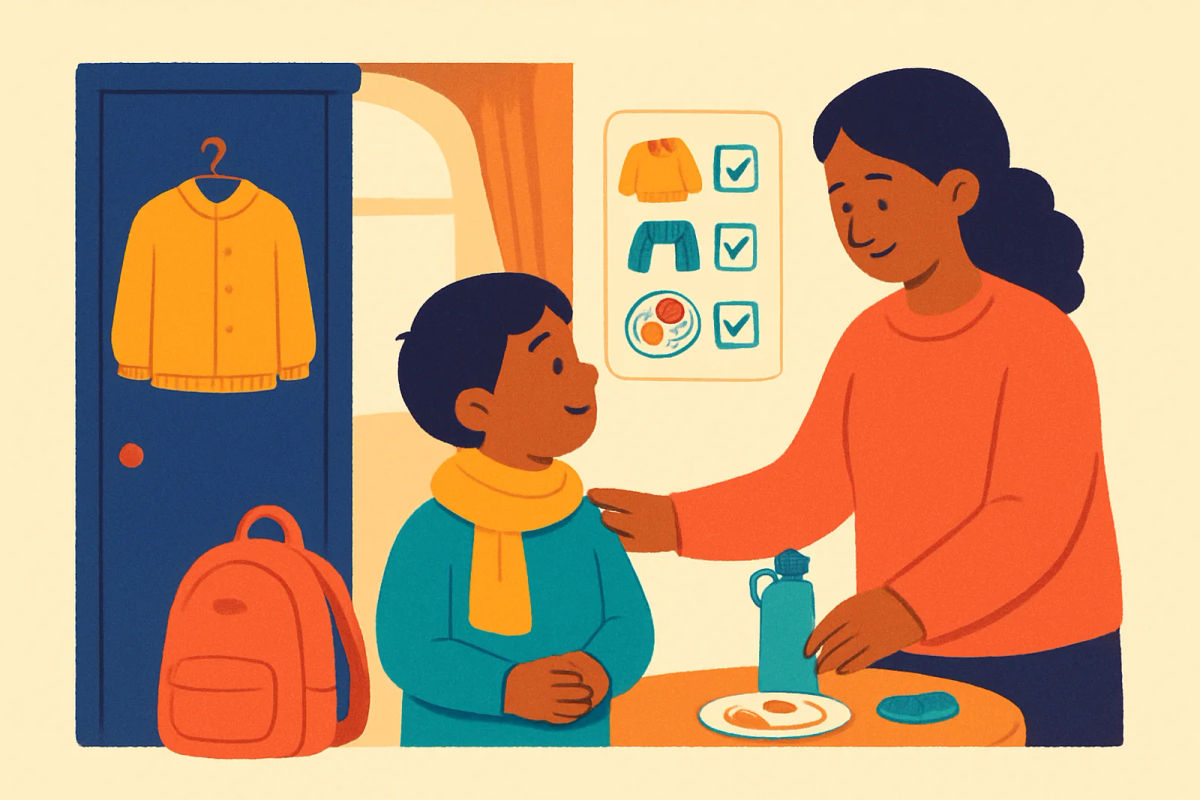
A fixed order takes away some of the remembering. Your child sees what comes next instead of hearing a new list each day. A useful sequence is toilet, clothes, breakfast, water bottle, bag and shoes. You can add washing after the toilet and a coat or sweater when needed.
The aim is not to make your child hurry through every step. Aim to prepare as much as possible the night before. Lay out clothes, check the bag and keep the bottle ready so the morning is used for the few things that must happen then. A few calm minutes of preparation can help more than repeated reminders. For a quiet seasonal activity after school, see these Winter Activities for Kids.
Set up the morning sequence the night before
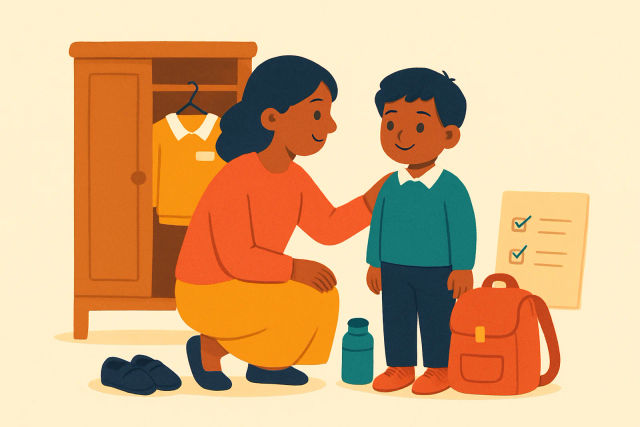
Choose a short evening routine that takes place after homework and before bedtime. Put the school-approved clothes, underwear, socks and shoes in one place. Check that the sweater, jacket or other warm layer is clean and easy for your child to put on. Keep shoes together, with the pair facing the right way.
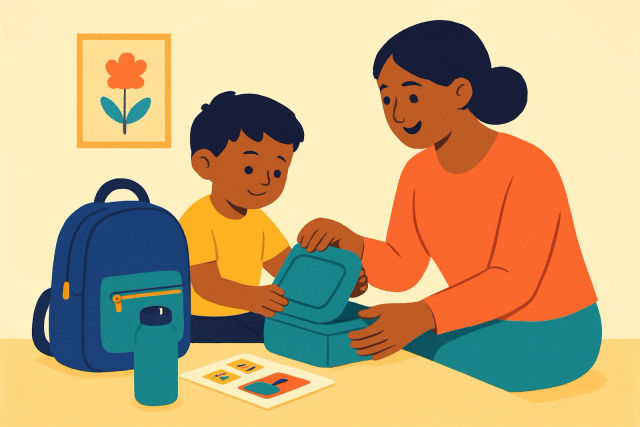
Look through the school bag before your child goes to sleep. Check homework, books, the ID card, pencil box, lunch box, water bottle and any item needed for the next day. If your child uses a school diary, place it in the bag after checking it. Fill the bottle only if it can safely remain ready overnight, or keep it beside the sink for the morning.
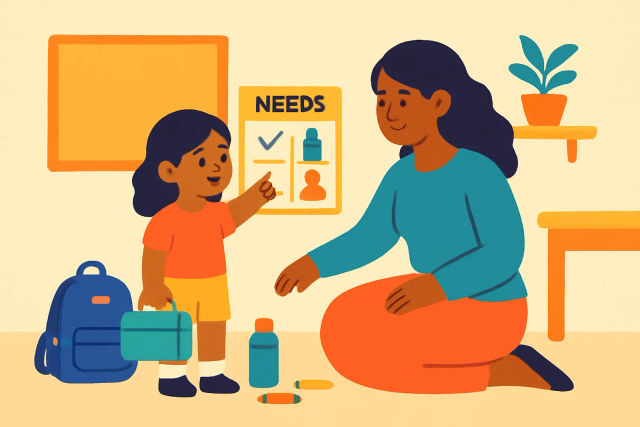
Place the picture checklist where your child can see it, such as near the bed, wardrobe or main door. The order should match your family's real morning. If breakfast happens before dressing in your home, use that order. A useful checklist is one your family can follow, not an ideal timetable that leaves out real tasks.
Use one clear order for getting ready
Keep the sequence short and say it in the same order each day:
- Wake up and sit up.
- Use the toilet and wash.
- Get dressed.
- Eat breakfast.
- Fill the water bottle.
- Take the school bag and put on shoes.
You can point to the next picture and say, "First toilet, then clothes." After that, say, "Check the picture, then choose the next step." Give one instruction at a time when your child is sleepy, playing or looking for a missing sock. Wait for that step to finish before adding another instruction.
Try not to call out several tasks together, such as telling your child to use the toilet, dress, eat and pack the bag in one sentence. Avoid changing the order every day unless the family schedule has changed. If a step is missed, point back to the checklist and return to the sequence without a long lecture. Your calm voice and the repeated order do much of the reminding.

Lumi's tips
- Lumi says to keep the next step visible and the spoken instruction short.
- Put socks inside the shoes the night before if your child often searches for them.
- Use the same place for the water bottle every day so your child can find it quickly.
- If the morning feels rushed, remove one checklist step and prepare it at bedtime.
- Keep one spare pencil and required school item in the evening bag check, not in the morning rush.
Adjust the checklist for Nursery, LKG and UKG
For Nursery, use four to six large pictures with very few words. Toilet, clothes, food, bottle and shoes may be enough. An adult can point to one picture, help with the task and then let the child move a peg or place a sticker beside it. Use clear photographs or simple drawings that look like the objects at home.
For LKG, add small matching tasks. Your child might find the sweater, place the bottle in the bag and check that both shoes are together. Use a short word under each picture if your child recognises some letters. Keep the page uncluttered so the child can see the next action.
For UKG, add a tick box and small choices. Your child could choose between two suitable sweaters or check the bag after an adult names the needed items. An adult may still need to help with buttons, zips, shoelaces and checking the toilet routine. The checklist supports the routine, but it does not replace supervision, especially when the child is very young.
Make the routine suitable for Class 1
A Class 1 checklist can use both a picture and a word label. For example, a small bottle picture beside the word "water bottle" helps your child read the step and recognise it quickly. Keep the labels familiar and use the same words that your family uses at home.
Add school items that matter on that day, such as homework, maths book, pencil box, lunch box and school diary. You do not need a long list for every morning. A weekly strip or a small note beside the bag can show items that change.
Teach a final three-part check: bottle, bag and shoes. Ask your child to point to each one before leaving. At first, stand nearby and ask questions. Later, reduce reminders one at a time while still checking that your child is warm, has eaten enough for the morning and is ready for school. If your child is practising reading simple labels, you can add a few words from the Free Printable English Worksheets that match the checklist.
Plan warm clothes, breakfast and water sensibly
Choose school-approved layers that your child can put on without too much help. A sweater with a wide opening may be easier than a tight one, while a simple zip can be easier to manage than many buttons. Follow the school's uniform rules and check the weather before adding layers. Too many clothes can make movement, toileting and carrying the bag harder.
Offer a small, familiar breakfast that fits the time available. This might be the food your child already eats comfortably at home, rather than a new dish on a rushed school morning. Keep the serving manageable and allow enough time to sit and eat. If your child needs more time, discuss a practical change to the morning plan with the family.
Keep the water bottle ready and show your child exactly where it belongs in the bag. Check that the lid is closed and that the bottle is easy to carry. A raincoat, cap or extra layer should be added when the weather or school guidance calls for it, not automatically every day.
Make and use a printable picture checklist
You can print a ready checklist on A4 or US Letter paper at Actual size, which is 100%. You can also make a simple custom version with a free maker by drawing or adding pictures for the steps your child follows. Remove steps that do not apply and add family-specific pictures, such as a school bus, lunch box, raincoat or van.
Print one copy for the bedroom and, if needed, another for the main door. You can laminate the page or place it in a clear file. Let your child mark each step with a pencil tick, a reusable sticker or a peg. Wipe the page at the end of the day and reset it before bedtime.
EarlyActivity printables are for use at home or in your own classroom. Files should not be shared or resold. You can find more printable options in the free printables library. If you are preparing a school corner, keep the checklist at the child's eye level and leave enough space for a finger, peg or sticker beside each picture.
Questions parents ask
What time should a child wake up for school on a cold morning?
Choose a wake-up time that leaves enough room for toilet, washing, dressing, breakfast and the trip to school. Work backwards from the time your child must leave, then add a few calm minutes rather than planning to finish at the last second. The right time depends on travel, the child's pace and the school's reporting time.
How can I get my child out of bed without shouting?
Open the curtains, use a gentle voice and give one clear next step, such as "Sit up, then toilet." Keep the checklist near the bed and point to the first picture. If your child still struggles each morning, move bedtime earlier or prepare more items before sleep.
What should a child wear on a cool November or December school morning?
Follow the school's uniform and winter clothing guidance, then check the day's weather. Choose comfortable layers that your child can manage for toileting and movement. Avoid adding extra clothes automatically if they make the child hot, uncomfortable or unable to carry the school bag easily.
How can I use a picture checklist if my child cannot read yet?
Use large, clear pictures or photographs of the actual toilet, clothes, bottle and shoes. Point to one picture, name it and wait for your child to finish that step before moving to the next one. A tick, peg or reusable sticker gives your child a simple way to show what is done.
What should I do when my child refuses breakfast or keeps delaying the routine?
Keep breakfast familiar and offer a small portion with enough time to eat. Point to the next picture instead of repeating many warnings, and use a calm choice such as choosing between two suitable sweaters. If refusal happens often or your child seems unwell, speak with your child's doctor or school.