How to teach a child to play independently for 15 minutes
Learning how to teach a child to play independently starts with a short, predictable time and two simple activity choices. This guide will help you build up to 15 minutes while staying available and keeping your child secure.
In short
- Begin with two to five minutes and increase the time slowly.
- Offer two familiar activities instead of a whole shelf of toys.
- Return when you promised so your child can trust the routine.
- Choose activities that match your child's age, skills and safety needs.
- Stay nearby when your child needs help with setup, difficult steps or materials.
What does independent play mean?
Independent play means your child chooses and uses an activity without an adult sitting beside them all the time. You may be in the same room, finishing the dishes, folding clothes or sending a message. The first goal can be very small, such as playing near you for three minutes while you wash a few plates.
Your child may still need help with setup, a difficult step or a safety question. Independent play does not mean leaving a young child alone with unsuitable materials. It means giving them a clear activity and a little space to try it.
Expectations change with age and experience. A toddler may play for a few minutes while you stay close. A Nursery, LKG or UKG child may manage five to ten minutes with a familiar task. A child in Class 1 to 5 may work towards 15 minutes with a puzzle, drawing prompt, quiet reading or small craft. Start from what your child can manage now, not from the final target.
Start with a short timer
Begin with two to five minutes, depending on your child's age and usual comfort with playing alone. A toddler who often asks for you after one minute may need a two-minute start. A child who already plays for a while may begin with five minutes.
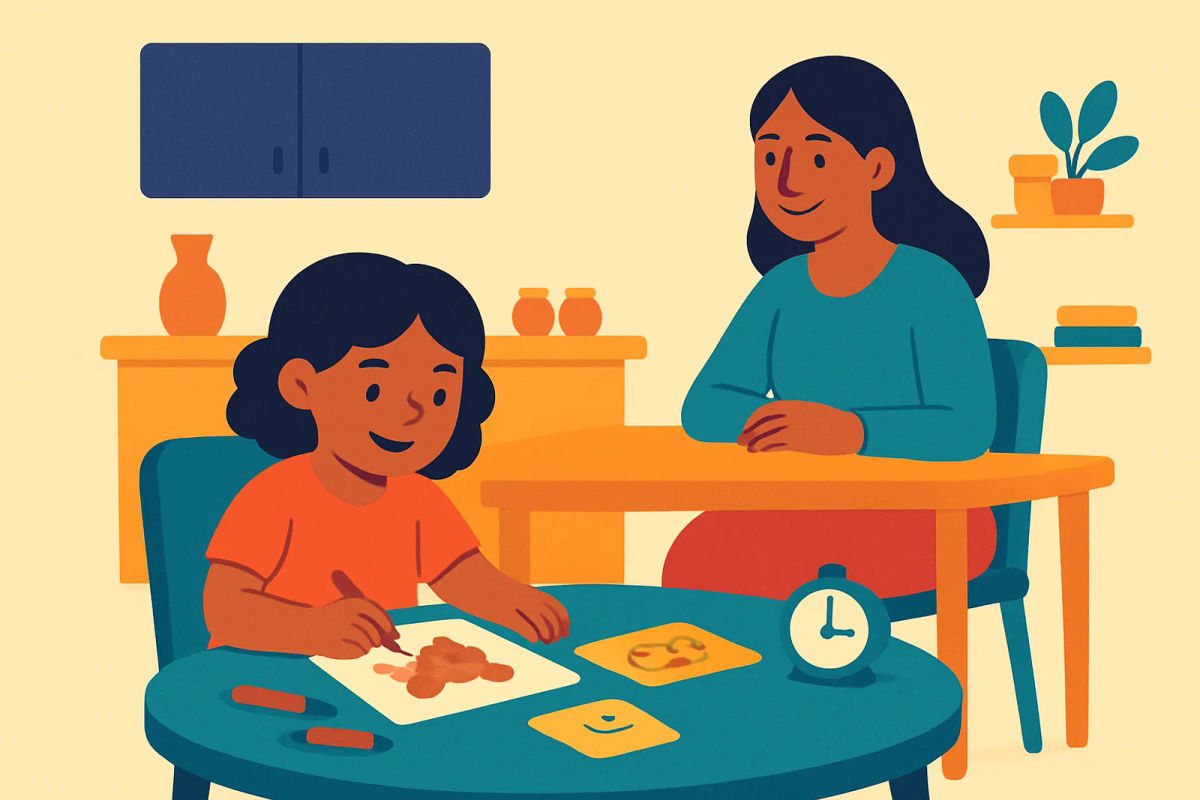
Use a kitchen timer, phone timer or visual timer your child understands. Before you start, explain the plan in simple words: "You will colour while I put these dishes away. The timer will ring after three minutes, and I will come back." Keep your task small enough to finish or pause easily.
When the timer rings, return as promised. After a few successful attempts, add one or two minutes. If your child manages five minutes calmly, try six or seven on another day. Continue in small steps until 15 minutes feels familiar. Some days will be harder, especially after a tiring school day, so it is fine to shorten the time and practise again.
Offer two clear activity choices
Put out only two choices, such as a printable puzzle and colouring pages. Too many toys or worksheets can leave a child unsure about where to begin. Show both activities before the timer starts and use simple words such as, "Would you like to colour or do the maze?"
Choose tasks your child already knows how to begin. For a younger child, use large colouring spaces, matching tasks or easy puzzles. For an older child, offer a word puzzle, maze, drawing prompt or pattern activity. You can print a suitable page from the free printables library or prepare a maze using the Maze Maker.
Keep a small activity basket ready with crayons, pencils, an eraser and other safe materials needed for the chosen task. Check that the page does not require instructions your child cannot read or remember. A familiar setup means less calling for help during the timer.

Lumi's tips
- Lumi suggests placing the timer where your child can see it, so the end does not feel surprising.
- Keep one familiar activity in the basket for days when your child is tired or unsettled.
- Use a calm voice and describe what your child did, rather than asking for a perfect result.
- If the timer feels stressful, practise with one minute and sit closer before trying again.
Return when you promised
Come back when the timer rings, even if your task is not quite finished. This helps your child learn that your promise is reliable. You can pause the dishes or message, sit beside your child for a moment and notice what happened.
Ask what your child made, matched or solved rather than judging the result. Specific feedback is more useful than general praise. Say, "You stayed with that puzzle until the timer rang," or, "You chose the blue pencil and finished the house."
If your child stops early, stay calm. Check whether the page was too hard, the materials were missing or the room felt distracting. You might say, "Which part was difficult?" Then try a shorter time or an easier task next time. Do not turn the timer into a test. The purpose is to practise staying with an activity while knowing that you are still available.
Keep the first sessions relaxed. A child who feels watched, rushed or corrected may call for you more often, even when the activity is manageable.
Use printables and a choice board
Print the activity before the session begins, so you do not need to search while your child is waiting. Printable puzzles and colouring pages work well because the task has a clear beginning and a visible stopping point. You can use the free printables library for a familiar page, or make a simple puzzle with the Sudoku for Kids tool for an older child.
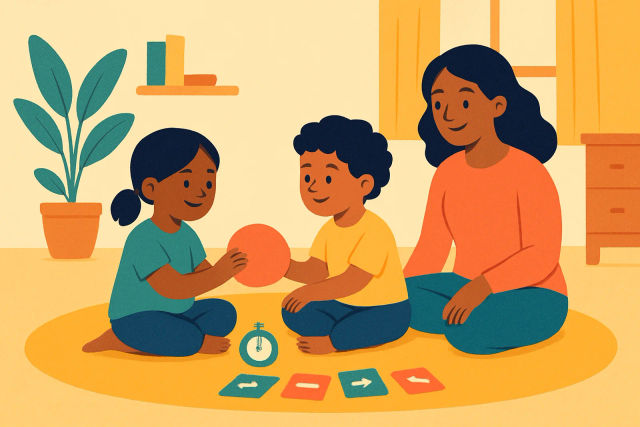
A choice board can be as simple as four paper cards with a picture or word on each card: puzzle, colour, build and read. Let your child point to two cards, then choose one. Place the chosen card beside the activity while the timer runs. This gives your child a small decision without offering a whole room of options.
You can draw the cards yourself or use a free maker to create a board with familiar activities, your child's name and simple pictures. Keep the board flexible. If reading is still developing, use drawings or photos. Change one card when an activity becomes boring, but keep some familiar choices so your child knows what to expect.
Adjust the plan for age and ability
A toddler may manage a few minutes with large crayons, stacking objects or a simple matching activity while you stay nearby. Sit where you can see your child and keep small pieces, cords and other unsafe materials out of reach. The activity should be easy to start, with only a few items on the floor or table.
Children in Nursery, LKG and UKG may manage five to ten minutes with a familiar printable, drawing task or sorting activity. Give one instruction at a time, such as "Match the pictures first." You can place an example beside the page if your child forgets what to do.
Children in Class 1 to 5 may work towards 15 minutes with puzzles, writing prompts, quiet reading or a small craft. A child who enjoys maths might use a page from the Math Worksheet Generator, while a child who likes words might try a word search.
Give harder pages, fewer reminders or a longer timer only after the current step feels manageable. Age is a guide, not a deadline. Attention, tiredness, language, confidence and familiarity with the task all affect the time your child can play independently.
Mistakes that make independent play harder
Do not begin with 15 minutes if your child usually asks for help after two minutes. A long timer can make the activity feel like separation or punishment. Start with a time your child has a fair chance of completing, then build slowly.
Do not put out too many toys or offer an activity with instructions your child cannot yet follow alone. A worksheet may look simple to you but still need reading, cutting or fine motor skills that your child is practising. Prepare the first step and keep the rest clear.
Avoid leaving without warning, changing the promised return time or using independent play only when your child is already tired and upset. Tell your child what you are doing and when you will return. If the child keeps calling, shorten the timer and check the task.
Keep small pieces, scissors and other materials within reach only when they are safe for your child and you are supervising appropriately. Stay close enough for the child's age and needs. Independent play grows from a reliable routine, suitable materials and repeated short practice, not from sudden long periods alone.
Questions parents ask
What age can a child start playing independently?
Many toddlers can begin with a few minutes while an adult stays nearby and watches. Start when your child can safely use a simple activity, then adjust the time and materials to the child's comfort and ability.
How long should independent play last for a toddler or preschooler?
A toddler may begin with two to five minutes. A Nursery, LKG or UKG child may gradually manage five to ten minutes, though tiredness and the difficulty of the activity matter more than age alone.
What should I do if my child keeps calling me during the timer?
Answer calmly and check whether your child needs help, reassurance or an easier task. Shorten the timer, stay a little closer and practise again rather than insisting on a long period.
How can I teach a child to play independently without making them feel ignored?
Tell your child what you will do, how long you will be busy and when you will return. Come back when promised, listen to what they did and give specific feedback so the child knows you are still interested.
Which quiet activities work best for 15 minutes of independent play?
Choose familiar activities with a clear first step, such as colouring, a maze, a matching page, a word search, quiet reading or a simple pattern task. Avoid pages that need frequent adult explanations or materials that are not safe for your child.