Matching activities for 3 year olds: a 10-minute daily plan with objects, pictures and words
These matching activities for 3 year olds begin with familiar objects, then move to pictures and simple word labels. You will learn how to set up a calm 10-minute practice session using things already at home.
In short
- Begin with two pairs of familiar household objects before using pictures or written words.
- Move from identical matches to related pairs, then to simple labels your child already hears.
- Use only two or three choices at first and add more when matching feels easy.
- Keep the session playful and stop when your child loses interest.
- Ask the teacher or a doctor about ongoing concerns with communication, understanding or play skills.
What should a 3-year-old match first?
Start with objects your child sees and handles every day. Real items are easier to understand than small pictures because your child can see their size, shape and purpose. Begin with two identical pairs, such as two spoons, two socks or two plastic cups. Keep one item from each pair in front of your child and place the matching items in a small mixed group.
Use a simple 10-minute routine. First, show an item and name it, such as, "This is a spoon." Next, invite your child to find the same spoon. Name the pair again when your child matches it. Spend the last few minutes talking about the objects or putting them away together. Praise the effort with calm words such as, "You looked carefully" or, "You found the same cup."
Some 3-year-olds will manage several choices, while others need just two. Children develop at different speeds, so fewer choices and extra practice are sensible, not a problem. The aim is to help your child notice sameness and difference without rushing to the next level.
Level 1: Match identical household objects
Choose two pairs of safe, familiar objects. Good choices include lids, toy cars, blocks, socks, spoons and clean plastic containers. Avoid small items that could be put in the mouth, especially if younger children are nearby.
- Place one object from each pair on the floor or a low table.
- Mix the matching objects beside them.
- Pick up one object, name it and ask, "Can you find the same one?"
- Let your child place the match beside the first object.
- Repeat with the second pair, then name both pairs.
Start with two pairs. Add a third pair when your child can match with little help. To make the task easier, choose objects with clearly different colours and shapes, such as a red lid and a long blue block. To make it harder, mix similar-looking spoons, containers or toy cars. You can also place the objects farther apart, but keep the activity comfortable and easy to see. If your child starts guessing, return to two pairs and model one turn before offering another chance.
Level 2: Match related objects and pictures
When identical matching feels familiar, introduce pairs that belong together. A cup and spoon, shoe and sock, or toothbrush and toothpaste are related because they are used together. This is harder than finding two objects that look the same. Your child now has to connect the items by meaning.
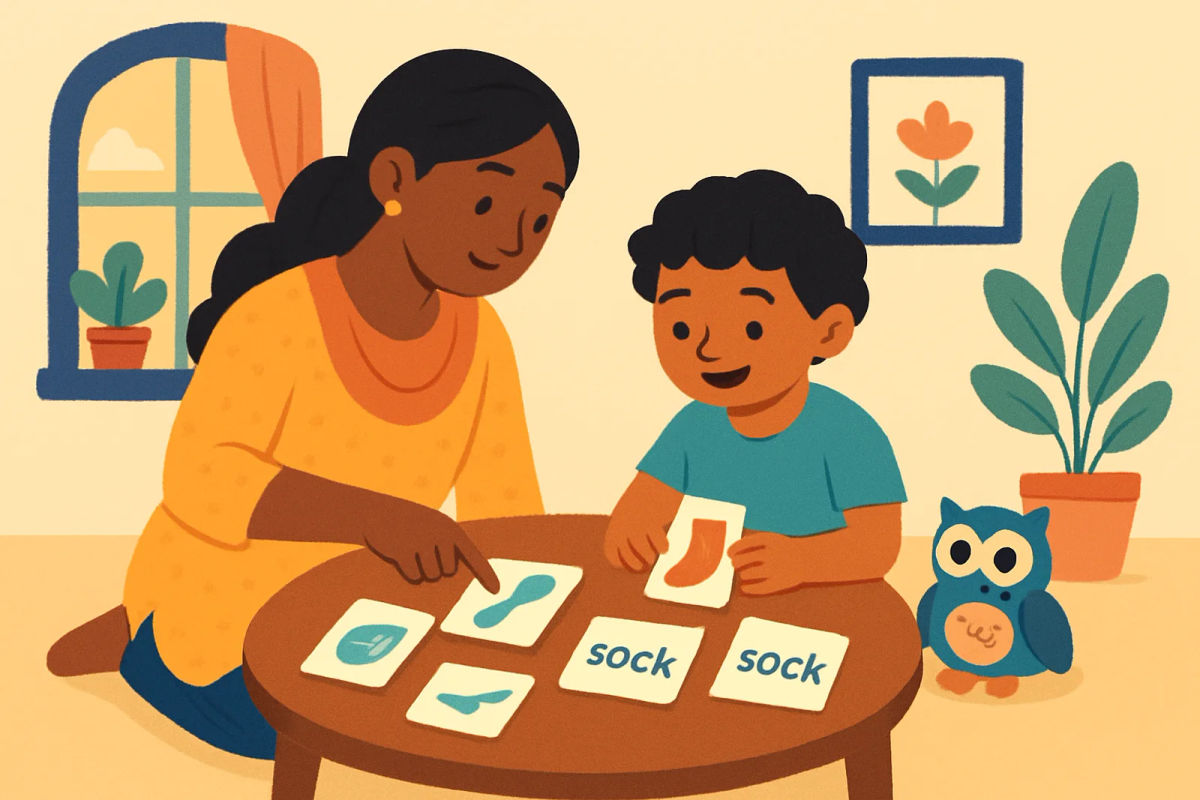
Begin with one real object and one picture. Place a cup beside a clear picture of a cup, or place a toy shoe beside a picture of a sock. Later, use two picture cards and ask your child to find the pair that goes together. Home examples include a plate with food, an umbrella with rain, a bed with a pillow, or a key with a lock.
Keep the pictures simple and familiar. You might show a plate and a banana, then ask which picture goes with the plate. Say, "These go together," rather than expecting a full explanation. If the task is difficult, return to real objects, use only one pair, or give two possible cards. Big and Simple Animal Coloring Pages and Simple Fruit Coloring Pages can offer clear pictures to talk about, though colouring is not needed for the matching task.

Lumi's tips
- Lumi suggests starting with two pairs and adding one pair only when your child is comfortable.
- Keep a small basket of safe matching objects ready for a quick activity after lunch.
- Use your child's home language when naming objects, then add English labels when the pictures are familiar.
- Let your child point or place a card instead of expecting an answer every time.
- Lumi's reminder is to stop on a good turn and keep the next session short.
Level 3: Match simple word labels
Introduce written labels after your child understands the pictures and can match familiar objects or related pairs. Start with short words such as cat, cup, sun and ball. Place one word card under a familiar object or picture. Read the word aloud clearly, then invite your child to place the same label under another matching picture.
Use large lowercase labels first. Choose words your child hears often in English or in your home language. For example, you might use cup beside a cup picture, or add the Hindi word you use at home if that is more meaningful to your family. Keep the labels uncluttered, with one word on each card.
The first aim is to connect the printed word with its meaning, not to test letter sounds. Your child may remember that a card says cat before being able to name each letter or sound. Say, "This word says cat," and let your child handle the card. A few familiar labels are enough. Free Printable Sight Words Worksheets may be useful later when your child is ready for more word practice, but simple homemade cards are a good starting point.
How to use printable picture matching pages
Print a simple matching page or cut out picture cards and begin with only two or three pairs. Cover extra pictures with a sheet of paper so your child sees a small number of choices. Ask your child to point, draw a line or place one cut-out picture beside its match. Cutting should be done by an adult, or with close supervision.
Print EarlyActivity PDFs on A4 or US Letter paper at "Actual size" or 100 percent. Use a clear, uncluttered page and keep the first session short. You can use the free printables library to choose simple picture material that matches your child's interests, such as animals, fruit or vehicles.
A free printable maker can help you create pairs using familiar objects, colours or words. If you use one, choose large pictures and only a few choices. Adult guidance is still needed because a page cannot tell when your child is tired, confused or ready for a smaller task. Covering part of a busy page, pointing to one pair at a time and naming each picture can make the activity more manageable.
A 10-minute matching routine for each day
Keep the daily session predictable. Spend two minutes naming the objects or pictures, five minutes doing the matching and three minutes talking about the pairs. The naming time prepares your child for the task, while the final conversation gives the activity a natural ending.
Change the material across the week. You might use objects on Monday, picture cards on Tuesday, related pairs on Wednesday and word labels later in the week. On another day, match lids, blocks or socks while folding laundry. In an Indian home, you could match a steel spoon to another steel spoon, then talk about the plate, tiffin box or cup used at mealtime.
Use short phrases such as "same spoon," "goes together" and "cup says cup." Give your child time to look before helping. If needed, show one answer and invite your child to copy the action. Stop while your child is still interested. Repeating the activity another day is more useful than turning it into a test. A successful session can end with putting the cards or objects back in their place.
Common mistakes and when to get extra help
Matching becomes harder when there are too many choices or the pictures are unfamiliar. Other common problems include correcting every attempt, giving clues too quickly, moving to word labels before picture matching is understood, or asking your child to sit for too long. Use clear pictures, two or three choices and objects your child knows.
Matching a picture is different from naming the object. A child may understand that two pictures belong together without saying the word aloud. Pointing, placing a card or bringing the correct object can show understanding. If your child is upset, tired or distracted, simplify the activity, offer one pair or stop for the day. Try again when your child is rested.
Speak with your child's teacher or a doctor if you have ongoing concerns about communication, understanding or everyday play skills. Share what you have noticed and explain which tasks your child can do with help. One difficult matching session does not give a complete picture, but repeated concerns deserve a calm conversation and suitable guidance.
Questions parents ask
What can I use at home for matching activities for 3 year olds?
Use safe, familiar items such as socks, spoons, lids, toy cars, blocks and plastic containers. Start with two identical pairs, then try related pairs such as a cup and spoon or a shoe and sock.
Should my 3-year-old match objects before pictures and words?
Real objects are usually a helpful starting point because your child knows how they look and feel. Move to pictures when identical object matching feels comfortable, then add simple word labels after the pictures are familiar.
How many matching cards should I give a 3-year-old at one time?
Begin with two pairs, giving your child two possible matches at a time if needed. Add a third pair when your child can match without much help and is not guessing.
How can I make picture matching easier if my child keeps guessing?
Cover the extra pictures and show only one or two choices. Use familiar, uncluttered pictures, name each one and return to real objects if the page still feels difficult.
When should I start matching simple written words with pictures?
Start when your child understands the pictures and can match familiar objects or related picture pairs. Use a few large lowercase labels such as cat, cup, sun and ball, and read each word aloud without making letter sounds a test.