What to do when your child says they have no friends: a parent and teacher guide
When your child says they have no friends, start by listening to the feeling instead of correcting the words. This guide will help you ask useful questions, practise a small joining-in sentence, use a simple printable page, and know when to speak to the class teacher.
In short
- A child may say they have no friends after one upsetting event or because they have felt left out for several days.
- Ask about one part of the school day so your child can share clear details without feeling questioned.
- Practise one short joining-in sentence and a second plan if the first attempt does not work.
- Speak to the class teacher about repeated exclusion, teasing, threats, or a change in your child's school behaviour.
- Praise honest sharing and small social attempts instead of expecting a quick friendship result.
Start by listening to the feeling
When a child says, "I have no friends," the words may describe feeling left out, not knowing how to join a game, or feeling upset after one difficult incident. Your child may have classmates or cousins and still feel lonely at that moment. Try to hear the feeling before checking whether the statement is literally true.
You might say, "That sounds lonely," or "Tell me what happened next." These replies show that you are ready to listen. Avoid quick answers such as, "You have many friends," or, "Just go and play." They may be meant to reassure, but they can make the child feel misunderstood.
Choose a quiet time if your child is tired or upset. You could sit together after a snack, during a short walk, or before bedtime. Ask one question, then give your child time to answer. You do not need to solve the whole problem in the first conversation. Your first job is to understand what the child means and help them feel safe enough to keep talking.
Ask about one part of the day
A broad question such as "How was school?" often leads to "Fine" or "Bad." Ask about one part of the day instead. Try, "What happened when you arrived?" "Who was near you at break?" or "How did group work go today?" You can ask about assembly, lunch, the bus, the last period, or the change between activities.
Then ask three gentle questions: "What did you do?" "Who was nearby?" and "What did you want to happen?" These questions can show whether your child wanted to join a game, needed a partner, or felt hurt by something someone said. Listen for whether this happened once or has happened across several days.
For a child in Nursery, LKG, or UKG, use simple choices. Ask, "Was it during play or snack time?" or "Did you want to sit with someone or play with a toy?" You can draw two simple pictures if talking feels difficult. Keep notes of dates and situations when a concern repeats. Clear details will help you and the teacher understand a pattern without making a single hard day seem like the whole school experience.
Practise one small joining-in sentence
Give your child one short sentence that suits their age and the situation. A young child might say, "Can I play too?" An older child might say, "Can I sit with you?" or "Do you need one more person?" Practise the words in a calm way, without making your child perform them in front of classmates.
Teach a second option for when the first child says no. Your child could ask another classmate, choose a nearby activity, or go to a trusted adult if the situation feels unkind or unsafe. This teaches flexibility without suggesting that your child must keep trying with one group.
Make three small role-play cards for home or class: joining a game, asking to share materials, and finding a partner. Write one situation on each card. Play the other child first, then swap roles. Keep each turn brief and friendly. Ask, "What could you say?" and let your child choose the words. You can also practise saying hello, waiting for a turn, and accepting a different answer. The aim is familiar practice, not a promise that one sentence will solve every friendship problem.

Lumi's tips
- Lumi suggests asking about one school moment at a time, such as break or group work, instead of asking many questions together.
- Keep role-play short. Two minutes of practice can be enough before moving to a game, snack, or story.
- Write your child's own words on the problem-solving page so the page feels like their plan.
- Notice small steps, such as a greeting, a turn asked for politely, or telling a trusted adult what happened.
- Keep the class teacher informed when the same concern appears across several days.
Use a friendship problem-solving page
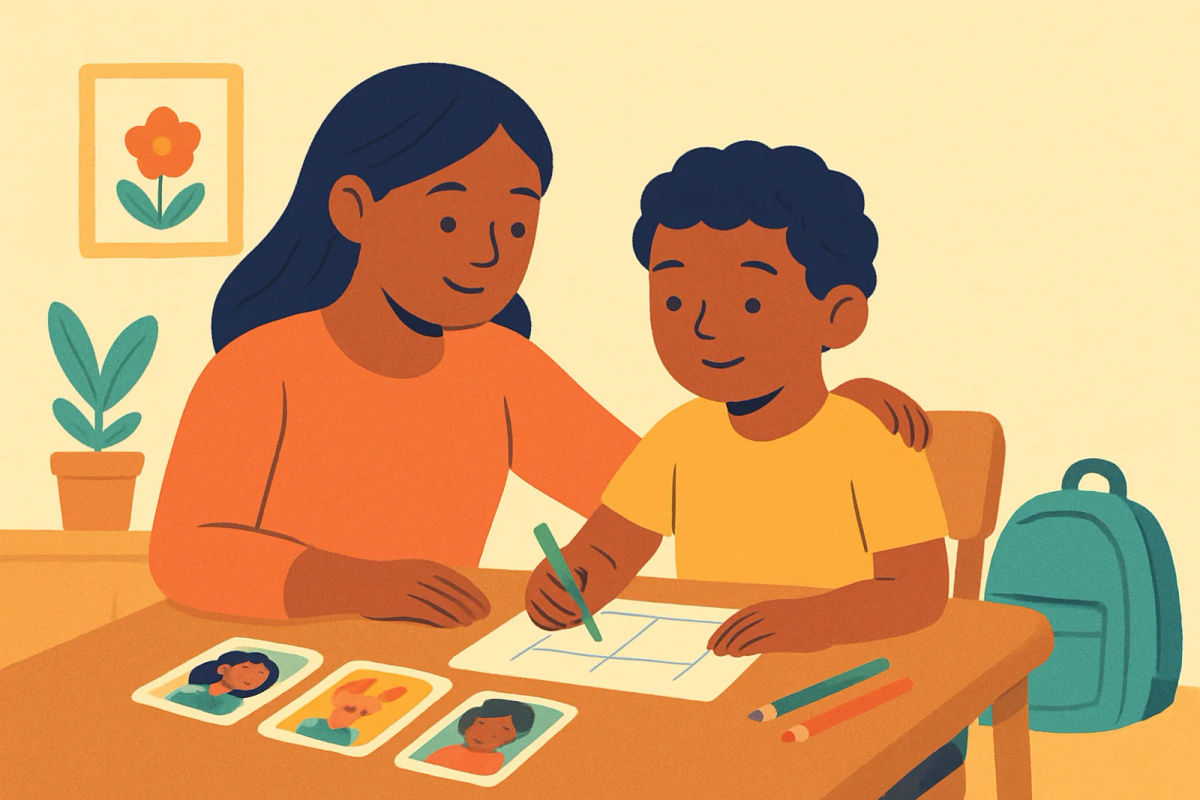
A simple page can give shape to a worry that feels too large or unclear to explain. Make four boxes with these headings: What happened? How did I feel? What did I want? What safe step can I try next? Sit beside your child and fill in only as much as they wish to share. The page is a tool for discussion, not a test.
Younger children can draw faces, people, a classroom, or the playground instead of writing full sentences. You can write their words underneath the drawings. An older child may write a few phrases, such as "No one let me join the football game" or "I wanted a partner for science."
Use the final box to plan one action for the next school day. It could be greeting one classmate, sitting near a group, asking for a turn, or telling the teacher during a quiet moment. You can find other simple activities in the free printables library if your child likes working with paper. A page can make a vague worry easier to discuss because you can look at one event at a time. Stop if the child becomes distressed, and return to listening rather than pressing for more details.
Adjust the support for age and setting
For Nursery to Class 1, keep the focus on taking turns, asking to join, and finding a trusted adult nearby. Use dolls, blocks, or a pretend playground to practise. A child may need help with the exact words and with recognising when a game has space for another player. Adults can guide the child towards a teacher or classroom helper when needed.
For Classes 2 to 5, talk about changing groups, teasing, group chats, games, and how to seek help without blaming. Ask what the child has tried and what response they received. Do not ask them to share private messages with the whole family, but do take repeated unkind behaviour seriously.
At home, practise with a sibling or parent. In class, teachers can use pairs, small groups, and planned partner changes so that one child is not always left without a partner. A child might benefit from working with different classmates during a maths activity or art task. Avoid forcing your child to say a social sentence in front of classmates before they feel ready. Quiet rehearsal and a supportive adult nearby are usually better starting points.
Know when to speak to the class teacher
Contact the class teacher when your child reports repeated exclusion, teasing, name-calling, threats, or difficulty joining activities over time. Also speak to the teacher if your child seems very worried about going to school or shows a clear change in sleep, attendance, appetite, or usual willingness to take part. One difficult incident may need support too, especially if your child feels unsafe.
Share specific information rather than a general statement. Tell the teacher the time of day, the activity, names if known, what your child said, and whether the event has happened more than once. Ask what the teacher has noticed during play, group work, lunch, and transitions. Agree on one small follow-up plan, such as checking in after break or observing group work for a few days.
If the concern continues, ask the school what further support is available. Do not question other children or confront a family before gathering clear information through the school. Contact a doctor or qualified mental health professional if distress is severe or persistent, or if your child talks about self-harm. If your child feels unsafe, seek help from the school promptly and stay close while the concern is addressed.
Mistakes to avoid while helping
Do not dismiss the feeling because your child has classmates, cousins, neighbours, or online contacts. A child can know many people and still feel alone during a particular activity. Start with the experience your child is trying to describe.
Do not promise that one joining-in sentence will fix every friendship problem. It is one small tool. Your child may need help choosing a different group, speaking to a teacher, or responding to repeated unkind behaviour. Keep the focus on safety and support, not on making your child responsible for another person's behaviour.
Do not question other children or confront a family before you have gathered clear information through the school. This can increase tension and may make your child less willing to share. Instead, keep a brief record of what your child reports and arrange a calm conversation with the teacher.
Praise honest sharing and small attempts. You might say, "Thank you for telling me," or, "You said hello and asked for a turn. That took practice." A quick result is not the only sign of progress. Your child may need several chances to feel comfortable with a classmate, group, or new way of joining an activity.
Questions parents ask
What should I say when my child says they have no friends?
Start with the feeling: "That sounds lonely" or "Tell me what happened next." Avoid saying, "You have many friends," or telling your child to simply go and play. Ask about one part of the day when your child feels calmer.
How can I tell if my child is lonely or being bullied at school?
Ask about specific times, places, people nearby, and what was said or done. Repeated exclusion, teasing, name-calling, threats, fear of school, or a change in sleep and attendance need attention. Speak to the class teacher so the school can observe what happens during play, group work, and transitions.
How can I help a shy child join a game without forcing them?
Practise one short sentence at home, such as "Can I play too?" Give your child a second choice, such as asking another child or choosing a nearby activity. Do not make the child perform the sentence in front of classmates before they feel ready.
When should I contact my child's class teacher about friendship problems?
Contact the teacher when exclusion, teasing, name-calling, threats, or difficulty joining activities repeats over time. Share clear details about the time, activity, people involved if known, and any changes you have noticed at home. Ask what the teacher has seen and agree on one small follow-up plan.
What can I practise at home if my child does not know how to make friends?
Use short role-play turns for greeting someone, joining a game, sharing materials, and finding a partner. Practise with a parent or sibling, then use a friendship problem-solving page to choose one safe step for the next school day. Praise the attempt rather than expecting an instant friendship.